 Sometimes the best ideas are the simplest ones, and for appliance retailers, installers and servicers, Flood Buzz may be a good example.
A loose connection behind a dishwasher, a slow drip beneath a refrigerator or a leaking washing machine hose can start as a minor problem. If no one notices the water, however, that minor problem can quickly become an expensive one, damaging floors, cabinets, carpeting and furniture. And when a leak occurs shortly after an appliance has been delivered, installed or serviced, there’s a good chance the appliance dealer will be among the first people the customer calls.
That’s what makes Flood Buzz an interesting product for the appliance channel. The patented water-leak alarm has one simple job: When it comes in contact with water, it sounds an alarm.
There’s no app to download, Wi-Fi network to connect to, device to pair or subscription to maintain. The battery is already installed, so the alarm can simply be removed from its package and placed where water shouldn’t be. For an appliance retailer or installer, that simplicity may be exactly what makes the product so appealing.
A Natural Appliance Add-On
Consider how many appliances retailers sell every day that are connected to water, including dishwashers, washing machines and refrigerators with ice makers and water dispensers. Each represents a potential location where a leak could occur and go unnoticed.
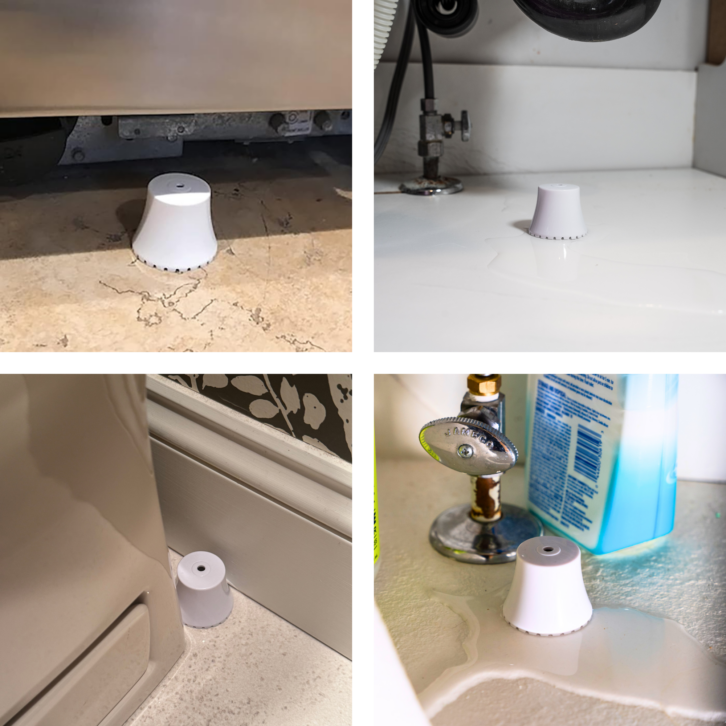
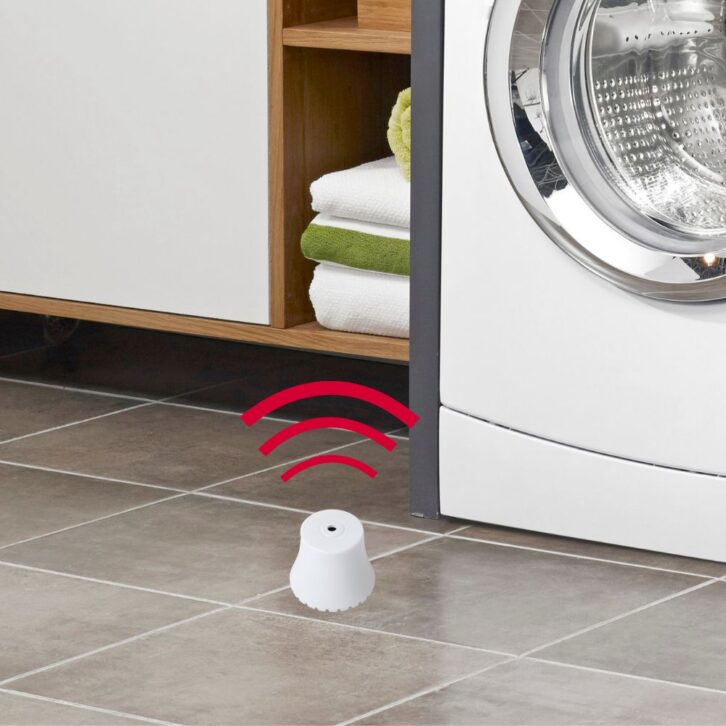
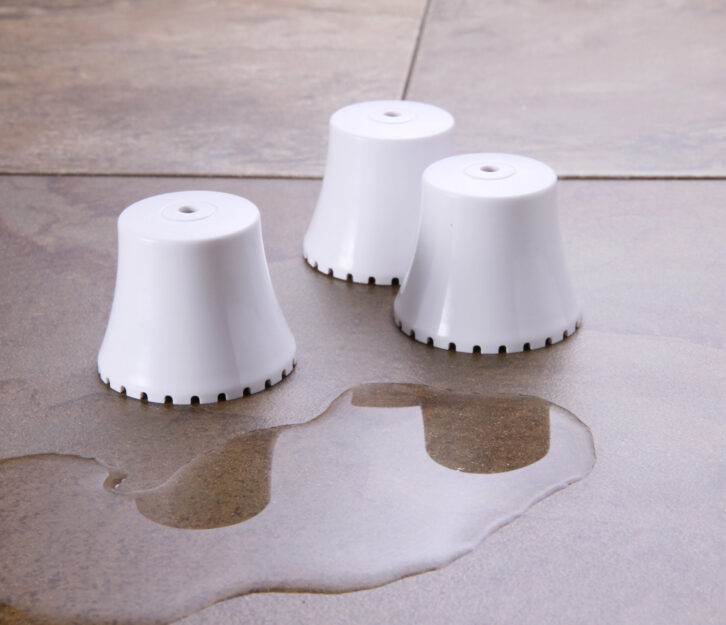
Flood Buzz Small measures just 1.5 inches tall and 1.75 inches wide at its base, allowing it to fit under or near refrigerators and ice makers, behind dishwashers and next to washing machines. Two metal prongs on the bottom detect water, and when water makes contact with them, the unit sounds a 90- to 95-decibel alarm.
For the installer, there’s virtually nothing else to do. Place the alarm next to the appliance and the job is finished. That’s an attractive proposition for dealers looking to add another layer of protection to an installation without adding significant time, complexity or another potential technical-support issue.
At Agren Appliance in Maine, leak detection has already become standard procedure for water-connected installations.
“We use Flood Buzz with every delivery involving water,” said Eric Agren of Agren Appliance. “Customers understand the value immediately, and it helps show that we’re taking an extra step to protect their home.”
Jordan Gasc, installs fulfillment manager at Agren Appliance of Maine, said the company places a leak detector at every water connection it makes, an approach that has been well received by customers and technicians.
“The ease of use and peace of mind brought by the detectors have been a huge hit with both our technicians in the field and our customers,” Gasc said. “The ability to head off a leak before it can do real damage has become invaluable, and we wish we had started using these sooner.”
Those experiences turn what might sound like a theoretical attachment opportunity into something much more practical. At Agren, leak detection isn’t an accessory customers have to remember to ask for. It’s part of the installation.
A Less-Than-$5 Alarm Next to a $2,000 Appliance
The price also makes Flood Buzz an intriguing proposition for appliance retailers. Current pricing is $45.99 for a six-pack and $79.99 for a 12-pack, while a full case of 144 is $699. That works out to approximately $7.67 per alarm in a six-pack, $6.67 in a 12-pack, and less than $5 per unit when purchased by the case. Flood Buzz also offers discounts on first-time orders.
Those numbers become particularly interesting when compared with what consumers are spending on the appliance sitting next to the alarm. A customer may be purchasing a $1,000 dishwasher, a $2,000 refrigerator or a premium appliance package costing thousands more. Against those numbers, putting a $5 to $8 water alarm next to a water-connected appliance isn’t particularly difficult to explain.
For dealers buying by the case, the economics create several possibilities. Flood Buzz could be sold as a traditional attachment, incorporated into a premium installation package, or offered following service on a refrigerator, dishwasher or washing machine. A retailer could also decide that at less than $5 per unit in case quantities, the alarm makes sense as a standard part of every water-connected appliance installation.
That’s essentially what Agren Appliance is already doing. Rather than waiting for customers to request leak detection, the Maine dealer places a detector at every water connection it makes.
For independent retailers, the value may therefore extend beyond whatever margin can be made selling the alarm itself. Including one with an installation is a relatively inexpensive way of telling the customer that the dealer isn’t simply delivering an appliance and leaving; it’s thinking about what happens after the installation is complete.
Simplicity Has Its Advantages
Flood Buzz enters a market that already includes sophisticated connected water-management products capable of sending alerts to smartphones, integrating with smart-home platforms and, in some cases, automatically shutting off a home’s water supply. Those products provide capabilities that Flood Buzz doesn’t, but the company isn’t trying to replace them. Instead, Flood Buzz addresses a narrower need with a simple solution: Water touches the contacts, and an alarm sounds.
For an appliance installer, there are obvious advantages to that approach. There’s no app to download, account to establish, Wi-Fi password to find, or device to pair. It also eliminates the possibility of a customer calling the dealer later because the detector has lost its network connection.
That simplicity extends to the life of the product. After a leak has been addressed, the contacts can be wiped dry, and the Flood Buzz returned to service. The Flood Buzz Small has a service life of up to three years, with a replacement date printed on the bottom of the unit.
Flood Buzz has been in the water-leak alarm business for more than 15 years, and the company says its products are used in thousands of homes, buildings and facilities throughout North America.
Protecting the Dealer as Well as the Customer
 The homeowner isn’t the only one with something at stake when an appliance leaks. The retailer may find itself dealing with the consequences as well.
Consider a customer who discovers water around a dishwasher a few days after installation. Was the appliance connected correctly? Did a hose or fitting fail? Is there something wrong with the dishwasher? Who is responsible for the damaged floor?
Even if the dealer ultimately isn’t responsible for the leak, employees may still have to investigate what happened, dispatch a service technician, and manage an unhappy customer.
For Allen & Petersen, an appliance dealer in Alaska, the issue became much more tangible after the company faced a multi-thousand-dollar repair bill.
“After facing a multi-thousand-dollar repair bill, we began looking for ways to prevent future water damage before our insurance company dropped us,” said Alek Lowry, operations manager at Allen & Petersen. “We looked to Flood Buzz to help protect our business, reduce our liability, and save money. Our customers have also been very happy to have the added peace of mind.”
That’s a different calculation from simply deciding whether another accessory can generate a few dollars of incremental margin.
Flood Buzz can’t prevent a hose, valve, fitting, or appliance component from failing, but it can help shorten the amount of time between water appearing and someone discovering it. When it comes to water damage, that time can be critical. The difference between finding a small puddle and discovering a damaged hardwood floor may simply be how quickly someone knows there’s a problem.
That’s where a product costing only a few dollars can potentially deliver value far beyond its price.
Should Leak Detection Become Part of the Installation?
Ultimately, Flood Buzz raises an interesting question for appliance retailers: Should a basic water-leak alarm become another standard part of installing a water-connected appliance?
Dealers already sell and install hoses, water lines, installation kits, filters and other accessories around major appliances. They also offer extended-service plans and other products designed to protect the customer’s purchase. Leak detection seems like a natural extension of that conversation.
It’s inexpensive, easy to explain, and requires virtually no additional installation time. More importantly, it fits with what independent appliance dealers have been telling consumers for years: Buying an appliance is about more than finding the lowest price.
The value of a good dealer includes the salesperson’s product knowledge, professional delivery and installation, service after the sale, and knowing someone will answer the phone when something goes wrong. Agren Appliance’s experience suggests leak detection can become another piece of that service proposition.
Putting a less-than-$5 alarm behind a $2,000 refrigerator may seem like a small gesture, particularly for a dealer purchasing in case quantities. But if that alarm sounds before a slow leak damages a customer’s hardwood floor, the customer isn’t likely to think it was such a small thing after all.
Sometimes the smartest add-on isn’t the one that adds the most margin. It’s the one the customer remembers. For more information, go to: www.floodbuzz.com.
See also: Abode Adds Outdoor Security Sensors