There are many reasons to go to a trade show or conference: Meetings, education, catching up with friends, and maybe even having the opportunity to see a city or eat at a restaurant that you haven’t been to before. Yet at the end of the day, most of us would have to admit that the real reason is to visit the exhibit floor and demo rooms or suites to “see the new stuff”. I admit it, I’m a “show dog” and one of the main reasons I go to trade shows, as well.
All well and good, but if you focus too intently on the gear, you may be missing something: when you compare the new gear to what’s already out there, when you step back and note what wasn’t there rather than what was, and then put all of that together in the blender with the new products, you have a much better view of the totality of the market rather than one cool product.
To paraphrase James Carville, “It’s the trends, stupid!” Thus, with others here covering the details, let’s take a step up to the 30,000-foot view and see where some of the industry trends and directions are going post-Expo.
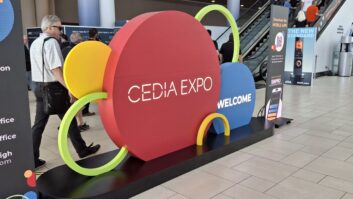
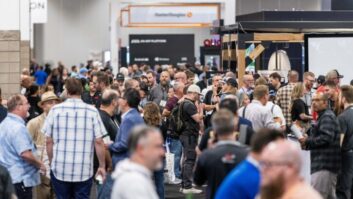
First, trade shows still work. Yes, the attendance at Expo was down by almost 14% this year, and some of the major brands either weren’t there or had a smaller meeting-room-only presence. That said, there is still no other way to see the disparate items you sell to plan, integrate, commission, and maintain residential technology than at a trade show like CEDIA EXPO.
Next, “the big demo is dead”. In years past, there were more than a few BIG demo rooms, showcasing systems aimed at large-scale jobs. Not so this year. Yes, there were demo rooms and the presentations were impressive. However, they were smaller in size and aimed at smaller budgets, albeit at $250K-ish rather than seven figures. Does that mean that mega-sized showroom spaces and jobs are gone? NO! The trend to take from this is twofold: As the brands doing the demos did, view all expenditures in light of the ROI. Then, look at where the market in your trading area is and scale your demos and showroom accordingly.
On the video side, there are three trends that seemingly oppose each other, but which are complementary. One is the trend towards dvLED as a large-screen video display solution. While some of the major brands sat out this year’s Expo, other, newer brands took their place. The presence of (in alphabetical order) Absen, AWALL, Barco, C SEED, Dream Walls, Just Add Walls, Pixel Perfect Walls, and Quantum Media Sony made up for the absence of other dvLED brands. Yes, the cost is still relatively high, but the images are bright, color-perfect, and suitable for all manner of installations. Unified “All In One” mounting configurations were also featured, simplifying the time and cost on your side of the business.
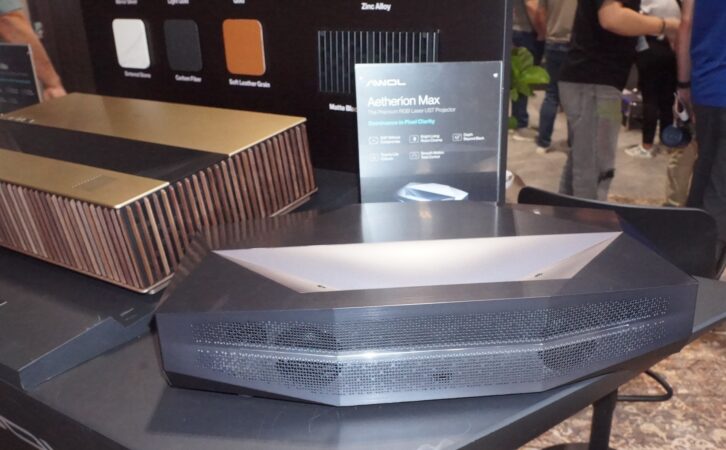
The second slice of video trends is the flip side of dvLED: projection. While dvLED has become more visible in the large-scale space, projection is still very much with us. With one exception, all of the major demo rooms featured projection as the display source, with Barco, Christie, Epson, JVC and SIM2 showing standard projectors with AWOL, X-WALL and XGIMI strutting their stuff in the Ultra-Short-Throw (UST) and “Lifestyle” segment. Complemented by new screen technology and surface products, don’t let the hype about dvLED fool you. Particularly for true “behind the screen” sound presentation, projectors are still very much “a thing” and will remain so for the foreseeable future.
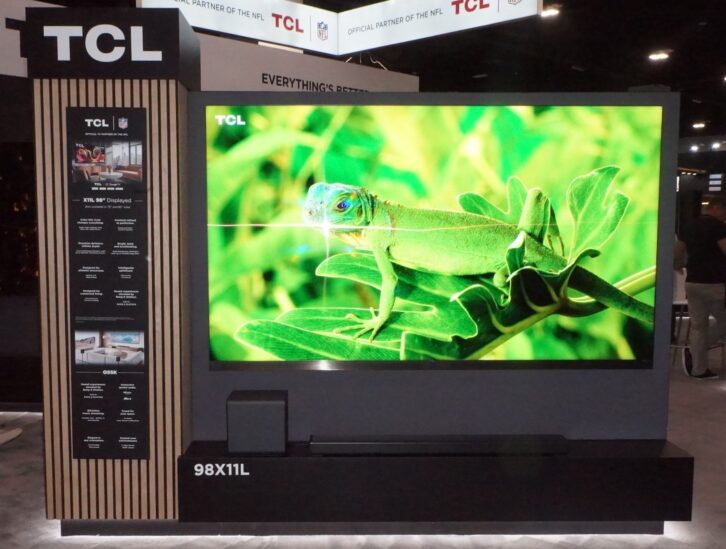
The third and most important leg of the video display triad remains flat screen. Make that LARGE flat screens and throw in a heavy dose of new technology. Among the major brands, only Skyworth, Sony, and TCL were on the show floor, with LG and Samsung showing in meeting rooms. With flat panels, the trend towards large screens continues. Of course, the space available in the room is always the ultimate determinant, but when it is there, LARGE is the new rule.
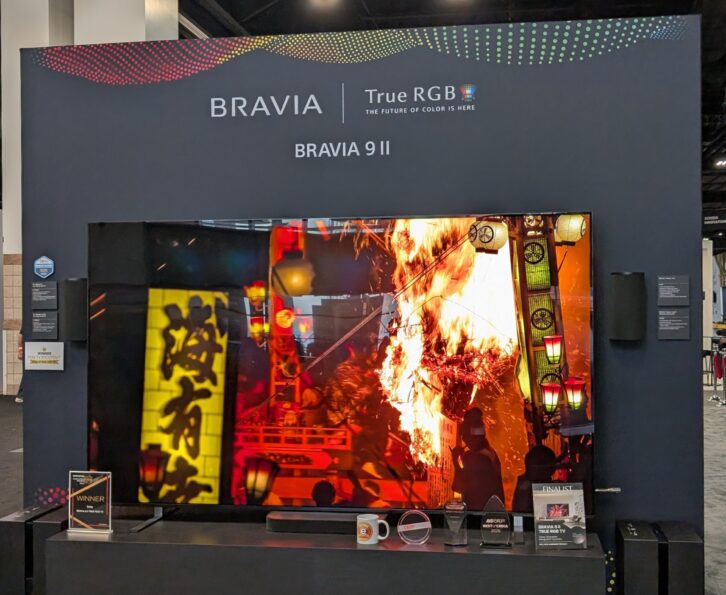
The second trend in this space is the emergence of advanced display backlight technologies we began to see at CES. Sony highlighted their True RGB models to amazing results, as did TCL with SQD and their own RGB backlights. At the higher end of the display spectrum, this is what your customers will hear about from the manufacturers’ advertising, and it is wise to include them in your mix.
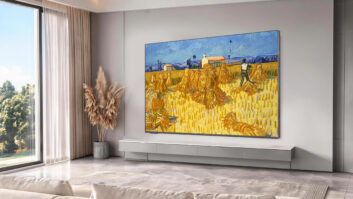
Finally, Skyworth devoted most of their booth to showing their “Canvas” models showing premium displays available in sizes up to 100”. TCL had their Lifestyle TV, and Sony got into the “Art TV” act with Leon Studio Frames. The trend here is that the number of brands following in the footsteps of Samsung’s original The Frame shows the appeal of the Art TV concept. Indeed, Skyworth is almost totally devoting its US line to the Canvas models.
One can’t talk about CEDIA Expo trends without mentioning audio, and the headlines were not unexpected. Class D amplification is no longer an oddity, and its presence across the board in all product configurations tells one that this is no longer something to have to either explain or apologize to audiophiles about. It is here. Big time. Similarly, what one might generically call audio over IP (AoIP) using Dante/AES 67 also appeared in all sorts of products that firmly establish it as a part of the residential audio market.
Finally on audio, in a market where multichannel seems to get the attention, it was hard not to notice the renewed attraction of two-channel. The traditional stereo receiver with a tuner, preamp section, and amplification may be seeing the end of its illustrious run, but with streaming taking the place of the tuner, look to that product concept as being on the upswing.
OK, it has to be mentioned before closing today: AI. Suffice to say it was there, but one can’t yet put a firm finger on where it fits in the consumer electronics world. Across the Expo floor, in the demo rooms, in the CEDIA Education classes, and clearly in many overheard hallway conversations, it was as much a discussion topic at Expo as it is in today’s news headlines.
Rather than distilling the talk about AI to a single trend, the best way to capture it from CEDIA Expo is to say that it is and can do many things. It can help with planning and project management; it can adjust video; it will be able to assist in room calibration and allow end-user listeners to tell a system how they would like to have the room sound, while at the same time you can put in guardrails to prevent getting on the wrong side of calibration settings.
Where will AI end up in our businesses and in the homes of our customers? It’s there and creeping into the picture more each day. That is the trend. It’s up to us to watch and understand what it is doing and can do while at the same time learning how to best harness it.
Across the Expo show floor and around the event, there was much more, but space does not permit a deeper dive. As a close, all of these trends again add up to one more: having suppliers and customers in the same place for a few days for both guided and independent looks and discussion on technology and products is something that is positive and needed. It may change form and location, but it is still a critical part of the industry. Book me for CEDIA Expo next year, as it moves to Las Vegas. See you there!
See also: CEDIA Expo 2026 By The Numbers