At PrimeTime, Nationwide Marketing Group (NMG)’s John O’Halloran and John Laing urged independent appliance retailers to capitalize on their strengths while pushing vendor partners for greater channel discipline and M.A.P. (minimum advertised price) management.
The appliance market remains challenging, but NMG believes independent dealers have more leverage — and more competitive advantages — than they may realize.
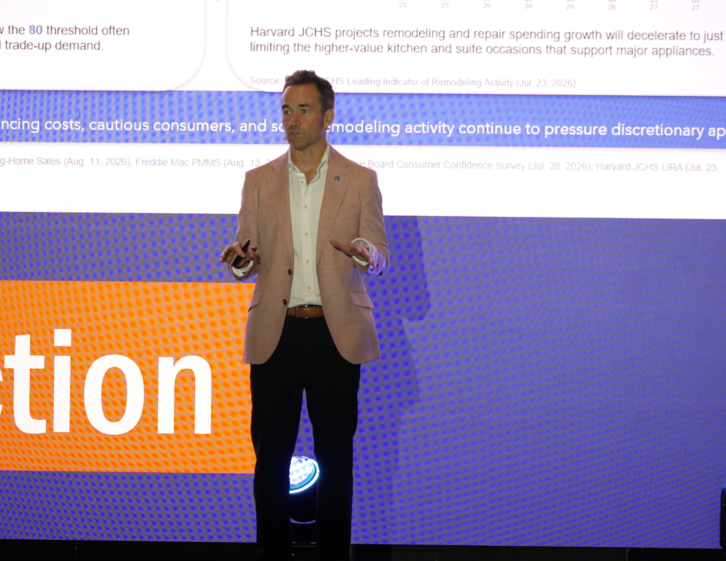
During the Appliance Merchandising Session at NMG’s PrimeTime, John O’Halloran, Senior Director of Luxury Appliances, and John Laing, Director of Appliances, offered a candid assessment of the business while outlining opportunities for dealers to drive sales and profitability. Their broader message: Independents need to recognize their value to manufacturers and use their collective purchasing power to advocate for a healthier channel.
Elevated interest rates, sluggish existing- and new-home sales and consumer uncertainty continue to weigh on appliance demand. Industry sales were down approximately 5.8% for the year, O’Halloran said.
“I don’t think this really feels good,” he acknowledged. Still, he emphasized, “We still continue to outperform the industry.”
Laundry has been one of NMG’s strongest categories relative to the broader market, while refrigeration has been more challenging. There are signs of improvement, however, with O’Halloran pointing to positive comps around Memorial Day and the Fourth of July as reasons for greater optimism heading into the balance of the year.
But improving demand alone won’t address some of the structural challenges facing independent retailers.
As an industry, we continue to see share shift away from the independent and regional channels, driven by big box and direct-to-consumer. The challenge is their go-to-market approach, which leans almost entirely on price and promotion to drive sales. This erodes value and pulls down both mix and average ticket, trends that are directionally concerning for recovery.
“That should be concerning everybody in this room,” O’Halloran said.
He called on dealers to deliver a consistent message to manufacturers about pricing and market discipline.
“Across the industry, share continues to shift and have a shared voice with a common message back to our vendor partners,” he said. “There needs to be pricing discipline with your brands.”
Direct-to-consumer sales are another concern. Manufacturer DTC now accounts for approximately 6% of the market, according to the presentation, up more than three percentage points over the past five years.
O’Halloran said independents need to counter that trend with an omnichannel approach that combines strong digital capabilities with the advantages they already offer through their showrooms, delivery, installation and post-sale service.
Manufacturers also have a responsibility, he argued.
“You cannot advantage yourself over your retail partners when it comes to your website,” O’Halloran said, encouraging dealers to reinforce that message with their vendors. “1,000 voices will have a much bigger impact than just a few.”
NMG believes the performance of its members gives them a compelling argument.
Members generate an average selling price approximately $585 above the industry average, O’Halloran said. Even after adjusting for mix, they remain approximately $277 higher, while premium and luxury products represent 47% of NMG’s appliance business.
“Nobody does a better job stepping up consumers and selling higher-end products” than the independent channel, he said.
O’Halloran also pointed to Bosch and Speed Queen as examples of brands gaining share within NMG while maintaining marketplace discipline.
“It’s not a coincidence that both brands have great pricing and market discipline with their products, and we are rewarding them for that,” he said.
Capturing The Replacement Customer
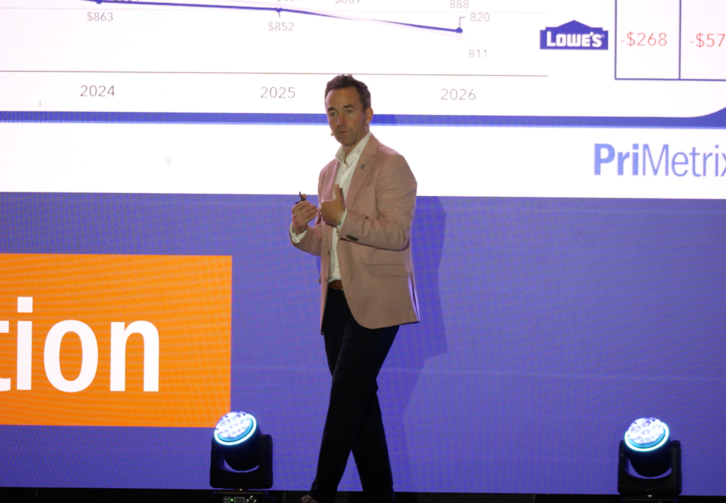
NMG sees an immediate opportunity for dealers in replacement sales. The group estimates approximately 76% of current appliance shoppers are replacement buyers, while O’Halloran said some vendor estimates put that figure as high as 80%.
He identified four priorities for capturing those customers: consumer financing, digital visibility, rebates and inventory.
Because a failed appliance is generally an unexpected expense, financing can help turn an unplanned purchase into a manageable one. O’Halloran said that members who increased their use of retail financing experienced three times more sales growth than those that did not.
Dealers also need to be “always on” digitally. A shopper faced with a broken refrigerator or washer is likely to immediately search for appliances and retailers nearby, making visibility across search, display and social media critical.
Rebates provide another opportunity. NMG has expanded its strategy beyond major promotional holidays to provide a savings message during the “white space” on the calendar. O’Halloran said members who increased their rebate usage experienced 14 times more growth than those that did not.
Inventory completes the equation. Replacement shoppers primarily want to know how much a product will cost and how quickly they can get it, O’Halloran said. If the desired appliance or an appropriate substitute isn’t available, the dealer risks losing the customer.
Luxury remains another important opportunity for independents. O’Halloran said the business has been up nearly 20% over the past four years.
“The luxury business is healthy,” he said. “It’s going to continue to be healthy moving forward in the future.”
The category is particularly well suited to independents because selling luxury requires knowledgeable salespeople, strong showrooms and expertise in delivery, installation and service — creating barriers to entry for mass retailers.
O’Halloran also encouraged dealers to examine their luxury brand mix. The #1 brand in the luxury space represents approximately 45% of NMG luxury sell-out, and while he emphasized the importance of that partnership for members, he challenged members to consider shifting share to NMG strategic partners that offer a stronger margin and invest incrementally in their business, giving NMG members a competitive advantage in their local market.
The ‘Power of the PO’

Laing reinforced the session’s themes with results from NMG’s latest member vendor survey, which evaluated seven leading manufacturers across market value and discipline, supply chain and operations, and product and innovation.
The survey, Laing explained, gives NMG more than a vendor scorecard. It provides data the organization can take directly to manufacturers to reinforce what its members are experiencing in the marketplace.
DTC and market discipline were again among the major concerns, and Laing encouraged dealers to raise those issues directly with vendors — and to consider vendor behavior when deciding where to place their business.
Holding up a pen, he reminded attendees of an old retail expression.
“You have the power of the pen,” Laing said.
Today, purchasing may be electronic, but the principle remains the same.
“Power of the PO, because it will drive change.”
As dealers look toward Black Friday and 2027, Laing urged them to think strategically about where they place purchase orders and whether there are opportunities to shift share toward vendors that support the independent channel.
It brought NMG’s message full circle. Independent retailers cannot control interest rates, housing activity, or consumer confidence, but they can control where they place their business.
And NMG believes that gives them a powerful voice in shaping what comes next.