Retail theft continues to rise, but so does something more concerning to retailers: violence.
According to the National Retail Federation’s 2025 Impact of Retail Theft & Violence Report, nearly half of retailers surveyed reported increases in violence during a crime, including shoplifting, while 73% said shoplifters are exhibiting heightened aggression.
For consumer electronics retailers, where high-value inventory and confrontational theft often intersect, the question is no longer whether incidents are increasing. It’s whether employees have the tools to respond when a potentially dangerous situation arises.
One increasingly visible answer: the “panic button.”
From Optional to Expected

What was once a niche safety device, often a hardwired button under a cash register or counter, is evolving into a broader category of wearable, wireless, and app-connected alert systems.
And, according to vendors, demand is no longer theoretical.
“Employees need better protection,” asserts Kenny Kelley, founder and CEO of Silent Beacon, a wearable panic-button provider focused on small businesses. “Owners are sick of it. Legislators are trying to pass this stuff to make people safer.”
Kelley noted that Silent Beacon initially had to educate customers on why they needed such devices. Today, he reports, roughly 85% of the company’s business comes from small retail and service businesses, driven in part by post-pandemic shifts in customer behavior and rising incidents of theft and confrontation.
Other panic button vendors echo that shift.
“Panic buttons aren’t just a high-end security feature – they’re becoming a necessary safety baseline,” observes Terry Swanson, president and CEO of Madison, WI-based Singlewire Software, an SaaS company that offers wearable alert badges and incident management systems. “In the consumer electronics sector, where high-value inventory increases the risk of confrontation, panic buttons provide a critical, discreet link to emergency responders.”
Singlewire provides critical communication and incident management platforms, including its InformaCast system, which integrates with wearable panic buttons to trigger alerts, notifications, and coordinated emergency responses across organizations.
Legislation and Risk Driving Adoption

If retailer demand is rising, legislation is accelerating it – but unevenly.
New York’s Retail Worker Safety Act, signed in 2024, requires retailers with 500 or more employees nationwide to deploy panic buttons in stores by January 1, 2027, along with workplace violence prevention plans and employee training.
Washington state has taken a broader approach. It’s an isolated worker safety law, signed in April 2025 and effective January 1, 2026, that requires employers in several industries, including retail, to provide panic buttons to employees who work alone or without immediate supervision.
Both laws reflect a broader shift in how workplace safety is being addressed, one that originated in hospitality and has been reinforced by conditions in healthcare.
“I believe the current legislation in states like Washington and New York is a spillover effect from the hospitality industry,” affirms Joacim Westlund Prändel, CEO of Shortcut Labs and Flic Button, which has expanded beyond its programmable consumer buttons to B2B panic button systems.
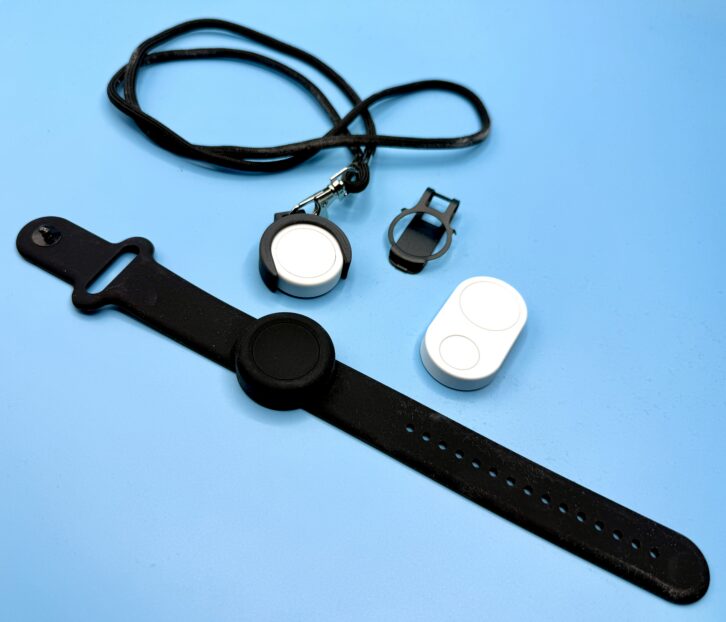
Hotel unions, particularly in cities like New York and Chicago, successfully pushed for mandatory panic buttons for housekeepers working alone in guest rooms to combat harassment and assault. Legislators are now applying that model to retail, where employees often face similar risks.
At the same time, healthcare has been a parallel driver of panic-button adoption. Healthcare workers experience some of the highest rates of workplace violence of any profession, prompting widespread deployment of wearable alert systems in hospitals and care facilities as part of broader violence-prevention programs.
In retail, the risk profile is different but increasingly volatile.
Employees who work alone or without immediate support face an increasingly volatile mix of theft-related violence and customer confrontations. The NRF report found that incidents involving threats or acts of violence during theft rose 17% year over year, with weapon-related incidents increasing 16%.
“We’re seeing a rapid shift in state-level legislation around retail worker safety, with panic buttons becoming a central requirement,” states Chris Andry, founder of WSPER.
The legislative shift, Andry added, mirrors earlier workplace regulations, suggesting panic-button mandates could spread more broadly over time.
What Panic Buttons Add
Retailers have long relied on surveillance cameras, alarms, and security personnel. But those tools don’t always help employees in the moment.
Retailers are increasingly restricting employee interaction with suspected shoplifters due to rising aggression and the risk of injury or legal liability, the NRF report found, with many companies limiting who is authorized to intervene.
That leaves frontline employees exposed, especially in smaller stores without dedicated security staff.
“Employees are often told not to engage,” explains Silent Beacon’s Kelley. “So now the question becomes: how do you get help without escalating the situation?”
Modern panic devices fill that gap, extending security from store infrastructure down to individual employees.
What Retailers Should Look For

For small to mid-size consumer electronics retailers, panic-button systems now range from simple Bluetooth devices to fully integrated, LTE-connected platforms, all surprisingly affordable.
Some newer systems are designed not to replace existing security tools, such as cameras, but to integrate with them. Platforms such as WSPER, for example, pair panic-button activations with video and communication systems, allowing alerts to trigger real-time camera feeds and coordinated responses rather than standalone alarms.
Consumer electronics retailers have one panic button system advantage over other retailers: staffers are likely more tech savvy, flattening the learning curve.
Choosing the right panic-button solution, however, depends on budget, store layout, existing security systems, and risk profile.

1. From Fixed to Mobile: How Panic Buttons Are Evolving
The biggest change in panic-button technology is its move from fixed, location-based systems to mobile, employee-centered devices.
Traditional panic buttons were often mounted under counters or at registers, limiting their usefulness to specific locations. Newer systems are increasingly wearable – lanyards, badges, or pocket-sized devices – allowing employees to trigger alerts anywhere in a store.
“Protection that moves with the person – not tied to a wall or a building – is becoming a key design principle,” according to WSPER materials describing its wearable panic badge systems.
This fixed-to-mobile shift also affects how devices connect.
Some systems rely on a paired smartphone. Silent Beacon’s wearable device connects via Bluetooth to a phone, which then places a 911 call and sends GPS-enabled alerts to designated contacts.
Others eliminate the phone entirely. WSPER’s devices connect directly over LTE-M cellular networks, allowing alerts to be sent without Wi-Fi, Bluetooth, or local infrastructure, an advantage in larger stores or environments where wireless connectivity may be inconsistent.
2. Integration vs. Standalone Systems
Basic panic buttons send alerts. More advanced integrated systems provide context.
“A traditional panic button is a ‘dumb’ sensor – it tells you something is wrong, but not what is wrong,” explicates Chris Sisto, VP of Product at Solink. “By pairing panic buttons with video footage, staff can assess the situation and dispatch help where it’s needed most.”
Solink integrates panic alerts with video feeds, allowing managers or monitoring centers to see incidents in real time.
“We are turning passive surveillance into an active digital teammate,” Sisto adds. “This allows a small store manager to essentially be in two places at once, using AI to focus on the moments that threaten staff safety.
3. Cost and Scalability
For smaller retailers, cost remains a key factor, but these systems are increasingly price accessible.
“Panic buttons aren’t just a high-end security feature,” insists Singlewire’s Swanson. They’re becoming a necessary safety baseline that protects employees in shops of every size.”
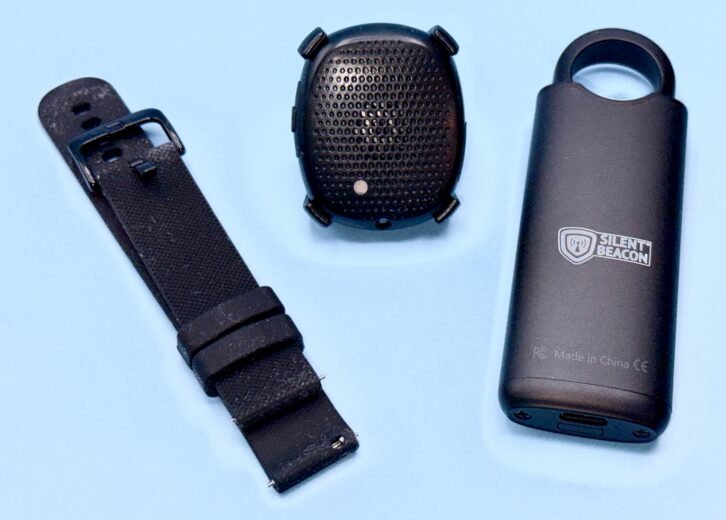
For instance, entry-level devices such as Flic’s wireless buttons start at roughly $20 per unit with no required long-term contracts.
Silent Beacon’s wearable device retails for about $59.99, with optional subscription tiers for expanded functionality.
LTE-connected systems such as those from WSPER typically operate on a subscription basis, reflecting their always-on cellular connectivity and monitoring capabilities.
Enterprise platforms such as Singlewire’s InformaCast layer panic-button alerts into broader communication and incident-response systems and are generally priced on a per-user subscription model, often in the range of roughly $10 to $15 per employee per month, depending on scale and features.
In other words, panic button solutions are available along a wide pricing spectrum that allows even smaller retailers to deploy basic panic button protection while scaling to more advanced systems as needed.
4. Speed and Simplicity
In an emergency, simplicity matters.
“In emergencies, fine motor skills deteriorate,” one industry analysis notes, underscoring the need for single-button activation and minimal setup.
Modern panic button systems emphasize:
- one-press activation
- no passwords
- instant alerts
From Gadget to Baseline
For decades, panic buttons were an afterthought – installed, rarely tested, and often ignored.
That’s changing.
Between rising retail violence, shifting corporate policies that limit employee intervention, and new state-level mandates, panic buttons are moving from optional add-ons to baseline safety tools.
“We view panic buttons not just as compliance tools, but as part of a broader shift toward real-time, connected safety infrastructure,” contends WSPER’s Andry.
For consumer electronics retailers, especially smaller operators without dedicated security staff, the decision may come down to a simple calculation: If employees are instructed not to engage, what happens next?
Increasingly, the answer may require just a press of the “panic button.”
See also: Why Audio Consistency Matters More Than Ever In Today’s Dynamic Collaboration World