Editor’s Note: The products featured here were showcased during a media tour organized by Global Connect Show (GCS), a networking organization that connects Chinese innovators and entrepreneurs with Western media, retailers, investors, and business partners. The trip included visits to companies and innovation organizations in Shenzhen, Hangzhou, Suzhou, and Shanghai.
Chinese tech companies have become synonymous with smartphones, televisions, laptops, and mowing and cleaning robots, as well as contract manufacturing that produces many of the world’s best-known devices for many of the world’s best-known brands.
But during a recent tour of Chinese technology companies and startups, I got hands-on with a variety of original and clever products aimed at solving everything from arthritis pain and hair loss to family companionship, oral health, and AI-powered customer service.
Some of these products may never reach U.S. retail shelves. Others are already headed here. But all offer glimpses into the kinds of innovations emerging from China’s increasingly diverse entrepreneurial innovation ecosystem.
AsclepStaff Targets Pain Relief
IMHO, the most memorable product of the trip may have been one that never turned on a display, generated an AI image, or even connected to the internet.
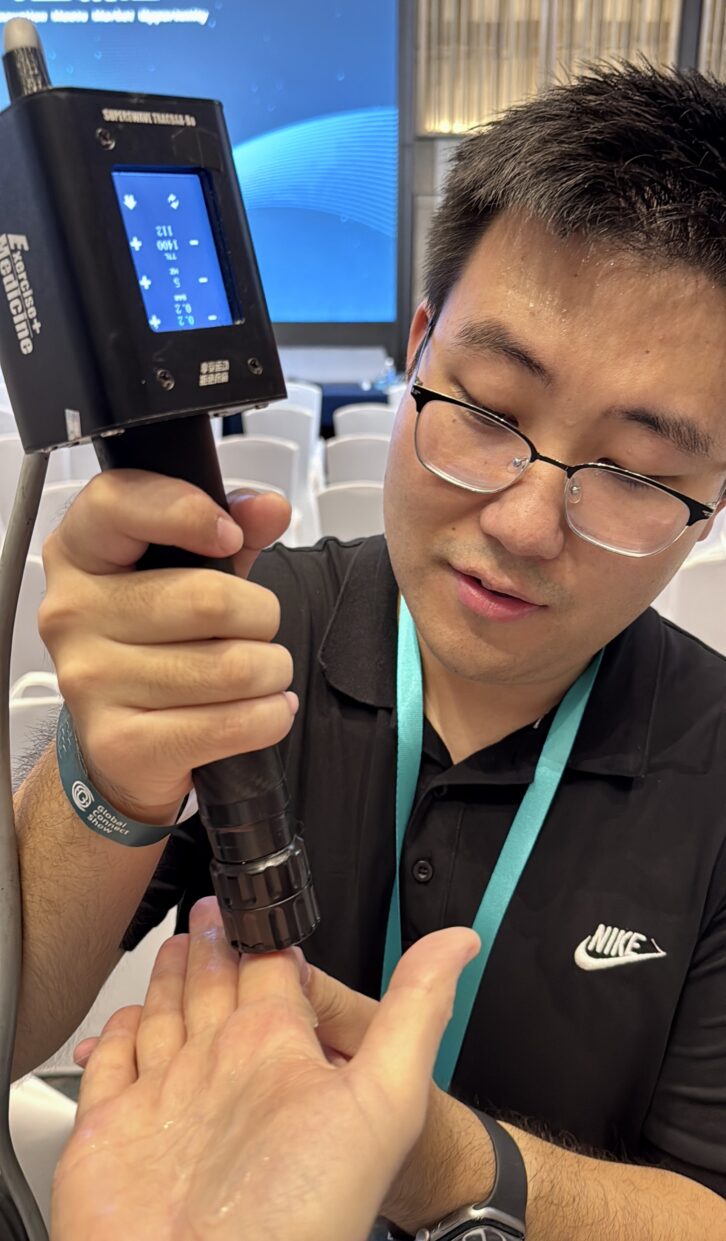
A new company called AsclepStaff is developing the Team 1 Pro Shockwave Therapy Device – and, boy, does that name need work. Essentially a portable version of the pneumatic shockwave systems used by sports medicine clinics and rehabilitation specialists, the 3.7kg device delivers professional-grade extracorporeal shockwave therapy designed to penetrate deep tissue, relieve pain, and promote healing in a package small enough to fit in a suitcase.
And I found out how effective this shockwave treatment is.
After an AsclepStaff representative applied ultrasound gel to my increasingly arthritic hand and spent about five minutes treating several painful joints, my stiffness and discomfort largely disappeared. Every time the device hit a particularly sore spot, it felt like a (ow!) pinprick, which I was told meant the treatment was targeting a problem area. To my shock and pleasure, the stiffness- and pain-free results lasted roughly two days.
AsclepStaff says the portable device is designed to bring clinical-style pain therapy into the home. It’s still at least a year away from commercialization and would likely require FDA clearance before reaching the U.S. market. But whatever the company eventually calls it, I suspect many arthritis and chronic-pain sufferers like myself will be lining up to buy one.
Rehabilitation Minus the Clinic
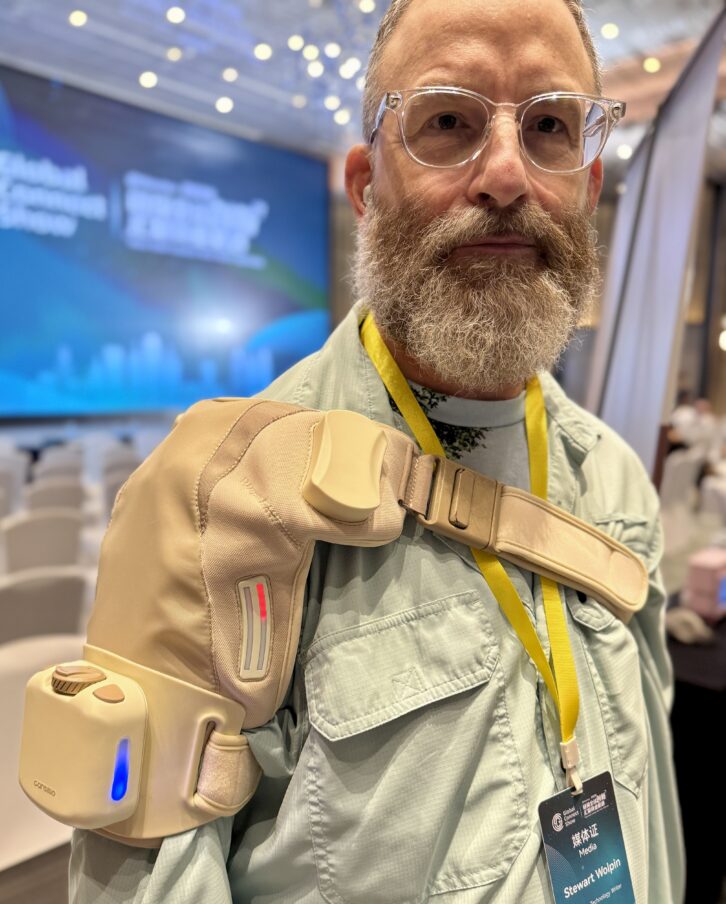
Like the AsclepStaff device, Caremio helps to manage musculoskeletal pain and recovery without frequent clinic visits. Unlike AsclepStaff’s shockwaves, however, Caremio combines electrostimulation, red and near-infrared light, and heat therapies, adjusting treatment using sensor feedback, into a single AI-assisted home rehabilitation platform.
Targeted at athletes, rehabilitation patients, and older adults, I tried the device and found the treatment comfortable and potentially useful.
My bigger complaint was its industrial design. Strapping it on brought to my mind an arsenal tote John Wick could wear under his black sports coat. But putting the system on and taking it off felt like a two-person operation, suggesting some industrial design simplification might be in order.
 Customer Service Sans Hold Music
HeroDash is a business-to-business customer-service platform designed to handle phone calls, email, text messages, WhatsApp, and other customer-contact channels.
The system combines AI automation with human oversight, routing approximately 80 percent of requests through AI before escalating more complex interactions to people. According to the company, the approach can reduce customer-support costs by as much as 80 percent while supporting more than 100 languages.
Safe Listening for Tender Ears
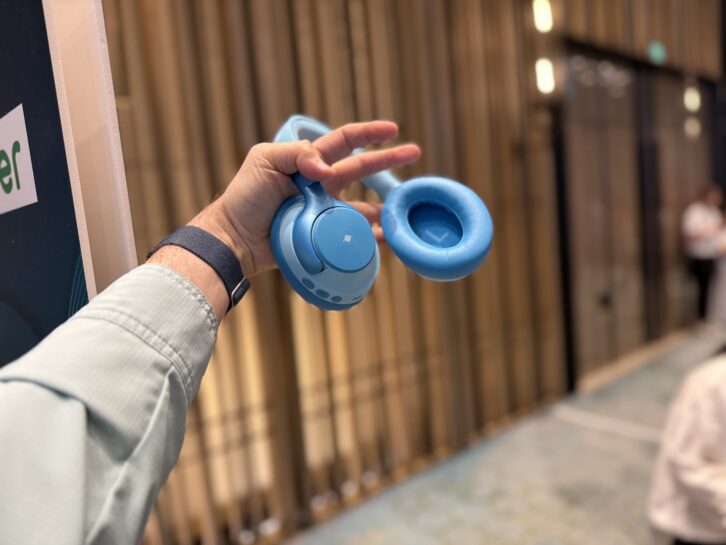
iClever’s Q950 addresses an increasingly important concern as kids spend more time learning, gaming, and consuming media through headphones.
The company’s Safe Stop technology, developed in conjunction with audiologists, limits listening volume to 80 decibels while helping reduce ambient noise. Kids get up to 60 hours of Bluetooth battery life and can continue listening indefinitely through an included 3.5mm audio cable.
In my own brief tests, the Q950 blocked New York City subway noise surprisingly well for a headphone costing a fraction of many premium ANC models while also effectively limiting volume to barely above normal conversation levels.
The Q950 earned a 2026 Red Dot Award and was selected as GCS’s Best of Show winner by attending journalists. Scheduled to begin sales July 2, the Q950 carries a suggested retail price of $54.99.

Helping New Mothers Recover
Women’s-health startup Momewell is targeting a category that receives far less attention than consumer fitness or beauty technology: postpartum recovery.

Its AI coach-assisted pelvic rehabilitation system combines a smart therapeutic belt with software designed to help women strengthen pelvic-floor muscles following childbirth and provides real-time verbal correction and guidance. According to Momewell, mothers using the belt in a one-month study experienced an average reduction of 3-5 centimeters across waist, abdomen, and pelvic measurements, while a control group performing the same exercises without the belt showed less than 1 centimeter of change.
Momewell says the waist-worn system was developed over two years with therapists from three hospital OB/postpartum centers and tested by more than 200 mothers.
Navee Brings Flight to Boating

At East Taihu Lake in Suzhou, Navee, best known for electric scooters and e-bikes, showcased what it described as the world’s first consumer-grade hydrofoil – or personal flying boat – a watercraft that uses wing-in-ground-effect technology that allows the boat to “fly” just above the water’s surface.
The battery-powered WaveFly 5X carries one or two passengers at speeds up to 53 mph (85 km/h), cruises at roughly 40 mph, and can travel up to 50 miles (80 kilometers) on a single charge. By trapping a cushion of air between its wings and the water, the craft glides approximately 12 to 20 inches above the surface, combining elements of a speedboat, hydrofoil, and low-altitude aircraft.
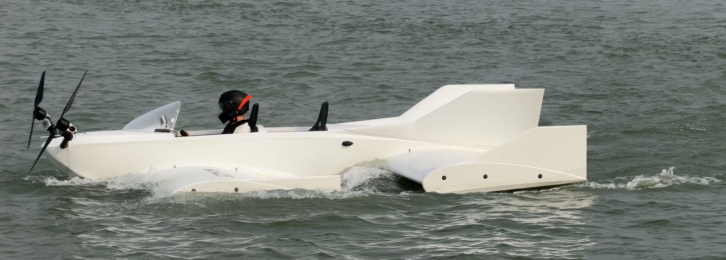
During the live demonstration, however, it appeared the left propeller engines weren’t operating properly, cutting the demo short before attendees could see the craft at full speed or offering test rides.
The flashy two-seat vehicle is aimed not only at wealthy consumers with too much disposable income, but also at yacht clubs, resorts, and for faster emergency response.
Making Dental Care Less Painful
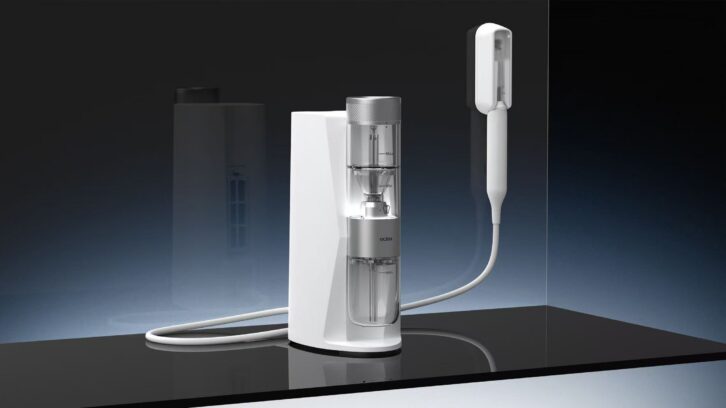
Many people avoid aggressive dental cleaning because they find it uncomfortable. But OcJoy’s oral-care technology is less aggressive but promises to deliver some of the stain-removal and deep-cleaning benefits typically associated with dental office treatments.
OcJoy combines micro-crystals, air, and water to provide what it describes as an at-home professional-style dental cleaning experience, and not a replacement for brushing. The cleaning system is paired with an AI-powered oral-health monitoring platform that tracks changes over time and alerts users to potential periodontal issues.
AI As a Family Companion
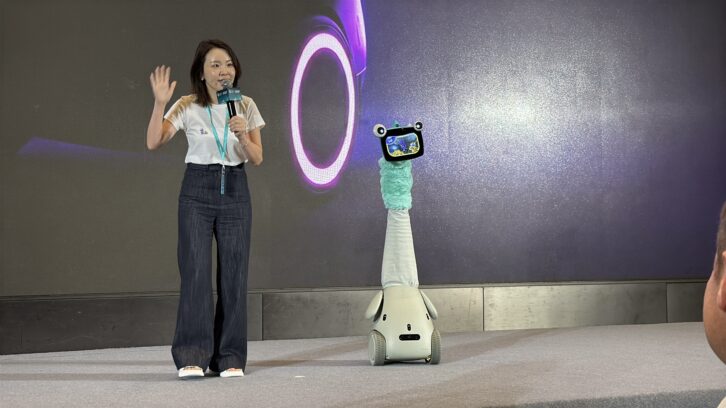
If small home robots seem too, well, robotic, Ollobot’s “All of Us” AI companion aims to be less of a digital assistant and more of a digital family member.
Think of All of Us as a far more advanced – and much larger – Tamagotchi. Unlike most AI assistants that focus primarily on answering questions or completing tasks, All of Us is designed around companionship, able to recognize faces, remember experiences, and learn family habits. Most of all, the robot evolves over time through interactions with its users via its “cyber path evolution” tech, which allows each device to develop differently depending on the family using it.
Ollobot founder Queen described the Wall-E-like robot as a lifelong companion built around emotion and personality rather than task completion. All of Us also auto-captures family photos, provides remote video calling, and can be integrated with Alexa, Google Home, Apple HomeKit, and SmartThings. Perhaps best of all in this age of instant obsolescence, All of Us’ memories are stored in a removable “heart” memory module that can be transferred to future upgraded Ollobot models.
Fighting Hair Loss with Better Minoxidil Delivery
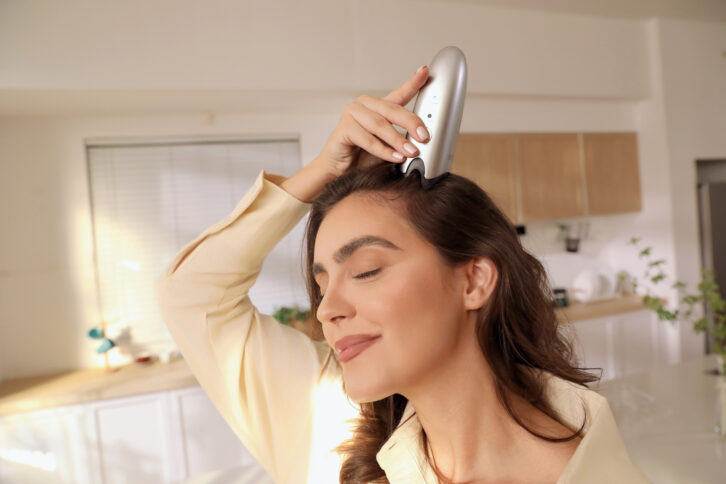
As someone who has spent time and money experimenting with hair-loss remedies, Rootique immediately caught my attention.
Rather than replacing conventional treatments such as minoxidil, Rootique’s DUO system attempts to make them work better – think a more efficient minoxidil delivery system.

The Rootique combines patented IntelliMist delivery technology with built-in 660nm red-light therapy to improve absorption of topical treatments. According to the company, the system can boost absorption by 3.5 times while reducing wasted minoxidil or other topical hair loss treatments by more than 60 percent.
Turning Words into 3D Models
Tripo AI demonstrates how generative AI is moving beyond text and images into physical and virtual object creation. The platform can transform a text prompt, photograph, or series of images into a detailed 3D model in seconds, producing assets suitable for game development, animation, industrial design, XR applications, or 3D printing.
During a demonstration, a presenter generated a detailed Viking ship model from a simple prompt, illustrating how AI can dramatically reduce the time and expertise traditionally required to create complex 3D content.
Founded in 2023 and backed by Alibaba and Baidu Ventures, Tripo AI is building what it describes as a full-stack ecosystem for AI-powered 3D content creation. The company says more than 6.5 million creators and 90,000 developers have used its platform, generating more than 100 million 3D models to date, with applications ranging from gaming and animation to manufacturing, e-commerce, and 3D printing.