For independent retailers, the connected-home opportunity extends well beyond selling another smart doorbell, thermostat, or lighting product. The bigger question is how to enter the category without taking on more complexity than the business — or the customer — can handle.
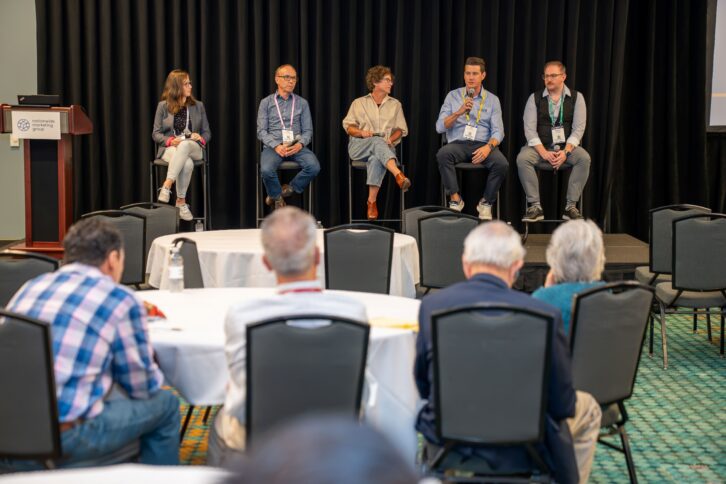
That was a central theme of Nationwide Marketing Group’s Consumer Electronics and Oasis Innovation session at PrimeTime in Nashville, where retailers, integrators, manufacturers and distributors discussed how independents can make connected home a more approachable and profitable extension of their existing businesses.
Nationwide Marketing Group revamped the workshop in response to member feedback, placing greater emphasis on interaction and retailer perspectives. The connected-home discussion was designed specifically to explore ways to make the category more relevant to the independent channel.
The takeaway was clear: Dealers do not need to become full-scale custom integrators overnight. They do, however, need to understand the problems customers are trying to solve and recognize where connected products and services naturally fit into the sales they are already making.
The definition of smart home has also expanded considerably. What once centered largely on simplifying home entertainment now encompasses security, lighting, shading, networking, energy management, wellness, air quality, and other areas of the home.
Angela Larson of Savant and GE Lighting encouraged dealers to focus less on technology and more on the experience it creates. Rather than overwhelming consumers with specifications and product options, she suggested explaining how a solution improves their living environment.
That shift in language can also make the category less intimidating. Instead of leading with “smart home,” retailers can talk about needs consumers already understand — security, convenience, wellness or sustainability.
Her advice to dealers was simple: pick one problem they can solve well and begin there.
 City Home offers an example of how that strategy can translate to the showroom floor. As the retailer has expanded beyond its furniture roots, it has incorporated connected-home products into a broader whole-home strategy built around safety and security, automation, appliances, entertainment, and health and wellness.
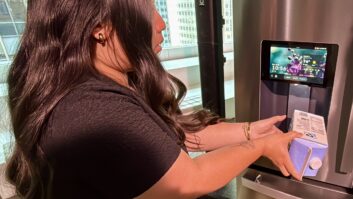
Rather than isolating those products in a single department, City Home uses cross-merchandising to create natural attachment opportunities. A Wi-Fi-enabled appliance can lead to a conversation about connectivity. A television sale can open the door to lighting or audio. Furniture can lead to discussions about entertainment, networking, or automation.
The goal is to make connected technology part of the customer journey rather than a separate, technical conversation.
Larson said entertainment can be one of the easiest starting points. A dealer selling a TV or sound system, for example, can add responsive lighting or other simple connected products that enhance the experience without significantly complicating the installation.
At the same time, panelists emphasized that none of those experiences work reliably without a strong network.
Bob of Resolute Design Group described networking as the backbone of the connected home and cautioned dealers against assuming Wi-Fi alone will support every application. Home construction, access-point placement, bandwidth requirements, and wired connections can all affect performance.
And when something fails, the consumer generally does not distinguish between a product problem and a network problem. The retailer or integrator that sold the solution is likely to get the call.
That makes networking not only a technical consideration, but also a service and revenue opportunity. A dealer capable of diagnosing connectivity problems and delivering a more robust network can solve a meaningful customer pain point while strengthening the overall connected-home sale.
 For retailers concerned about the learning curve, the panel stressed that they don’t have to build all the expertise internally.
Jeff Nielsen of Wave Electronics said value-added distributors can help dealers enter the category through training, technical support, system design, inventory management and connections to manufacturers.
“If you just don’t know really where to start, you can just lean on our team as your integrator until you can get your feet under you,” Nielsen said.
Local integrator partnerships can provide another option, particularly for retailers that want to sell connected-home products without immediately building their own installation teams.
Support also needs to be part of the equation from the beginning. As systems become more sophisticated, customers expect ongoing help. The panel discussed third-party service programs that can extend support beyond normal business hours while also creating potential recurring-revenue opportunities.
For dealers still unsure how deeply to commit, Nielsen offered the session’s most repeated piece of advice: “Crawl, walk, run.”
A retailer could begin with a simple DIY assortment, track what customers respond to, and expand from there. More advanced products, installation services and integrator partnerships can follow as the business develops its expertise.
“Start with the most simplistic DIY solution on an end cap in your store, and monitor it for three months,” Nielsen told attendees.
The same discipline applies to experienced integrators. Panelists cautioned against building systems simply because the technology allows it. Simplicity and reliability should take precedence over feature overload.
“Just because you can doesn’t mean you should,” was a recurring sentiment during the discussion.
For independent dealers, that may be the broader lesson. Connected home is not necessarily a new standalone category that requires an entirely new business model. It can be an attachment strategy, a service opportunity and, perhaps most importantly, a way to deepen the retailer’s relationship with the customer.
City Home has embraced that idea as part of its evolution into a broader whole-home retailer, using connected categories to make the brand more relevant and expand beyond a traditional furniture transaction.
The advice for Nationwide Marketing Group’s members leaving Nashville was therefore less about choosing the perfect platform and more about taking a manageable first step: identify a customer problem, work with trusted manufacturers and distributors, build the necessary expertise, and expand as the opportunity grows.
The connected home may touch nearly every room in the house, but independent retailers do not have to tackle all of it at once.
See also: Nora Gomez Helps Women In Nationwide Find Their Leadership Signature