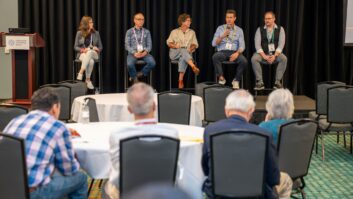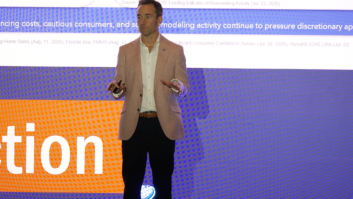
Nationwide Marketing Group CEO Tom Hickman and keynote speaker Will Guidara opened PrimeTime in Nashville with a shared message: Technology will keep changing, but relationships, service, and memorable customer experiences remain powerful advantages for independent retailers.
Technology changes. Marketing changes. Products change. Competitors come and go. But the fundamentals of independent retail haven’t changed nearly as much.
That was the message Nationwide Marketing Group CEO Tom Hickman delivered as he opened Nationwide PrimeTime in Nashville, setting the stage for a keynote from Unreasonable Hospitality author and former Eleven Madison Park co-owner Will Guidara.
The two approached the subject from different directions but arrived at essentially the same conclusion: In a marketplace increasingly shaped by AI, digital commerce, price transparency and seemingly endless consumer choice, independent retailers can still differentiate themselves through something much harder to replicate — the customer experience.
“The tools have changed; they will continue to change,” Tom Hickman told attendees. “But in the end, the same is the same: serve and out-serve your customers, and you’re going to win.”
The Fundamentals Still Matter
 Tom Hickman acknowledged how much can change in the six months between Nationwide gatherings. New technologies emerge, marketing opportunities evolve and retailers experiment with new approaches to inventory, merchandising, digital marketing, delivery and service.
Nationwide is evolving its tools as well. Tom Hickman pointed to OneShop, which he said has progressed from showing retailers what is selling to tracking actual purchase activity, potentially helping dealers better align the products they promote online with what consumers are buying.
But technology remains a means to an end.
“Technology has always been simply a means to an end for us,” Tom Hickman said. “Another tool in the toolbox.”
Whether that tool was once newspaper advertising and television or is now digital marketing and AI, the goal remains the same: serving customers better.
Tom Hickman said independent businesses have survived generations of competitive and economic change because they learned to adapt while holding onto those fundamentals.
Previous generations couldn’t control the economy or what major competitors were doing. What they could control was how they treated employees and customers, the experiences they created, their community relationships and the reputations they earned “delivery by delivery, service by service.”
One increasingly important piece of that experience, Tom Hickman said, occurs after the sale.
He highlighted what he calls the “last three feet” — the point at which the retailer’s promise travels through the customer’s front door and into the home.
“That last three feet is our moat and our battleground for the next decade or more,” he said.
For appliance, furniture, bedding and CE dealers, the point is especially relevant. A retailer can create an excellent website and showroom experience, only to see that goodwill disappear with a poor delivery or installation.
Service doesn’t begin when something breaks, either. Tom Hickman said it starts with understanding the customer, recommending the right products and continuing to support that customer after the sale.
That provided a fitting introduction to Will Guidara’s idea of making hospitality “unreasonable.”
From Excellence to Experience
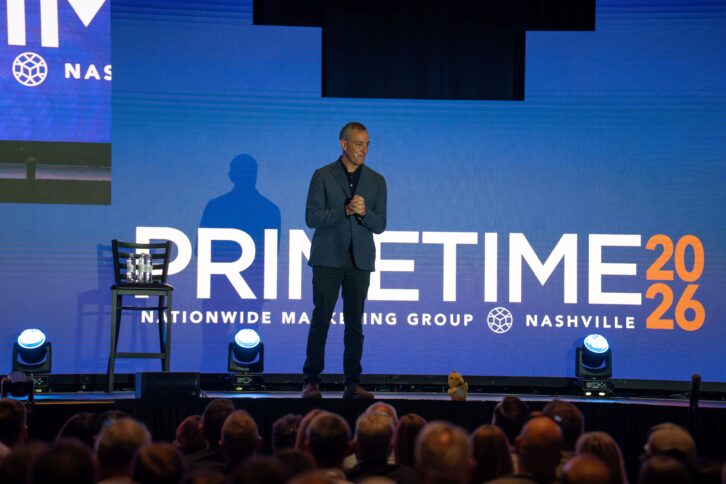
Will Guidara helped transform New York’s Eleven Madison Park into one of the world’s most acclaimed restaurants.
But after years spent relentlessly improving the restaurant’s food and service, he realized excellence alone wasn’t enough to achieve his ambition of making Eleven Madison Park the world’s best restaurant.
The world’s leading chefs, he observed, were unreasonable in pursuit of their food and relentless in pursuit of innovation.
Will Guidara wasn’t a chef. His expertise was the dining room and the people in it.
So he decided Eleven Madison Park would instead become “unreasonable” in pursuit of people — making them feel seen, cared for and genuinely welcomed.
One of his first steps was what he calls an “interrogation of the customer experience.”
Will Guidara gathered the entire restaurant team and asked employees to identify every touchpoint between the restaurant and its guests, from the moment someone considered visiting until after they left.
Initially, the teams identified about 30. After three hours, they had identified roughly 130.
Only then could they begin asking how each could be improved.
Retailers could perform much the same exercise.
The journey might begin with a Google search and continue through a website visit, phone call, showroom experience, salesperson interaction, financing, checkout, delivery scheduling, installation, follow-up and eventually service.
“The smallest enhancements to the most overlooked touchpoints can have the greatest impact on the experience as a whole,” Will Guidara said.
His challenge: Find one customer touchpoint you’ve never really thought about and make it better.
One Size Fits One
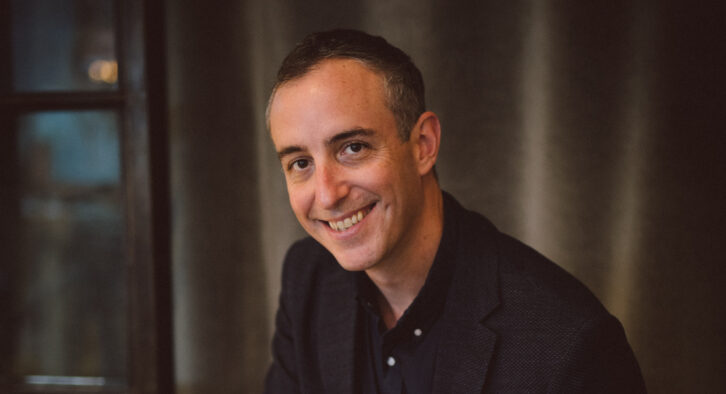
Will Guidara illustrated the idea with one of the keynote’s most memorable stories.
While working in the dining room, he overheard four European guests discussing their culinary trip through New York. They had visited some of the city’s finest restaurants but regretted never eating a New York City hot dog.
Will Guidara ran outside, bought one from a street vendor and convinced his chef to serve it.
The kitchen divided the hot dog into four pieces, dressed up the presentation and delivered it to the table.
The diners “freaked out,” Will Guidara recalled.
He had spent his career serving expensive ingredients such as Wagyu beef, lobster and caviar, yet had never seen diners react the same way.
The hot dog worked because it was personal.
“In unreasonable hospitality, one size fits one,” Will Guidara said.
That’s a useful distinction at a time when retailers increasingly discuss personalization in terms of technology and data. Sometimes personalization is simply an employee paying attention to what a customer says and being empowered to act on it.
Will Guidara also cautioned that simply telling employees to create those moments isn’t enough.
After initially encouraging his team to practice unreasonable hospitality, he realized he had given them the idea but none of the resources necessary to execute it.
Eleven Madison Park responded by creating a “Dreamweaver” position whose job was to help employees bring those ideas to life.
The larger lesson for retailers is that a customer-centric culture requires more than a mission statement. Employees need the authority, resources and support to deliver it.
Systemizing Graciousness
Will Guidara doesn’t believe every customer experience needs to be scalable. In fact, limiting ideas only to what can be scaled can prevent businesses from doing anything truly innovative.
But when something works, he said, businesses should ask whether parts of it can be systemized.
Will Guidara calls that “systemized graciousness.”
At Eleven Madison Park, the team identified recurring occasions — such as marriage proposals — and developed responses in advance so employees were prepared when those moments occurred.
Retailers encounter their own recurring customer moments every day: a first home, an unexpected refrigerator failure, a kitchen remodel, a premium TV purchase, or an urgent replacement before a major family gathering.
Recognizing those situations in advance allows retailers to determine how they want employees to respond and give them the tools to do it.
This brought Will Guidara’s keynote directly back to Tom Hickman’s opening remarks.
While remembering the late Elmer Carl, founder of Carl’s in Gregory, S.D., Tom Hickman spoke about the role independent retailers play in their communities and offered one of the evening’s clearest distinctions between technology and human relationships.
Algorithms don’t host charity events in the parking lot, Tom Hickman said.

AI doesn’t show up after hours to make an emergency refrigerator delivery the night before a graduation party. Independent retailers and their employees do.
Will Guidara made essentially the same argument from another perspective.
Excellence is necessary, he said, but excellence is also “table stakes.” Eventually, a competitor can build a better product, create a stronger brand, offer a lower price or provide better service.
Relationships are harder to displace.
“The only competitive advantage that exists truly over the long term comes through hospitality,” Will Guidara said, “through consistently and generously and creatively investing in relationships.”
Eleven Madison Park eventually achieved Will Guidara’s audacious goal and was named the No. 1 restaurant in the world.
“We became number one because we made the choice to be as unreasonable in pursuit of how we made people feel as every other restaurant on that list was solely in pursuit of the thing they were selling,” he said.
For independent retailers, that’s a message worth taking home from Nashville.
AI will improve. E-commerce will get easier. Marketing will become more sophisticated. Competitors will find new ways to sell the same products.
But customers will still want to feel recognized, understood and valued.
And sometimes the difference between another transaction and a customer for life may come down to those last three feet — or the retail equivalent of a $2 hot dog.
See also: Nationwide Marketing Group To Appliance Dealers: Use Your ‘Power Of The PO’