 BrandSource members who have embraced the group’s e-commerce, marketing and technology programs are pulling away from those that haven’t, AVB’s co-CEOs told dealers at the group’s 2026 Convention.
The difference is becoming hard to ignore. Dave Meekings, who shares the CEO role with John White, said AVB went back several years, to shortly after the pandemic sales boom, and compared the performance of members actively using its tools with those that weren’t. The aggregate book of business among engaged members is now about 30% higher, he said, while dealers that didn’t use the programs saw their business decline.
“The difference between members that are engaged in these solutions and independent dealers that aren’t is stark right now,” Meekings said.
To put some dollars behind those percentages, he used the example of two hypothetical dealers that each had $2 million in annual sales several years ago. Applying the group’s results, the dealer that adopted AVB’s programs would now be doing about $2.6 million, while the other would have fallen to approximately $1.8 million. Not every dealer follows that exact path, Meekings acknowledged, but AVB now has several years of results showing a widening divide.
AVB is using those results to push members harder on e-commerce, digital marketing, connected POS systems and other technology. At the same time, White didn’t minimize the challenges retailers continue to face. He cited high interest rates, fuel costs, consumer sentiment and the job market, along with a housing market that has yet to provide much of a lift to appliance and furniture sales. He also said he doesn’t expect significant interest-rate relief in the immediate future.
For appliances, that leaves the industry heavily dependent on replacement business, which White put at roughly 80% of the current market. There may be some help ahead as year-over-year comparisons become easier in the back half, he said, and housing should eventually provide a stronger tailwind. In the meantime, AVB’s pitch to members was to concentrate on the business they can win now.
Meekings described AVB as the fastest-growing furniture, bedding and appliance group in the country and pointed to laundry as one area where BrandSource members have recently gained ground. At the group’s spring Summit, AVB identified laundry as a growing part of the appliance business where members weren’t keeping pace. It responded with a checklist of changes dealers could make online and in their stores, and within a few months, Meekings said, members had taken significant market share in the category.
The group saw a similar response on the furniture side with a La-Z-Boy marketing program developed exclusively for BrandSource members. Participating dealers saw customer traffic increase 70%, according to Meekings, while sales of the products included in the program doubled.
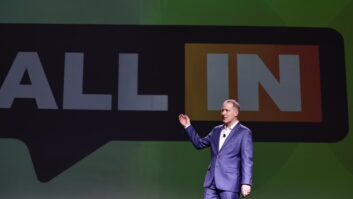
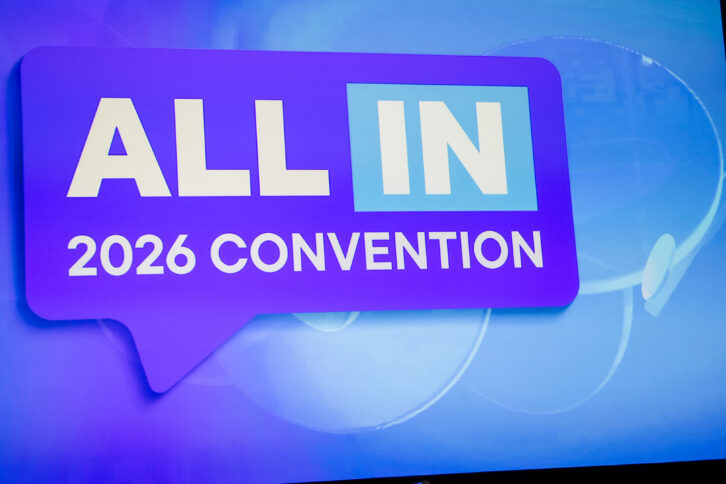
“We can make a real impact by going all in,” he said.
E-Commerce Moves to the Front
A large part of that “all in” message centered on e-commerce. Meekings said as much as 40% of appliances and 35% of furniture are now purchased online, numbers that make a transactional website increasingly difficult for an independent dealer to treat as optional.
“This is where the customers are,” said Meekings.
AVB launched its Path to 30 program about a year ago to help members capture more of that business. Dealers participating in the program have grown their online sales by nearly 40% in a little more than a year, Meekings said. But AVB found something else when it looked at those same retailers: Their in-store sales also outpaced the industry by as much as 10%.
Both executives repeatedly linked online performance with what happens in the store. White said nine out of 10 consumers visit a retailer’s website well before they enter a showroom. A customer may ultimately buy in the store, but the website can determine whether that visit ever happens.
And in an appliance market dominated by replacement sales, convenience becomes even more important. A consumer whose refrigerator or washer has just failed may not want to spend the day visiting stores. They want to know what a dealer has, what it costs, when it can be delivered and what the total transaction will look like.
“If you have a website with no price, it is the same as telling people to shop somewhere else,” White said.
AVB is telling dealers to get three basics in place: a strong website, a payment gateway and a connected POS system capable of communicating inventory, pricing, availability and orders between the website and the store. Within AVB’s technology stack, those pieces include its ALTA website platform, Trusted Transact payment gateway and ARC POS, although members can use another POS that connects with the site.
Rather than rely solely on group-wide numbers, AVB decided late last year to put its recommendations to the test with an individual dealer. The retailer was M&H Appliance in Minnesota, which sells appliances, home furnishings and mattresses outside the Minneapolis-St. Paul market.
Beginning early this year, White and the AVB team went deep into the dealer’s website for about a month, testing changes, watching the results and making additional adjustments. Much of the work was basic retail merchandising translated to the web: simplifying the site and its messaging, improving product sorting, working on pricing and making inventory information clearer. White said a consumer should be able to land on a retailer’s home page and understand within seconds what’s on sale and how quickly the dealer can get the product into the home.
The effect showed up quickly. M&H’s online orders more than doubled and online revenue nearly doubled, White said, with appliances driving much of the overall growth.
Then AVB began seeing improvement in the dealer’s physical-store business as well.
The M&H experience also gave White a more practical way to talk to dealers about Path to 30. Not every independent retailer is ready to think about getting 30% of its sales online, and some may never see that as the right number for their businesses. So he gave members a much nearer-term goal.
“My challenge to every single person in this room is, you need to start by getting one sale a day on your site,” White said.
One sale a day gets the process started. From there, dealers can work on improving merchandising, sorting, pricing and the rest of the online experience.
White also took aim at one of the reasons dealers give for not adding online payments: fraud. He said the fear is real, but often greater than the actual risk when retailers follow basic procedures such as delivering to an approved address, documenting the delivery and getting a signature.
AVB is putting some money behind that argument. Dealers that add Trusted Transact and follow the required procedures will receive a $2,000 fraud guarantee covering the first qualifying loss.
White also told members that Google is placing less emphasis on sites that aren’t transactional, giving dealers another reason to make it possible for consumers to complete a purchase online.
“Having a payment gateway on your website is not just impacting your website; it is impacting you in store,” he said.
AVB Adds More Tools — And Wants More Data
For members that know their websites need work but don’t know where to start, AVB introduced Path to 30 Accelerate, a one-year audit and improvement program.
The idea partly grew out of White’s own review of member websites before the Convention. His original plan was to visit each site and identify three things that could be improved. That proved more ambitious than expected because many of the sites had double-digit numbers of opportunities.
“It isn’t that you’re doing it wrong,” White told members. “There’s just a better way to do it.”
Under Accelerate, AVB’s e-commerce team will spend the first 90 days examining a dealer’s site and developing a list of recommended changes. The team will then present a game plan and return at several points during the year to look at transactions and other performance measures and determine what should come next.
AVB also announced its first annual ARC Users Conference, which will take place in conjunction with its next Convention. The two-day event will offer workshops and training for dealers using ARC and operating transactional websites, with AVB providing attendees a $1,500 show credit.
Another addition to ARC addresses the commercial side of the independent dealer’s business. AVB’s new Business Portal is designed for retailers selling to builders, property managers, schools, universities and other B2B customers.
Those customers will be able to log in and see their own catalogs and pricing, access stored delivery addresses, place orders, review balances, pay bills, look up serial numbers and request service. A property manager overseeing multiple locations, for example, could have individual addresses and product information stored in the system and conduct routine business without waiting for the salesperson handling the account to be available.
At the same time that AVB is giving members more technology, it wants more information flowing back from their stores. White asked dealers that have the capability to provide AVB with weekly POS reports containing model numbers and quantities sold. The data will be anonymized, he said; AVB isn’t interested in telling manufacturers what an individual member sold. What it wants is a faster and more complete picture of what’s happening across the group.
 That information could affect everything from product sorting on member websites to the timing and structure of promotions, rebates and vendor programs. White emphasized that consistency is important; a report one week followed by nothing the next won’t provide the same value as an automatic weekly feed. AVB is offering an incentive for members that participate consistently: five exclusive promotions next year tied to major holiday selling periods.
The data request also shows how far AVB’s technology operation now extends beyond its traditional buying-group role. Negotiating vendor programs and aggregating member purchasing power remain important parts of the organization, but AVB is now also developing websites, payments, POS software, marketing programs and other tools intended to work together. White said its technology operation makes roughly 400 releases a year, many of which never get discussed on the Convention stage.
Cybersecurity is becoming part of that effort as well. AVB announced a free training program for members using ALTA after seeing more retailers deal with compromised and ransomware-locked POS systems. The program will send employees a short video and test each month covering threats such as suspicious emails, urgent requests to transfer money and other attempts to gain access to a retailer’s systems or financial information.
There were product and purchasing announcements as well. AVB is partnering with Luxury Products Group, a member-owned buying group focused on plumbing, particularly decorative plumbing. The agreement opens AVB’s technology to LPG members while giving BrandSource dealers interested in decorative plumbing discounted access to LPG vendor programs.
FTS Direct, AVB’s program for pooling member purchasing volume and buying from manufacturers as a single account, is also moving further into appliances and related categories. New programs include DuPage Appliance Parts, MRCOOL HVAC systems and induction cooking products. On the furniture side, AVB introduced Stateside Seating, a BrandSource-exclusive motion seating program manufactured in the U.S. by HomeStretch.
A Cautious Take on AI
White also offered a cautious take on artificial intelligence.
AVB believes AI will have a place in retail and is continuing to develop tools around it, but White said the technology is still evolving and its effect on individual dealers isn’t yet clear. It can already handle useful tasks such as helping a retailer turn a few bullet points into customer communications, but deeper applications inside store operations remain relatively limited and experimental.
It’s also expensive, White noted.
That doesn’t mean AVB is dismissing AI. The group expects to continue building tools around it. But White spent considerably more time urging dealers to tackle the technology issues in front of them now: get the website right, show prices and availability, connect the POS, add payments and make it easy for the customer to buy.
Meekings made much the same point with the Convention’s game-board theme. Dealers don’t have to make every move at once. They need a plan, followed by a first move and then another.
Not all of those moves involve technology. Meekings called member-to-member learning BrandSource’s “secret sauce” and its “superpower,” pointing to dealers who have allowed AVB to test programs in their businesses, helped shape its technology and shared what they learned with other members.
More than 100 people at the Convention were attending a BrandSource show for the first time, he said. His request to veteran members was decidedly low-tech: Find somebody you don’t know, introduce yourself and ask about their business.
“You will learn something,” Meekings said, “and two, which is maybe even more important, you’re going to teach somebody something.”
White left members with an equally simple message about what comes next.
“Don’t stop evolving, don’t stop fighting, and don’t stop believing.”
See also: Chad Fischer Promoted To BrandSource’s Senior Director Of Home Furnishings/Bedding