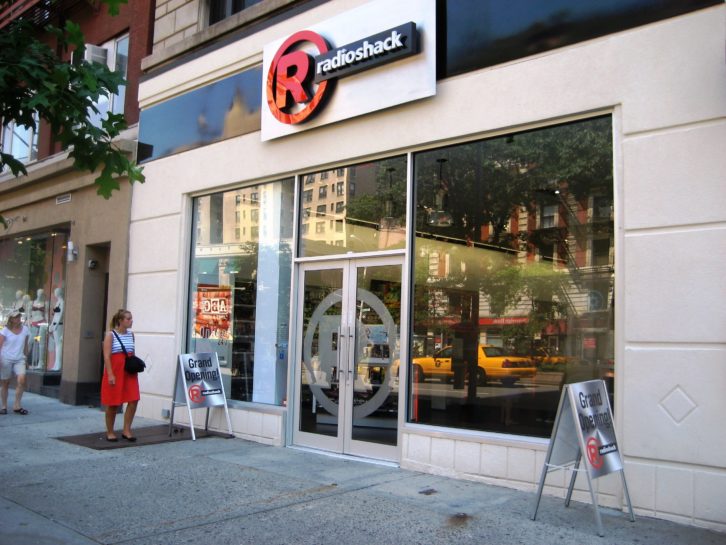
 With a U.S. strategy built around retro tech, DIY electronics, e-commerce and an expanding authorized-dealer network, RadioShack is betting that one of consumer electronics’ most recognizable names can find a new role for a new generation.
For generations of American consumers, RadioShack was the place you went when you needed something you couldn’t easily find anywhere else — a cable, battery, adapter, resistor or soldering iron, perhaps an RC car or the latest electronic gadget. Just as important, there was often someone behind the counter who could help you figure out exactly what you needed.
Luis Cuestas, Head of Commercial for RadioShack USA, describes it simply: RadioShack was “the neighborhood technology expert.”
Now the company wants to reclaim some of that identity without recreating the business model that once put thousands of RadioShack stores across America.
Under the ownership of Unicomer Group, RadioShack is rebuilding its U.S. presence through e-commerce, marketplaces and more than 170 authorized dealers while expanding its assortment of RadioShack-branded products. The strategy combines categories closely associated with the brand’s past — batteries, cables, electronic components and DIY products — with a growing emphasis on retro radios, turntables, cassette and CD players, STEM products and RC toys.
It is a comeback that draws on nostalgia but isn’t intended to depend on it.
“We really want to be a destination for retro tech,” Kevin Hamann, Managing Director for RadioShack USA, told TWICE. “Not just our branded products, but other people’s products.”
A Familiar Name, A Different Business

RadioShack brings enormous recognition to that effort, along with a complicated retail history. Founded in Boston in 1921, RadioShack eventually became one of the country’s most ubiquitous electronics retailers. By the late 1990s, it had more than 7,000 locations, including more than 5,000 company-owned stores, and built a reputation around electronics, batteries, accessories and hard-to-find parts.
But the retail landscape changed dramatically. RadioShack filed for Chapter 11 bankruptcy protection in 2015 after years of losses, and the successor business operated by General Wireless filed for bankruptcy again in 2017.
The stores largely disappeared. The brand did not.
Unicomer Group had already been involved with RadioShack in Latin America and the Caribbean for decades, as it first became a franchisee in 1998, and in 2023, the Group acquired RadioShack intellectual property assets and domains covering approximately 70 countries, including the United States.
Today, the Group owns and operates hundreds of RadioShack-branded stores outside the U.S., giving the company an established retail, product and sourcing infrastructure from which to rebuild the American business.
“They’ve already made a significant investment over the last 26 years in the RadioShack brand and their markets,” Hamann said. “It made perfect sense for them to be the stewards of the brand moving forward globally.”
Cuestas sees another asset that is much harder to build from scratch: immediate consumer recognition.
“The fact that we have that equity, immediate recognition, is extremely important,” he said.
The question is how to turn that recognition into relevance.
RadioShack believes part of the answer may lie in its past.
Old-School Tech Finds a New Audience

Some of RadioShack’s strongest-performing products today are vintage-inspired electronics, particularly turntables and retro-style radios. The company is expanding that concept into cassette players, CD players, and other products that recall earlier generations of consumer electronics while adding modern features such as Bluetooth.
RadioShack is even deliberately bringing back its older logo on selected products.
“We’re certainly trying to retain a lot of the original RadioShack look and feel,” Hamann said. “We’re deliberately using our retro logo for some of our vintage and retro products. It resonates very well with consumers.”
What has surprised Hamann is how well those products are resonating with consumers too young to remember RadioShack at its peak.
He said the company is seeing strong interest in vintage products from Gen Z, particularly around vinyl and turntables. Hamann sees the trend at home, too: His two teenage daughters are record fans.
That gives RadioShack an interesting opportunity. Older consumers may feel nostalgia for the brand, while younger shoppers can be attracted to the products without having any nostalgia for RadioShack itself.
Asked whether today’s core RadioShack customer is the longtime shopper or the younger technology consumer, Hamann’s answer was simple: “Both.”
That balance is shaping more than RadioShack’s retro assortment.
The company is bringing back soldering kits, resistors, transistors, and other components associated with its history among hobbyists and makers. Batteries and cables remain core categories, while DIY electronics, STEM products and RC toys are receiving increased attention.
What RadioShack does not intend to bring back is the enormous assortment and complexity of its former operation.
Cuestas recalled the thick catalogs that once contained a seemingly endless selection of products and parts.
“We’re deliberately deciding not to be complex,” he said.
Instead, RadioShack wants a more curated assortment built around categories where the brand has credibility and where it sees genuine demand.
Listening to the U.S. Market
 RadioShack’s international operation gives the U.S. business a substantial product pipeline. Hamann said more than 1,000 RadioShack SKUs are available through the broader organization, with the U.S. team selecting products appropriate for this market.
The company has a sourcing team based in El Salvador and an office in Hong Kong that evaluates products from various factories, attends electronics fairs in Hong Kong and China and follows emerging product trends.
But RadioShack is not assuming that a product successful in Central America will automatically work in the United States.
Hamann and Cuestas say the U.S. team is increasingly involved in shaping the assortment and feeding market information back to the sourcing organization.
“There’s a lot of bottom-up push from our end,” Cuestas said.
The team talks to dealers, monitors customer comments and identifies products or features consumers say are missing. Cuestas describes the process as a “continuous feedback loop” that helps RadioShack develop products relevant to the U.S. market.
RadioShack’s authorized dealers have become an important part of that loop.
A Capital-Light Route Back to Retail
Rather than rebuilding the massive corporate store network that once defined RadioShack, the company is taking what Hamann calls a “capital-light” approach.
RadioShack currently works with more than 170 authorized dealers in the U.S. The locations are independently operated, but they provide the brand with a physical presence while giving RadioShack direct insight into local markets.
“Relationships matter a lot in this industry,” Cuestas said.
Dealers tell RadioShack what customers are asking for, which products are moving and what price points work. For Cuestas, they function almost as extensions of RadioShack’s market research, giving the company “a read on what the market in that Middle America section is actually looking for.”
RadioShack, in turn, provides products, margin opportunities and a recognizable consumer electronics name.
There is also evidence that consumers still want a physical connection to the brand. Hamann said RadioShack’s store locator is the most-visited page on its website.
“Customers are looking to have that RadioShack store experience once again,” he said.
Growing beyond the current dealer base is now an active priority.
RadioShack sees potential partners among cellphone repair shops, independent computer stores and other local technology businesses that could carry RadioShack products and potentially adopt the RadioShack name.
The company is also looking beyond individual dealers to regional retailers. Hamann specifically pointed to members of NATM and Nationwide as logical potential partners as RadioShack looks to reach larger wholesale customers and put its products on more retail shelves.
For independent retailers and distributors, Hamann says the proposition combines brand recognition, differentiated products, margin opportunities and accessible order quantities.
“Anyone can go out and source a STEM or DIY kit or some of the nostalgic products,” Hamann said.
RadioShack’s differentiator, he argued, is the ability to offer those products with low minimum order quantities and “the strong name” attached to them.
That could be particularly relevant for independent dealers that want to experiment with categories such as retro electronics, STEM and DIY without making a large inventory commitment.
The model also gives RadioShack a path to expand its physical presence without taking on the cost of opening hundreds of corporate stores, while giving independent retailers a way to tap into the recognition the brand still commands.
What Comes Next
 RadioShack intends to continue building its assortment around retro tech, DIY, STEM, RC and components while exploring opportunities in adjacent categories.
Hamann said the company is open to licensing the RadioShack name in additional product categories, although specific discussions were not yet ready to be announced.
The company is also preparing to use CES as a showcase for the next stage of that product expansion. Hamann and Cuestas said RadioShack expects to display new vintage products, turntables, DIY kits, STEM toys and soldering products at the show.
For Cuestas, the retro products have already demonstrated their ability to draw attention at CES.
When attendees see the record players alongside the RadioShack name, he said, “they kind of reminisce and go back” to their memories of the brand.
That reaction captures both the opportunity and the challenge facing the new RadioShack: Nostalgia can get someone’s attention, but the company still has to give that customer — and its retail partners — something relevant to buy today.
Rebuilding the Neighborhood Technology Expert
RadioShack’s challenge is no longer whether consumers remember its name. It is whether the company can give them a new reason to seek it out. The strategy taking shape is an attempt to connect RadioShack’s history with today’s CE market rather than choose between them.
Retro products can attract consumers to the brand, while batteries, cables, and accessories preserve the utility long associated with it. DIY products, soldering kits and components reconnect RadioShack with makers and hobbyists. STEM and RC products offer a potential introduction to another generation. And the authorized-dealer model provides a physical presence without rebuilding the costly infrastructure of the past.
Hamann sees an opportunity for RadioShack to become a leader in DIY and STEM kits, RC toys, and retro technology while continuing to broaden the assortment.
But perhaps the clearest picture of what the company is trying to recapture comes from asking Hamann and Cuestas what the old RadioShack meant to them.
For Hamann, it was somewhere consumers went to discover new products, build something, or find the part needed to make a repair — particularly when that part was difficult to find elsewhere.
“The old RadioShack was somewhere where you would go discover new products,” Hamann said. “Where you went and came back home to build something, or fix something.”
For Cuestas, it was “the neighborhood technology expert,” bringing new gadgets and technology expertise into local communities long before e-commerce put an almost limitless electronics assortment at consumers’ fingertips.
That retail world has changed, and RadioShack’s new management isn’t trying to recreate it.
Instead, the company is betting that the qualities that made RadioShack distinctive — discovery, utility, expertise, and the satisfaction of building or fixing something yourself — still have value.
The new RadioShack just intends to deliver them differently.
Retailers, distributors, OEMs, and other industry partners interested in RadioShack USA products, dealer opportunities, or potential partnerships can contact [email protected].
See also: Exclusive Interview: Kevin Hamann, Managing Director Of RadioShack USA