The consumer electronics business naturally revolves around upgrades. When customers buy larger TVs or new surrounds, they usually end up replacing aging AV receivers to gain the latest in connectivity. For dealers, a useful question to ask during that transaction is: What are you doing with the equipment you already own?
An AV receiver that can’t meet the needs of a new system may still be perfectly capable of powering a different system. This concept may present the opportunity to help clients get more value from equipment they already own while opening the door to sales from passive speakers, subwoofers, streaming sources, cabling, and installation accessories.
Rather than treating every upgrade as a complete replacement, dealers can help customers think of older AV gear as the starting point for a second system – and a receiver can serve as the starting point for those conversations.
If a new receiver is purchased, additional speakers will be required for either the old or new receiver. A garage, workshop, home gym, basement, or secondary TV room rarely needs the same caliber of electronics and speakers as a primary theater. An existing receiver paired with a set of passive speakers can create a noticeable audio upgrade in one of these spaces, and customers will be more likely to decide to initiate an additional project if they know reusing existing equipment lowers the cost.
That also gives dealers an opportunity to uncover needs that may not have been part of the original transaction. Asking where else the customer listens to music, watches TV, or spends time at home can reveal spaces where better audio would be appreciated but where a completely new electronics/speaker investment might be difficult to justify.
Matching the Old Receiver to the Right Job
Of course, reusing equipment only works when the technology still makes sense for the application. When performing this evaluation, dealers should:
- Check speaker impedance and power requirements
- Determine whether the Receiver is Stereo only, Dolby Pro Logic, or Dolby Digital. If Dolby Digital, is it 5.1, 7.1, etc.
- Confirm which inputs and outputs remain useful
- Ensure the unit is in good working condition and not overheating.
- Determine whether the receiver supports the sources the customer actually plans to use
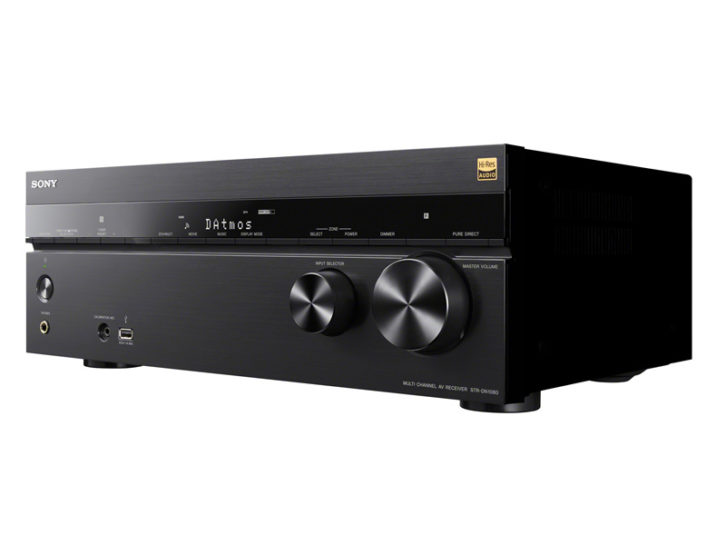 Following this checklist, dealers can consider the intended use. A receiver without current HDMI capabilities may no longer belong at the center of a new 4K or 8K theater, but that limitation may be unnecessary for a secondary video/music system or stereo listening room.
Likewise, an older model that lacks today’s wireless features could still become useful with the addition of an inexpensive streaming source. The key is matching the remaining capabilities of the product to the intended use where missing features may not matter.
There is also value in knowing when not to reuse the receiver. If a unit has reliability or overheating issues, damaged connections, or is simply incompatible with the speakers and sources being considered, the better recommendation may be recycling and replacement.
Secondary Systems Create New Sales Opportunities
The equipment a customer already owns can be the beginning of an opportunity for a new sales conversation.
A repurposed receiver may lead to a new pair of speakers, which may later include a subwoofer. A later home remodel or addition could result in a secondary TV room that might require L/C/R’s, surrounds, a subwoofer, wire, mounting accessories, etc.
BIC America offers affordable speaker solutions for both main and secondary systems. BIC has a reputation for performance that matches the highest visibility brands but at significantly lower price points. BIC has received many “Best Value” ratings when compared to other brands as well as high marks from consumer reviews. BIC’s market niche is for high-quality loudspeakers beginning below $150/pr to $499 each.
As a final thought, before an old AVR disappears into a closet, it is worth asking one more question: Where else in the house could we put it to work?
See also: Onkyo Expands Creator Series Beyond The Desktop With GX-AiO Systems