[Author’s Note: The opinions expressed in this article are solely those of the author and do not reflect the views of either TWICE or Future.]
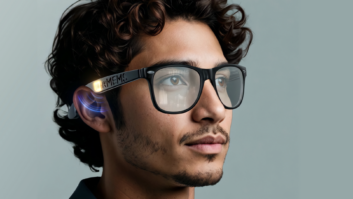
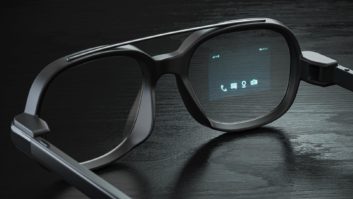
In the last month, two companies, Meta and Rokid, have announced next-generation smart glasses with a heads-up display lens. On both smart glasses, text and graphics appear on the lenses, seeming to float in front of a wearer’s eyes.
These heads-up displays seem to bring smart glasses closer to what Facebook and Meta doyen Mark Zuckerberg has been boldly predicting for the last year: that smart glasses would soon replace the smartphone.
“We’re going to get to this point, probably sometime in 2030, where you have your phone with you, but it’s gonna stay in your pocket more because you’re just gonna be doing more and more things on your glasses that maybe today you would do on your phone,” Zuckerberg asserted. “[G]lasses will be your main computing platform.”
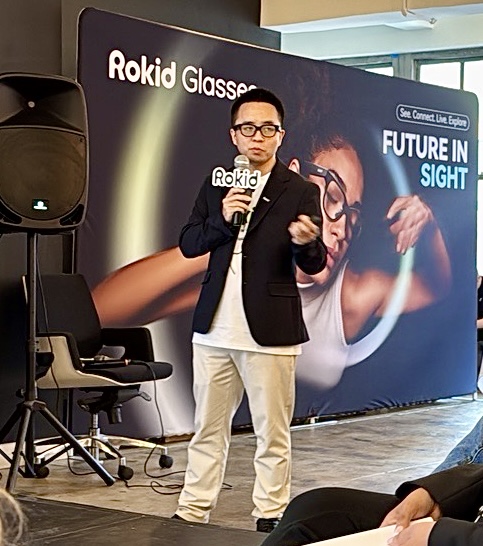
With his Meta XR platform, Zuckerberg and Rokid are investing millions, if not billions of dollars, to bring his smart glasses vision into focus.
“AI plus AR convergence is pushing AI glasses to become the next smartphone,” agrees Zoro Shao, Rokid’s global GM.
As impressive as these early generation heads-up display smart glasses appear, however, Zuckerberg’s ultimate smart glasses-smartphone replacement theory faces some on-the-ground, real-world usage issues.
Meta and Rokid Specs
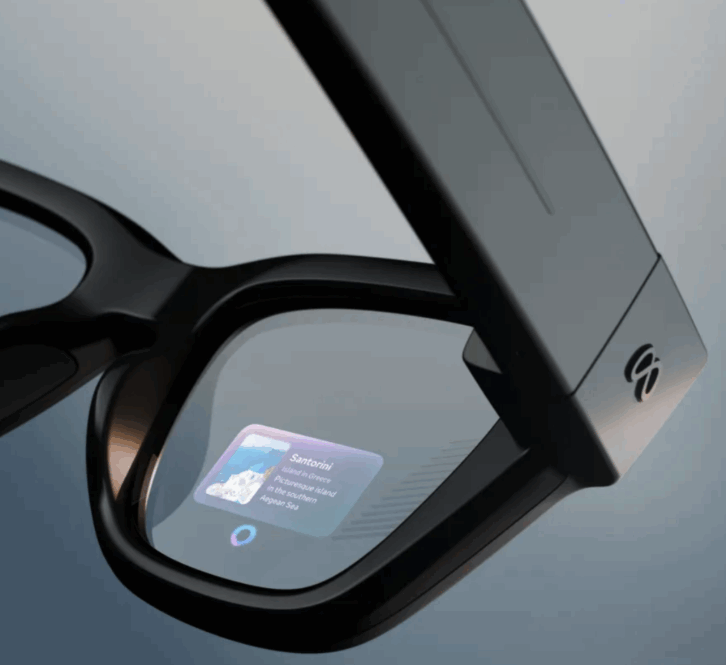
Meta’s new Ray-Ban Display smart glasses ($799) are due to hit store shelves on September 30. Each pair of Meta Ray-Band Display will come with a Meta Neural Band, an EMG (ElectroMyoGraphy) wristband that enables smart glasses control via hand movements. Ray-Ban Display is Meta’s third gen smart glasses; the first two generations lack Display’s heads-up capability.
The lesser-known Rokid, founded in 2014 in Hangzhou, China, has been working on smart glasses since 2018, and just unveiled its latest Rokid AI/AR smart glasses ($599), now available for pre-sale on Kickstarter.

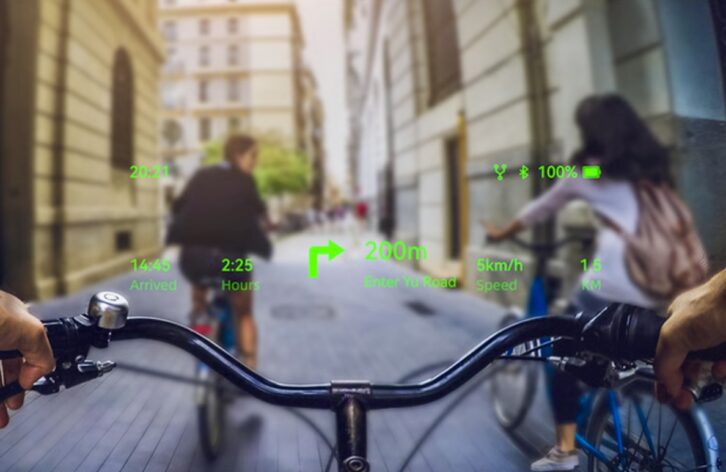
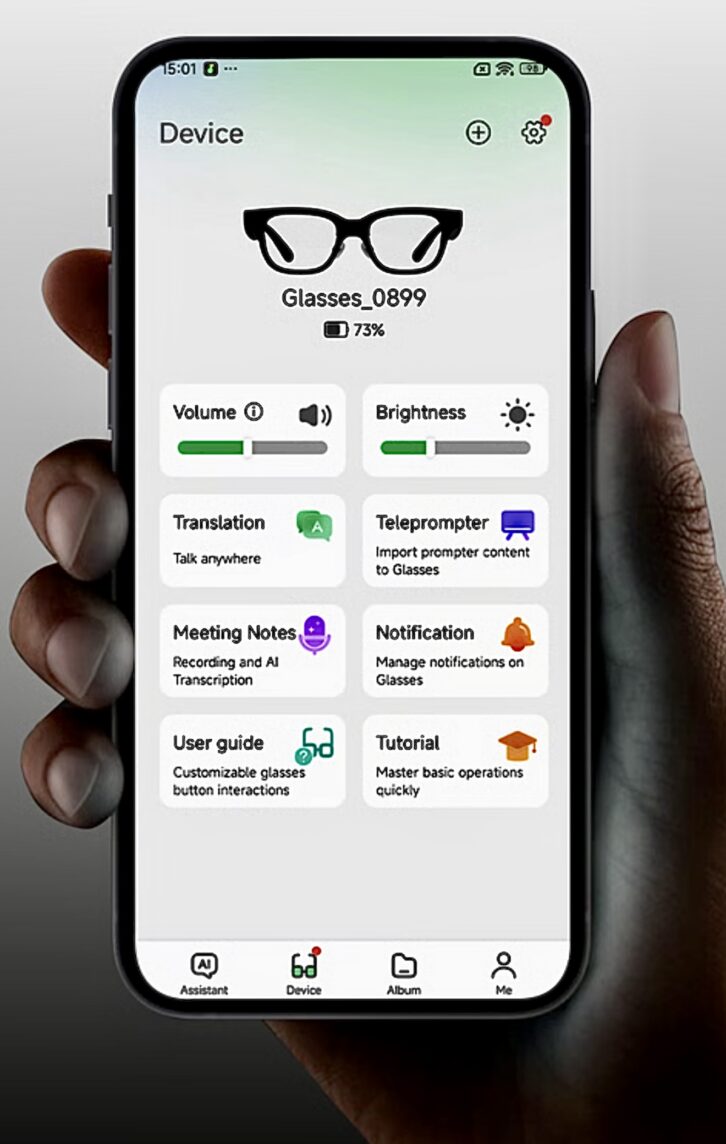
Both Meta’s and Rokid’s smart glasses feature a swath of handy AI and AR features, and both augment the heads-up display with aural AI assistant answers via personal speakers embedded in the glasses’ temples (earpieces). Both also offer GPS directional and language translations in their displays. Rokid says it can instantly translate up to 80 languages, with more to come; Meta doesn’t specify the number of languages the Display can translate. Rokid says its glasses can also offer “closed captioning” for the hearing impaired, music lyrics, object identification, and even a TV-like teleprompter for public speaking or presentations.
Embedded in the right Meta Display lens is a 600x600p full color display. Meta Display frames are equipped with a 12MP camera supplying 1440×1920, 30 FPS video with 3x digital zoom, twin speakers in each of the temples, and six microphones – two in each temple, one near the nose pad, and one contact mic.
Cleverly, any attempt to block the “recording on” LED will disable the camera and prevent any surreptitious recording.
Battery life is six hours of mixed use, 30 hours with additional recharges from the case.
Rokid’s glasses include a 12MP/1680p/60 fps HDR camera capable of 4:3, 3:4, and 9:16 display ratios. Embedded in the flexible temples are four embedded noise-reducing microphones and directional dual driver open near-ear AAC speakers.
Rokid boasts its glasses provide “all-day” battery life, but at most the glasses’ 210 mAh battery will last 7-8 hours on standby, 5 hours for listening to music, and up to 20 minutes to record video. The recharging case includes an additional 3,000 mAh of charging.
Both Meta and Rokid glasses can store up to 32GB of video or images.
Meta and Rokid Displays

Unlike Meta Display’s single lens, Rokid provides text and graphics arrays in both left and right lenses. While Meta’s single lens display looks like a traditional color screen, which means it can offer video phone calling, Rokid’s graphics seem a bit more like an old-fashioned MS-DOS green text and graphics, which actually may prove to be more easily discernible. But we’ll delay final judgment once we get our hands on samples of both.
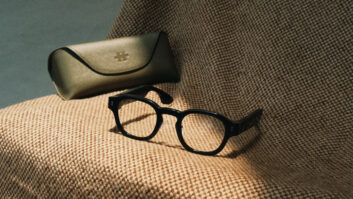
Meta Ray-Ban comes in either sand or black, while Rokid’s are available only in basic piano lacquer black, but hint that more style varieties are coming. Both Meta and Rokid frames come in a single size.
For those who need corrective lenses, consumers will be able to order prescriptive lenses to be fitted into the smart frames either online or in a participating retailer – opticians LensCrafters, Sunglass Hut, and Ray-Ban stores at the moment.
Rokid’s prescription glasses solution is quite clever. Instead of fitting the frames with lenses, consumers can order prescription lenses that then magnetically clip into the inside of the frame. Front magnetic clip-on sunglasses will become available sometime this fall. Rokid, however, is still looking for a certified lens supplier partner in the U.S.
Can Smart Glasses Replace Smartphones?

Those are the display-capable smart glasses details. Now the question is, is Zuckerberg right about the future smart glasses hegemony?
IMHO, no.
Zuckerberg correctly notes that billions of people worldwide already wear glasses, inferring this is a natural consuming constituency. An estimated 4 billion people wear prescription eyewear and according to the Vision Council, an estimated two-thirds of Americans wear glasses or contacts. But these naked statistics disguise an uncomfortable fact: people who wear glasses HATE wearing glasses.
More than 40 million LASIK procedures have been performed, and about 140 million people – including Zuckerberg himself – wear contact lenses. Not even Zuckerberg himself likes wearing what he predicts will replace smartphones.
More importantly, time and again over the last century, the buying public has displayed a distinct aversion to tech-based eyewear.
During the 1920s, the 1950s, and the 2000s, the movie industry and, recently, TV makers, tried to sell us on 3D, which required wearing glasses. All three times, 3D failed. People just didn’t like wearing glasses to watch movies in the theater or at home.
There was an effort to sell people personal home theaters – movie headsets – which also failed to find an audience.
And then there’s the Google Glass fiasco.
Finally, VR has still failed to find oft oft-predicted mass consumer adoption. VR instead illustrated consumer reluctance to wear tech eyewear that cuts them off visually from the “real” world, even for a limited period.
Smart glasses purveyors count on their devices’ AI and hands-free benefits to overcome this repeated consumer rejection of tech eyewear.
But wait, there’s more working against smart glasses as a smartphone replacement.
A Matter of Convenience
Historically speaking, truly disruptive technologies are demonstrably more convenient than the technology they are replacing.
Smart glasses are not more convenient than smartphones.
Yes, smart glasses are potentially “handier” than smartphones since they sit right on your face vs. having to pull a smartphone from a pocket. Yes, having translations or directions appear before your eyes is more convenient than looking up and down to a smartphone screen.
But travelers will still need a smartphone to “speak” back to the non-English speaking respondent in their native tongue, and on-lens directions are for pedestrians only, since having text and arrows appear on your glasses while you’re driving, the most common use of GPS, is not exactly safe.
Display smart glasses wearers also will not be fond of unwanted push notifications, texts, and other unwanted missives suddenly popping up while they’re driving, at the movies or a concert, during a date or a meeting, or any time. Smart glasses wearers will have to somehow keep unwanted messages from appearing on their lenses but continue to have them show up on their smartphone screen.
Less convenient is smart glasses’ limited battery life, rarely more than 5-8 hours of normal usage. The idea of having to charge your glasses several times a day is not only weird but also incredibly inconvenient since a vision-impaired user won’t be able to do much while waiting for them to recharge. And smart glasses wearers will have to schlep around a charging case, something standard spectacle wearers don’t need to do.
Smart Glasses Prescriptions and Style
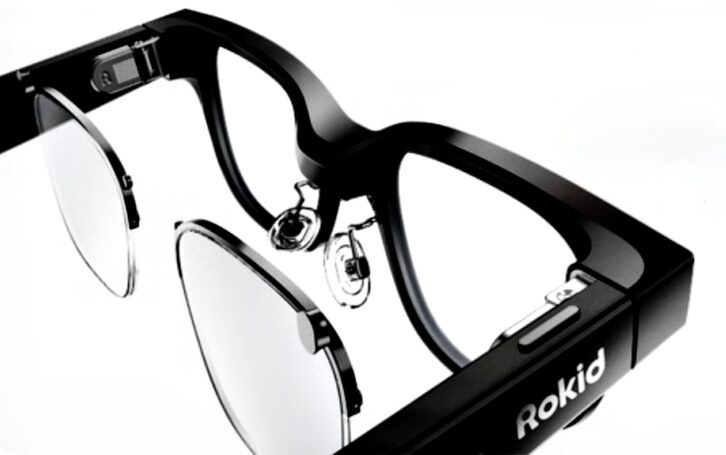
Then there’s the issue of prescription lenses. As noted, around two-thirds of prospective smart glasses buyers in the U.S. already wear corrective eyewear.
Prescription lenses substantially raise the price of smart glasses – anyone who wears glasses is aware of the wide variety – thicknesses, coatings, transition, etc. – and high cost of prescription lenses. Consumers will soon discover that the cost of prescription lenses – thin pieces of plastic – could be higher than the technically sophisticated smart glasses frames themselves. And unlike other new tech, high-priced prescription lens prices aren’t going to magically shrink even if the price of the smart glasses does.
To get prescription lenses for any smart glasses, consumers first need to get their prescription from their optometrist. And since many opticians will not install lenses into frames they don’t sell, consumers are forced to buy and get their new prescription lenses fitted into their existing smart glasses frames by the limited choice of official smart glass vendor partners.
All things considered, the total price for smart glasses fitted with prescription lenses could top $1,000. And that price doesn’t include the cost and chore of having to replace lenses when a prescription changes. Fortunately, you won’t have to get all-new smart glasses with new prescription lenses. Rokid’s lens-only replacement solution will make the new prescription process cheaper, and LensCrafter’s told us they will replace the lenses in current smart glasses frames, although it’ll take a couple of weeks and could cost up to $500.
Even if one doesn’t need prescription lenses, smart glasses styles aren’t exactly the height of fashion. The electronics and batteries in smart glasses require space, resulting is thick and dark colored styles and limited sizes. A person with a smaller face may find that smart glasses make them look like Urkel.
Disruption or Accessory

So, again, will smart glasses replace smartphones?
Current smart glasses technology and functionality make them a smartphone accessory. At $699 or $799 for the Rokid and Meta display smart glasses, they make an expensive accessory, pricier than most smartphones. Add in the cost of prescription lenses, and their accessory cost moves beyond accessory to a standalone device that doesn’t replace anything.
Additionally, smart glasses can be bought only from limited sources – online from the vendor or in-vendor partner opticians who can install prescription lenses. This limited retail distribution is hardly part of the recipe for a truly disruptive, smartphone-replacing device.
Given all of these and other unexplored unintended distribution and use case consequences, it’s hard to see how smart glasses will replace the smartphone at any time in the foreseeable future.
See also: Rokid Unveils World’s Lightest AI & AR Smart Glasses