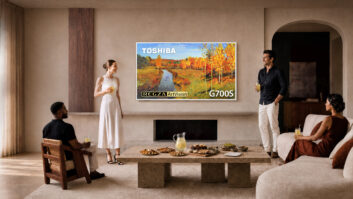
 Televisions have been a fixture in many homes for so long that we’re used to seeing blank screens when nobody’s watching anything. As display technology improves, it opens up better ways to integrate a TV directly into a home’s interior design rather than accepting and working around a black rectangle. Perhaps foremost among these strategies is the art TV, a display that shows art and photos in high resolution when it’s not needed for typical video tasks. Let’s explore a few highlights in the art TV space from CEDIA Expo 2026.
What makes an art TV?
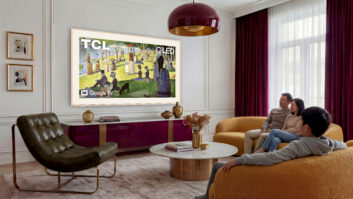
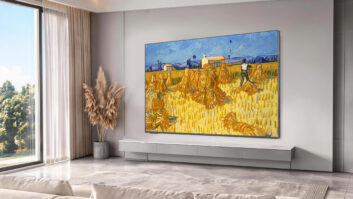
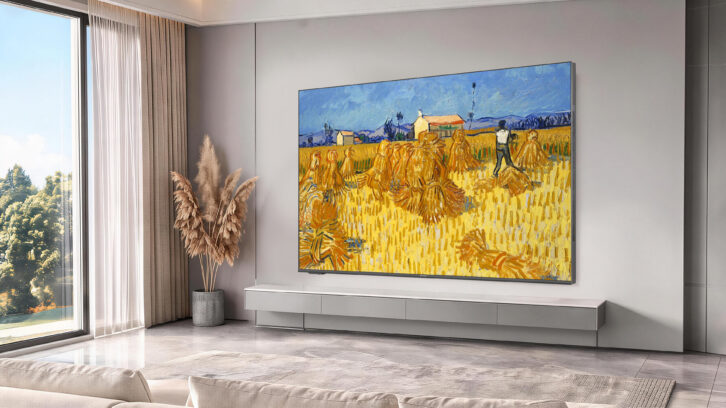
While it’s true that any modern display can show art, the design of an art TV aims to closely match the quality of a premium print. There are three things that help define a typical art TV: a matte finish, a premium frame, and a subtle backlight. Using a matte finish allows clients to better appreciate the art on display by cutting down on distracting reflections. Encasing the art TV in a premium frame immediately distinguishes it from an ordinary television set while allowing nearby art to flourish. Lastly, a subtle backlight gives the art TV flexibility to fade into the background rather than draw attention at all times.
Skyworth and Sony turned heads at CEDIA
 One of the most impressive TV booths at CEDIA was that of Skyworth, one of the largest television manufacturers in the world. The booth featured an entire wall of the impressionist Georges Seurat painting, A Sunday Afternoon on the Island of La Grande Jatte, with four art TVs forming part of the image. This helped the Skyworth C2 Canvas Art TV earn a Best of Show 2026 award from TWICE.
While Skyworth is most familiar to customers outside the United States, the brand now distributes retail brands like Philips and Panasonic stateside via licensing agreements. Notably, the Skyworth brand is entering the U.S. market in the luxury and custom integration spaces, with a large emphasis on its premium Canvas series art TVs.
These flush-mount QD-Mini LED displays aim to balance still image quality for artworks with a 144Hz refresh rate that allows them to meet the needs of demanding clients expecting strong performance when gaming or watching media using the built-in Google TV controls. Although each unit supports the Art Time function with over 400 included artworks—both public domain and licensed—users also have access to AI art generation and the option to use their own images on the display. The display can adapt to a schedule and lighting conditions to ensure it doesn’t create too much light at night.
To better cater to client needs, Skyworth now partners with HydroFrames to enhance the experience with custom-built wooden frames. This means a client can share their frame preferences with dealers to find the ideal complement to their interior design. HydroFrames then manufactures the frame to fit each Skyworth model precisely so retailers won’t need to source another specialist during a job.
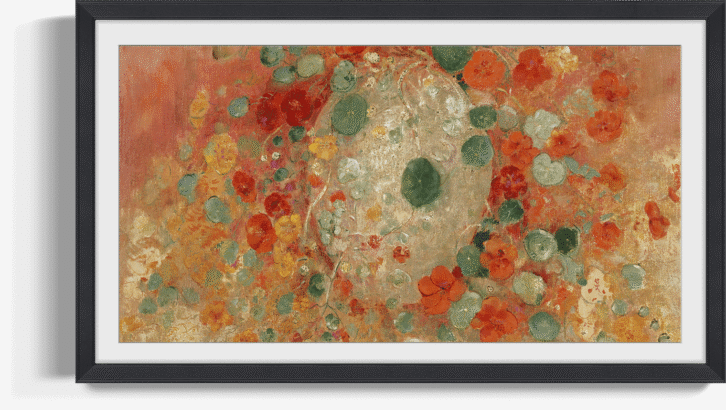
Sony’s approach to art TVs differs from Skyworth’s in that it adds art-focused features to its Bravia series through its collaboration with the Leon Studio Frame. The company’s booth was the first thing many CEDIA Expo 2026 attendees saw upon entering the show floor, so its art TVs were front and center, with other Leon frames occasionally appearing in other booths throughout the venue.
Leon’s product not only offers four finishes for its frames, but also unlocks an exclusive Gallery Mode to display museum-quality art when the Bravia TV is idle. One major benefit of the Leon Studio Frame is its option to match each frame with a matching soundbar—the Leon FrameBar—that mounts below the Sony Bravia set and its frame. This allows retailers to suggest an audio option that ties the experience together without compromising the visual aesthetic.
Art TVs are likely here to stay
Unlike some tech trends, art TVs tap into interior design sensibilities to create impactful, yet subtle experiences that feel timeless. It’s almost like stepping out of the house and into a personal art gallery. Retailers should take note, as clients seem ready to embrace the aesthetic.
See also: