 Every once in a while, you come across a product that simply blows your mind. Something you’ve been wishing for, asking for, and wondering why nobody has invented for years.
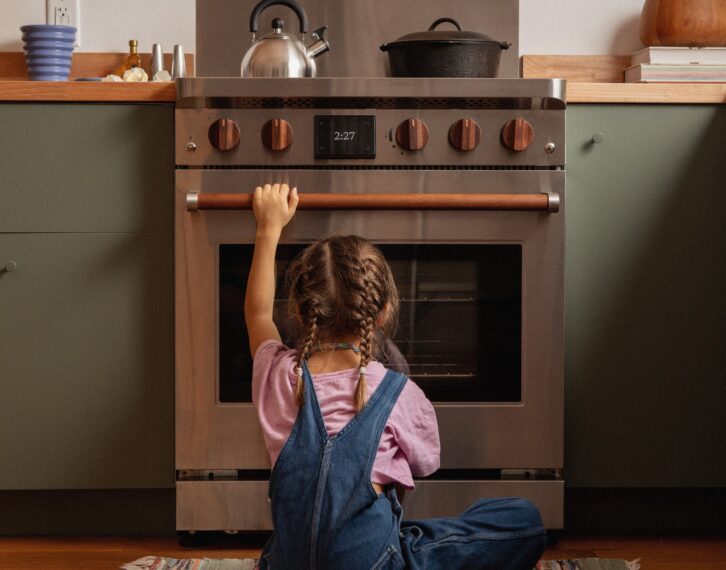
Imagine a full-size induction range that plugs into a standard 120-volt household outlet. No expensive electrical upgrades. No complicated installation. Just plug it in and start cooking.
Incredible, right?
But wait. It gets even better.
What if that same range had a built-in battery that lets you keep cooking even when the power goes out? And what if it could boil water faster than gas and deliver the kind of precision you’d expect from a premium cooking appliance?
Sounds almost too good to be true.
Well, meet Charlie, the battery-equipped induction range from Copper, a company that’s not just rethinking how we cook but potentially changing the future of the appliance industry.
And for independent appliance retailers, Charlie could be one of the most exciting new products to hit the showroom floor in years.
 The Secret Is in the Battery
Founded in 2022, Copper set out to solve one of the biggest obstacles preventing consumers from switching to induction cooking: the cost and complexity of electrical upgrades.
“Copper was founded in 2022 with a simple goal: make electrification easier and obvious,” said Weldon Kennedy, Co-Founder and Chief Commercial Officer of Copper. “Cost, infrastructure, and familiarity are three of the biggest barriers to switching from gas to induction.”
Charlie’s breakthrough is its integrated 5-kWh battery, which stores electricity and supplies additional power when cooking demands exceed what a standard 120-volt outlet can provide.
The result is a full-size induction range that delivers premium cooking performance without requiring the dedicated 240-volt electrical connection typically associated with conventional induction ranges. The latest Charlie also supports 240-volt connections.
And the potential savings are substantial.
According to Kennedy, upgrading electrical infrastructure for a conventional induction range can cost approximately $3,000 in a typical single-family home, on top of the appliance’s purchase price.
With Charlie carrying a $6,799 MSRP, the economics become interesting. A consumer purchasing a conventional $3,000 induction range could end up spending approximately the same amount once electrical upgrades are included.
But Charlie also provides a built-in battery, backup cooking capability and premium performance.
“Charlie is a premium cooking experience, and it is a fun twist that you may save time and money compared to buying a cheaper range,” Kennedy said.
Copper says installation typically takes just 30 to 60 minutes when a suitable existing outlet is available.
For retailers, that’s a powerful selling proposition.
 Performance That Gets Your Attention
Of course, convenience means little if an appliance doesn’t deliver where it matters most: cooking.
And Charlie’s specifications are impressive.
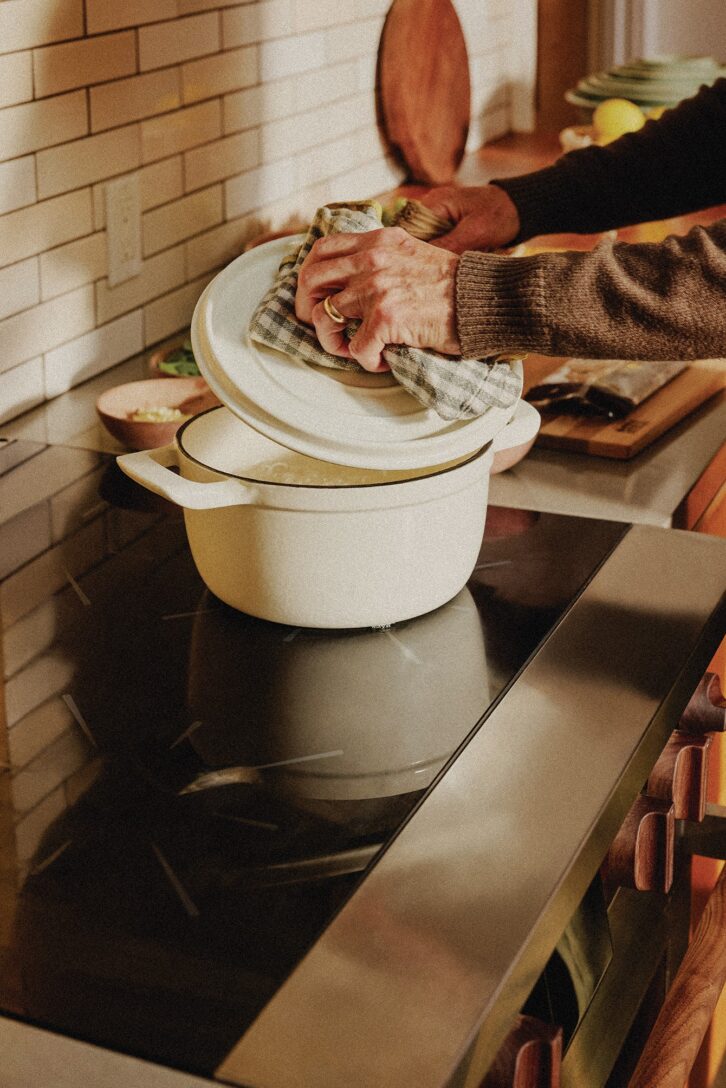
The range features four induction cooking zones, each offering 22 heat settings. According to Copper, its peak cooking power can boil water two to three times faster than a high-quality gas stove.
But the oven may be even more remarkable.
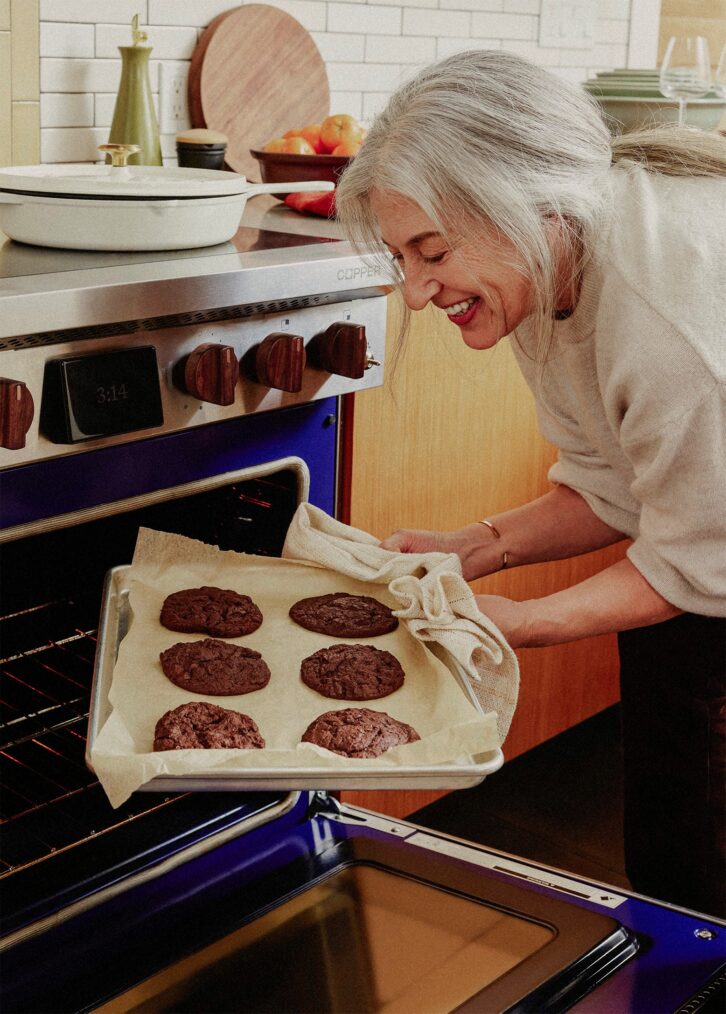
The latest Charlie can reportedly preheat to 350 degrees Fahrenheit in just three minutes and 50 seconds.
That’s right. Less than four minutes.
Copper also claims the oven delivers temperature control up to 30 times more precise than the industry standard, maintaining temperatures within one or two degrees of the selected setting across a range of 80 to 550 degrees Fahrenheit.
The newest generation features a more powerful cooktop and broiler, along with an updated design manufactured by Miele.
Despite the advanced technology, Copper has deliberately kept the cooking experience familiar.
Instead of complicated touchscreens, Charlie uses traditional knobs and straightforward power-level displays.
“We designed Charlie to be beautiful, intuitive, and free of unnecessary distractions, with familiar knobs instead of touchscreens,” Kennedy explained.
It’s a thoughtful approach that could make the transition from gas to induction less intimidating for consumers.
 When the Lights Go Out, Keep Cooking
Here’s another feature that makes Charlie particularly interesting: Its battery allows cooking to continue during a power outage.
According to Kennedy, the integrated battery can support approximately three to five meals during an outage under moderate-use conditions.
Copper recommends conserving battery power by using lower heat settings and limiting oven use when electricity is unavailable.
But the battery offers another potentially valuable benefit, even when the electricity is working perfectly.
Charlie can use stored energy during peak electricity pricing periods, reducing the amount of power it needs to draw from the grid when rates are highest. Its intelligent charging system can replenish the battery when electricity is less expensive or cleaner, potentially helping homeowners lower their energy bills.
For consumers whose utilities offer time-of-use pricing, that could translate into meaningful savings over time, depending on local rates, cooking habits, and how the battery is managed.
Think about it: You could be preparing dinner during one of the most expensive electricity periods of the day while relying on energy stored earlier when rates were lower.
That’s a benefit most conventional cooking appliances simply cannot offer.
Wi-Fi connectivity enables software updates intended to extend battery life and allows Copper to diagnose certain service issues remotely. The range comes with a two-year manufacturer’s warranty.
For consumers, Charlie’s battery offers more than protection during blackouts. It introduces a smarter approach to household energy use.
A Solution for Older Homes and Apartments
Charlie’s technology could be especially valuable in cities such as New York, where aging electrical infrastructure and limited kitchen space often make conventional induction installations expensive or impractical.
The standard 30-inch range fits into many existing kitchen openings without requiring additional space.
Copper is also working with housing authorities, property owners, and developers to bring battery-equipped induction cooking into multifamily housing.
In New York City, the company is involved in an initiative with the New York City Housing Authority, the New York Power Authority and the New York State Energy Research and Development Authority to bring 10,000 induction stoves to public housing.
Pilot installations include both 24-inch and 30-inch models.
Copper reports that hundreds of Charlie ranges have already been installed in affordable multifamily properties.
At one Los Angeles location, the company says its technology helped avoid approximately $800,000 in electrical upgrades.
That’s a staggering number—and one that illustrates how battery-equipped cooking could make large-scale electrification projects more practical.
For appliance dealers serving builders, property managers and multifamily developers, it could also represent an important new business opportunity.
 A New Opportunity for Independent Dealers
Copper isn’t taking the traditional mass-market approach to appliance distribution.
Instead, the company is concentrating on independent luxury appliance retailers.
In September 2026, Copper made its New York City retail debut at Royal Green Appliance Companies in Tribeca, giving consumers the opportunity to see and experience Charlie firsthand.
The company says its retail presence now stretches from Alaska to Florida and from Los Angeles to New York City.
“These are exclusively luxury appliance retailers; we don’t sell in big boxes,” Kennedy emphasized.
That strategy gives independent dealers access to a differentiated product with a compelling story.
And Charlie may be particularly well suited to live demonstrations.
Kennedy shared an incident at Royal Green that illustrates the opportunity.
Chief Commercial Officer Stuart Stone overheard a salesperson telling a customer interested in replacing a gas range that a 120-volt induction stove didn’t exist.
Stone stepped in, introduced the customer to Charlie and invited the shopper back for a demonstration.
After seeing the range in action, the customer purchased it on the spot.
“The in-store experience is essential for a breakthrough technology like Charlie,” Kennedy said. “Experiencing battery-equipped induction firsthand helps people fully appreciate its performance, design, and familiar controls.”
Because Charlie operates from a standard household outlet, retailers can demonstrate it without installing the specialized high-voltage connections generally required for conventional full-size induction ranges.
Copper also supports dealers with sales training, promotional events, customer traffic initiatives and service assistance.
The company trains dealer delivery and service teams or offers access to its existing network. Charlie’s Wi-Fi connectivity also enables remote diagnostics and, in some cases, service resolution without an in-person visit.
For independent retailers looking to stand apart from big-box competition, Charlie offers something increasingly difficult to find: a product customers may never have seen before, with benefits that can be demonstrated on the showroom floor.
Could Batteries Be the Future of Appliances?
Copper’s ambitions extend well beyond induction cooking.
Kennedy believes battery technology could eventually become commonplace throughout the appliance industry, improving performance, providing backup power, and allowing household products to use electricity more intelligently.
“We believe in the future most appliances will have batteries in order to boost their performance and provide resilience,” he said.
Imagine a future in which thousands of appliances store electricity when it is less expensive or more readily available, then use that energy during periods of peak demand.
Those appliances could become distributed energy resources, helping reduce strain on the electrical grid while potentially lowering household energy costs.
“Our vision is to make energy storage an easy part of everyday life, rather than another infrastructure project for households to manage,” Kennedy said.
It’s an ambitious vision, but Charlie offers an intriguing glimpse of what that future could look like.
A full-size induction range that plugs into a standard 120-volt outlet would be impressive enough. Add a built-in battery, backup cooking capability, the potential for peak-hour energy savings, exceptional performance claims, and the opportunity to avoid thousands of dollars in installation costs, and you’ve got something that deserves attention.
For consumers, Charlie could remove one of the biggest barriers to switching from gas to induction.
For independent appliance retailers, it provides an exciting new product story and an opportunity to demonstrate technology that challenges conventional thinking.
And for the appliance industry, it raises a fascinating question: Could batteries become as important to tomorrow’s appliances as motors, compressors and heating elements are today?
Every once in a while, a product comes along that makes you wonder why somebody didn’t think of it sooner.
Copper’s Charlie just might be one of those products.
For more information, visit copperhome.com.