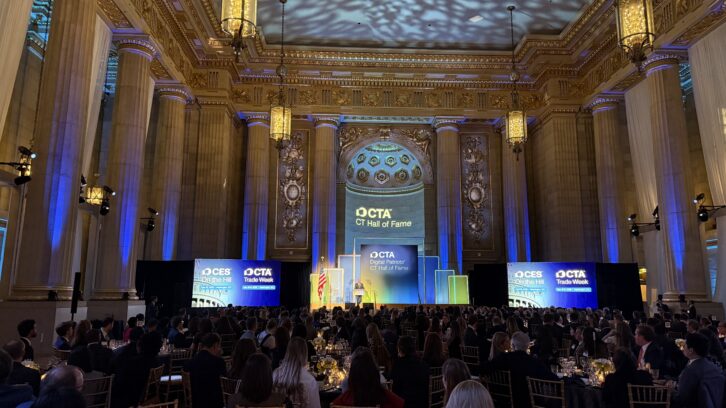
Capitol Hill lawmakers, Silicon Valley founders, and even a White House advisor all delivered a unified warning: without a coordinated national strategy on AI and a renewed commitment to free markets, the U.S. risks ceding its technological edge.
These sentiments were all ardently expressed at CTA’s annual Digital Patriots/Hall of Fame dinner, held April 21 at Washington, D.C.’s cavernous neo-classical Andrew Mellon Auditorium. The event brought together members of Congress, including Sen. Rand Paul (R-KY), and Reps. Jay Obernolte (R-CA) and Ted Lieu (D-CA), along with White House Science and Technology Advisor Michael Katsios, were honored as Digital Patriots. Former Nintendo executive Reggie Fils-Aimé and Reddit co-founder Alexis Ohanian were inducted into the CTA Hall of Fame.
Across all the acceptance speeches, the message was consistent: U.S. innovation, especially AI, must be encouraged, protected, guided, and shared, ideas encapsulated by CTA president and CEO Gary Shapiro, who emphasized the link between American values and technological progress.
“The U.S. is the best place in the world to build and grow a new business,” asserted Shapiro, due to shift to his new position as CTA executive chair on May 1. As emerging technologies like AI reshape industries and the mid-term elections creep closer, Shapiro urged policymakers and industry leaders alike to “look at the facts on the ground” and work collaboratively to shape the future.
Free Markets and the Innovation Engine
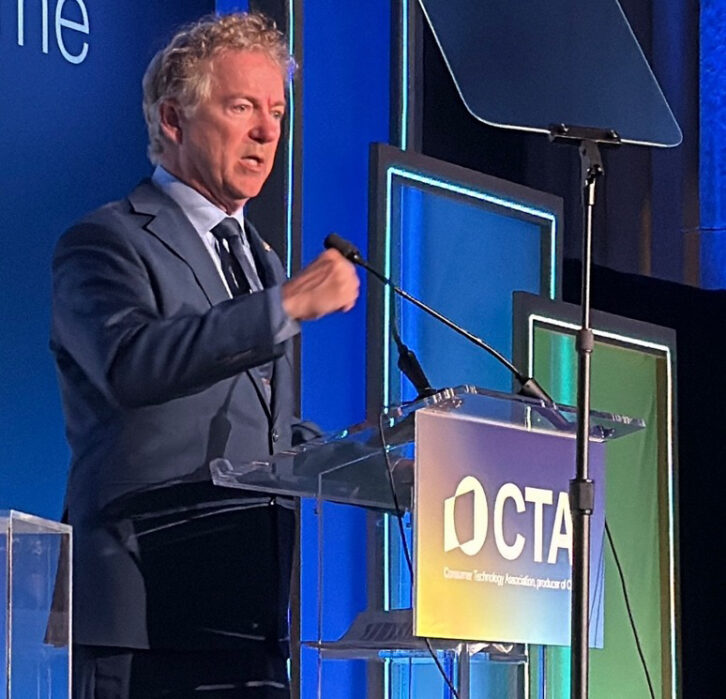
Sen. Paul delivered one of the evening’s most impassioned speeches, warning against policies he argued could undermine U.S. competitiveness.
“What made America great was basically free markets, trade, capitalism,” Paul almost angrily declared. “We are made richer by trade. Everybody used to know this. It was understood by everyone from Adam Smith to Milton Friedman. It was taught in every university, Republican or Democrat, every university taught the benefits of trade. In fact, trade isn’t something unusual. It’s not like this peculiar thing we do. Trade is simply an aspect of capitalism. If capitalism is good, trade is good.”
Paul also pushed back against his own party’s embrace of tariffs. “I worry that my party is going to become the party of the Middle Ages, that we’re going to be the party that loses all knowledge and runs on this populism. That makes no sense. But I will tell you that it takes brave people in Washington to stand up and say there are repercussions to both people in office as well as groups and businesses. I have businesses every day telling me, yes, they’re killing us with these tariffs, yes, we’re being hurt. But we can’t say anything.”
Shapiro reinforced Paul’s free trade message, cautioning that the current “zero-sum approach to trade policy” would “slam the brakes on American innovation” at a time when global tech competition – particularly from China – is intensifying.
Push for Federal AI Framework
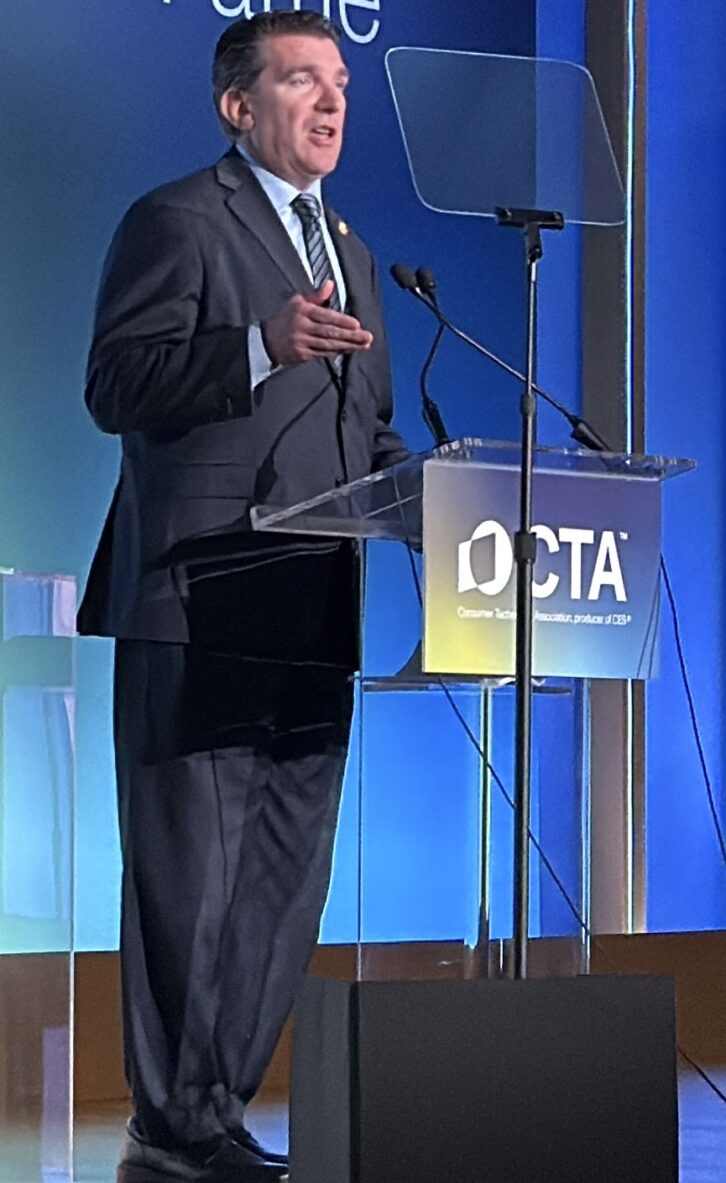
While Paul emphasized economic fundamentals, lawmakers more directly involved in technology policy focused on the urgent need for a coherent national AI strategy.
Rep. Jay Obernolte, co-chair of the House AI Task Force and the only member of Congress with a graduate degree in AI, warned that the current patchwork of state-level regulation threatens innovation.
“We have 50 different states going 50 different directions on AI regulation,” Obernolte carped, noting that large companies might be able to navigate that Tower of Babel of regulation, but startups cannot. “The people that can’t deal with that complexity are two folks in a garage somewhere trying to start the next Google or the next Apple.”
Obernolte argued for a balanced federal framework, one that protects against misuse while preserving the entrepreneurial spirit that drives the tech sector. He then hung out a rhetorical help-wanted sign for AI knowledgeable representatives and advisors.
“You are honoring fully half of the computer scientists in Congress tonight,” Obernolte quipped. “That’s not enough. We are underrepresented. We need reinforcements. Please send them to us, because we are embarking on this journey of regulating these technologies. And I don’t have to tell you that Congress isn’t particularly a fast-acting agency…but, unfortunately, that landscape is not very compatible with the landscape of fast-moving innovative technologies like artificial intelligence.
AI’s Speed – and Its Disruption
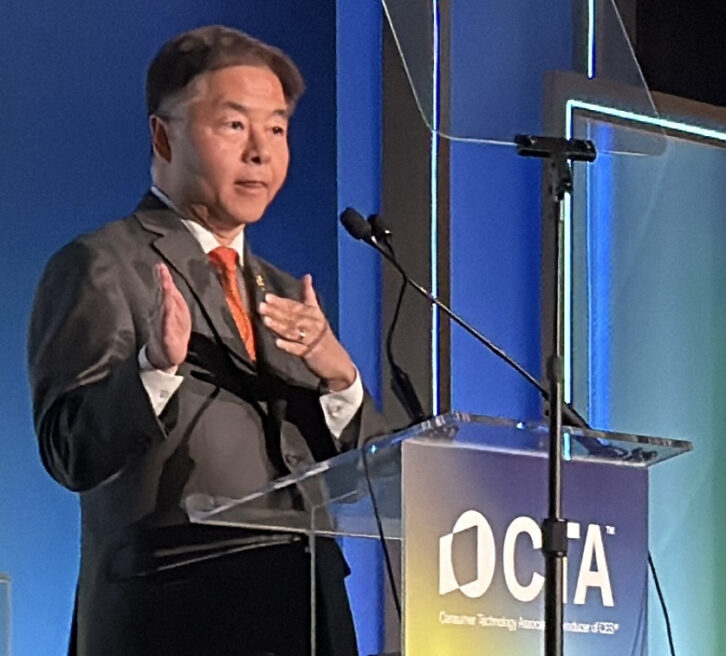
Rep. Ted Lieu, Obernolte’s Democratic counterpart on the AI Task Force, focused on the unprecedented pace of change and its broader societal implications.
“AI has been and will continue to be incredibly disruptive, mostly in a good way,” Lieu insisted. “We certainly have to put guardrails on it, because even the most advanced large language model is still hallucinating. But we’re not going to be able to fix it with AI or technology-specific legislation. It’s going to be much broader than that… We just [have to] make sure that when people get something disrupting their lives and maybe fall down, we help them get up again to become good members of society.”
Disruption as a Discipline
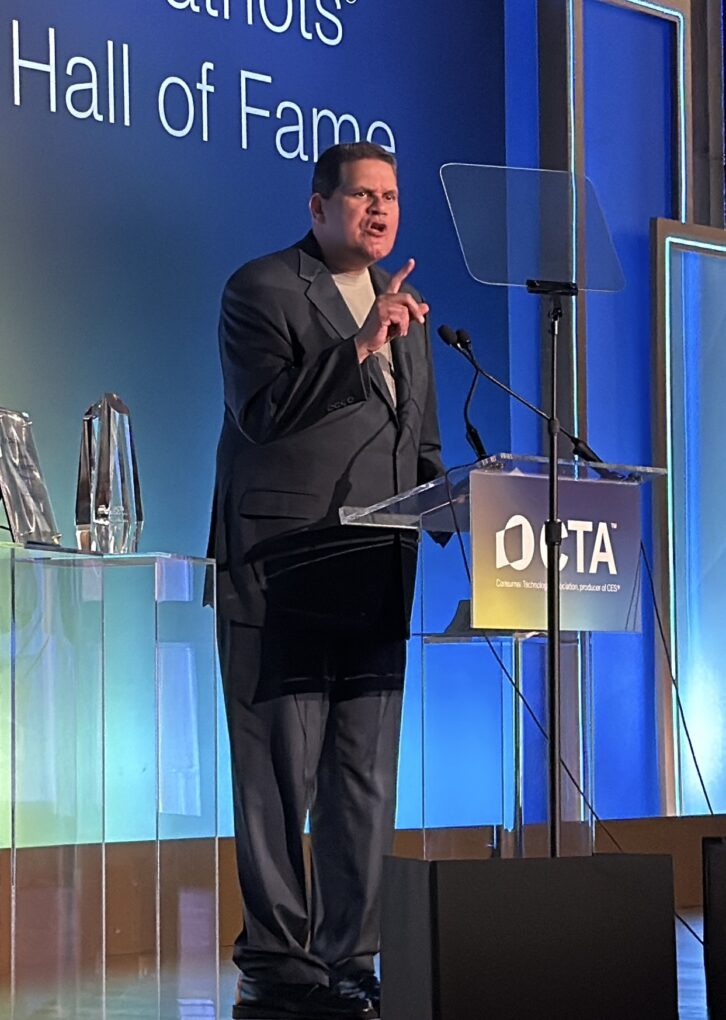
From the industry side, former Nintendo CEO Reggie Fils-Aimé offered a complementary perspective, framing innovation not as a singular breakthrough but as an ongoing process.
“Disruption…is a practice, it’s a mindset,” he philosophized. “It’s consistent work across every function of a company, including engineers, marketers, and product leaders. Everyone must feel responsible for changing the status quo in consumer electronics. The companies that win aren’t the ones that innovate once. They’re the ones that build a culture where innovation happens over and over.”
The night’s closing speaker, Alexis Ohanian, Reddit co-founder and venture investor, brought the discussion squarely back to AI, and to what he sees as a defining moment for the country.
“We have these emerging technologies like artificial intelligence, but also things like quantum computing that are going to fundamentally reshape the landscape of our economy, our society, and our national security,” Ohanian remarked. “We have to make sure that Congress does the job of regulating these new technologies the right way.”
One possibly overwhelming challenge is the public’s antagonism toward AI. “AI polls worse than every single individual elected official in America,” Ohanian observed only half in jest while reiterating the need for the U.S. to not only lead in AI, but change the public’s poor perception of the technology. “The fact that it’s technology which so many of us believe could truly change the world in so many profound ways is seen this poorly, is a real threat… [What] will change people’s opinions is the way that we ideally shepherd this technology and show them the value that it can create.”
Ending on Immigration – and Opportunity
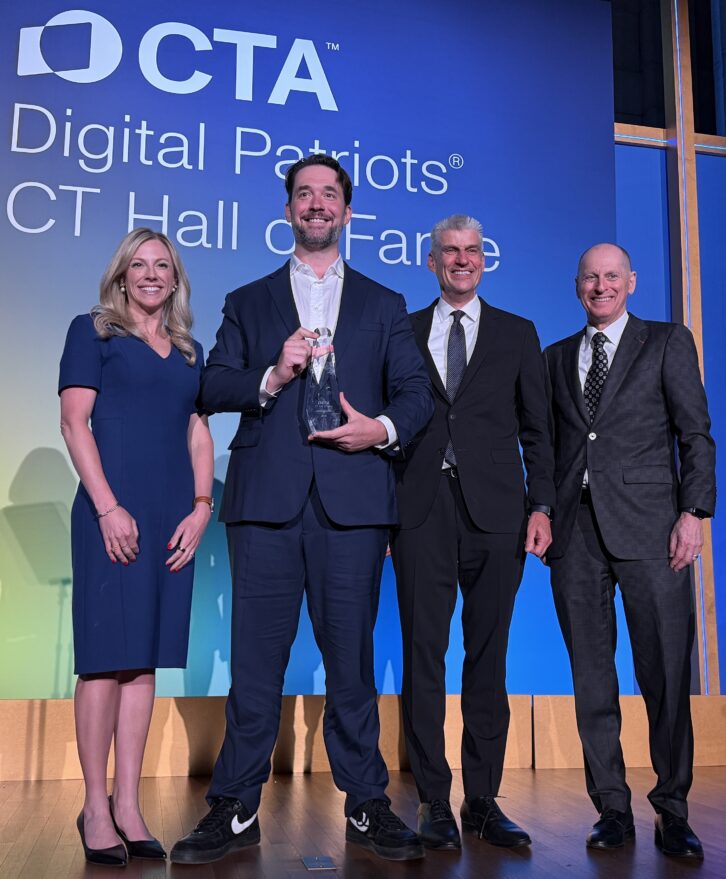
Ohanian closed on a more personal note, tying the American innovation story to immigration. He emotionally noted that he, the son of an undocumented immigrant, went on to co-found a multibillion-dollar company employing thousands of Americans.
“This country absolutely needs secure borders,” Ohanian acknowledged. “[But] for so many people who are here, they need a pathway. And please, before we generalize, and before we demonize, and before we villainize, just remember that the people who appreciate this country, often more than those of us who are lucky enough to be born here, like myself, are the ones who had to earn their way in. Let’s not lose sight of that.”
See also: CTA Appoints JC Murphy To Smart Home Division Board Of Directors