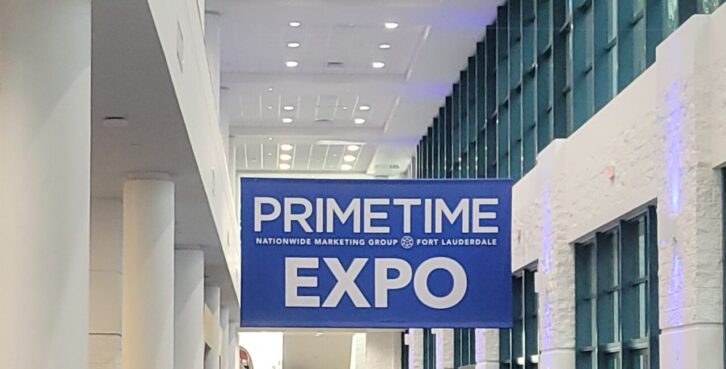
Nationwide Marketing Group’s (NMG) spring PrimeTime event in Fort Lauderdale opened with a focus on the role of independent retailers in a shifting market, alongside a broad look at product trends shaping 2026.
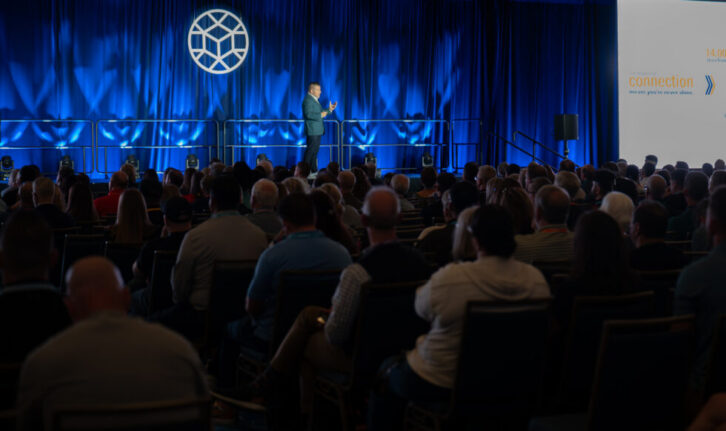
“Connection is how independents turn pressure into progress,” said Tom Hickman, CEO of Nationwide Marketing Group. “This channel is smarter, more connected, and better positioned to win,” Hickman added. “We’ll navigate whatever comes next… together.” He also noted that challenging economic cycles often expose operational gaps among larger competitors, while highlighting the adaptability and responsiveness of smaller businesses.
Hickman outlined several areas where independents maintain an edge, including curated showroom experiences, competitive pricing through buying groups, delivery and service capabilities, and strong ties to local communities. He also pointed to the scale of NMG’s network of more than 5,500 members and thousands of storefronts—as a driver of collective buying power and access to shared digital tools.
Artificial intelligence was a central theme of the keynote discussion. Mike Bechtel, former Chief Futurist for Deloitte and current professor at the University of Notre Dame, framed AI as a tool that depends on practical application. “There is a big difference between possible and profitable,” he said, adding that effective use of emerging technology requires clear alignment with business outcomes. He also emphasized the role of human input, noting, “AI makes you more powerful and more needed, not less.”
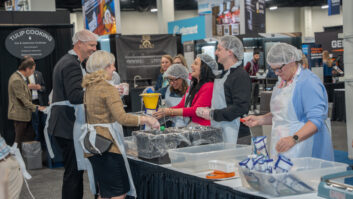
Beyond the mainstage, the show floor reflected a range of product trends across appliances, bedding, furniture, and consumer electronics.
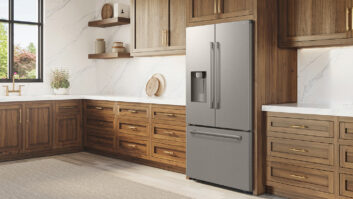
In appliances, manufacturers are increasingly designing for specific living environments. Products on display included counter-depth refrigeration, compact kitchen and laundry units, and garage-ready refrigerators, as well as larger-capacity options for multi-person households. Another notable shift was the rise of refrigerators with extra-tall water dispensers, reflecting the growing popularity of reusable bottles and tumblers.
Cooking appliances also showed continued evolution. Induction ranges were widely represented as an energy-efficient alternative to gas, while ovens with “no preheat air fry” functions pointed to demand for faster, multi-use cooking solutions.
In bedding, cooling technologies remain a dominant theme. Cooling pillows—seen earlier this year at industry markets—continue to expand into adjacent categories. Split head mattresses also remain in demand, with incremental updates aimed at improving customization and comfort.
Furniture trends leaned toward lighter neutral fabrics, with showrooms featuring softer tones such as off-white, gray, and beige. The shift suggests continued interest in versatile, understated design that can adapt to changing interiors.
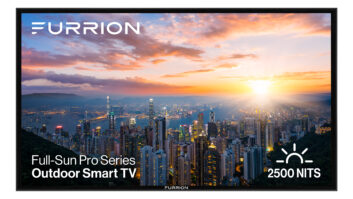
 Within consumer electronics, display technology drew attention. Micro RGB, which uses mini LED lighting for more precise color and brightness control, was highlighted as an emerging option for high-end displays. Larger screen sizes were also prominent, with multiple manufacturers showcasing televisions exceeding 100 inches, including a 115-inch model.
Across categories, several broader themes emerged: an emphasis on usability, a focus on multi-functional design, and continued demand for convenience-driven features. Products that simplify everyday tasks or combine multiple functions were particularly prevalent.
As both technology and consumer expectations evolve, PrimeTime continues to serve as a snapshot of how independent retailers and manufacturers are adapting—balancing operational strategy with shifts in product design and innovation.
The next PrimeTime event and expo is August 23-26, 2026, in Nashville, Tennessee.
See also: Kafene Announces Partnership With Nationwide Marketing Group