 The next phase of the AI computing race may not be limited to what Microsoft, Apple, Google and PC manufacturers build into their operating systems and next-generation computers.
BVIO Technology is betting there is room for another approach: a dedicated piece of AI hardware that can be connected to the computer consumers already own.
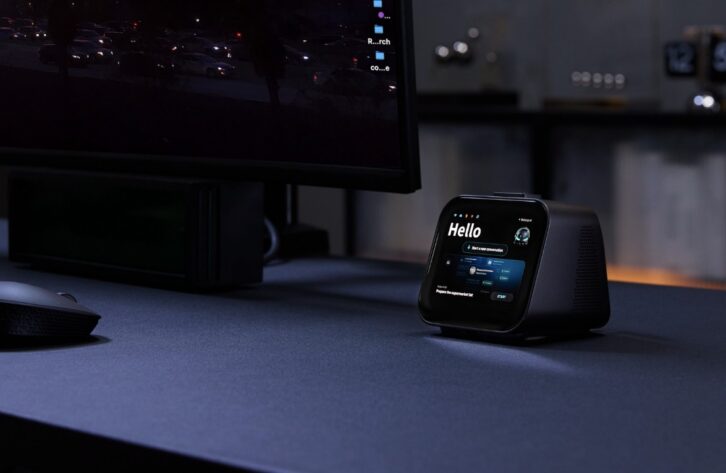
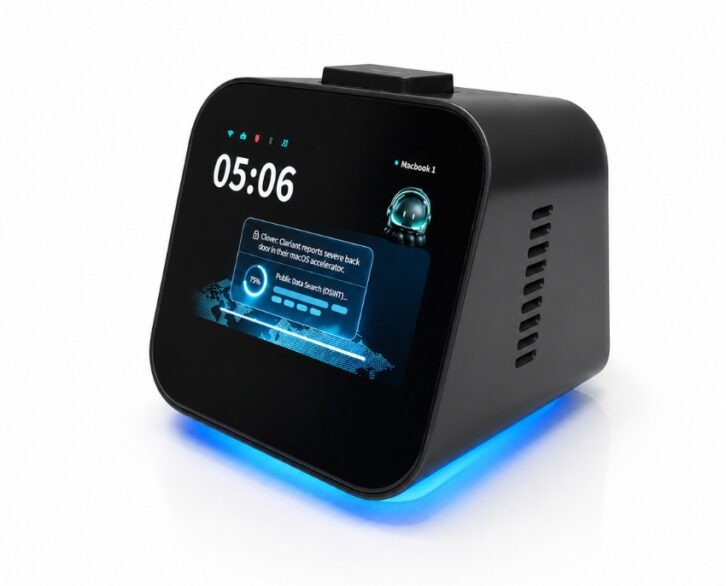
The company’s new Violoop is a palm-sized device that connects to a computer through HDMI and USB and is designed to give an AI agent the ability to see what is happening on screen, understand the context of a user’s work, and operate software across the computer.
That makes Violoop an intriguing proposition for the consumer electronics industry. Instead of asking consumers to buy a new AI PC to gain more sophisticated agentic capabilities, BVIO wants to provide an upgrade path for existing computers.
And unlike most generative AI products, the company’s pitch isn’t centered on a better chatbot.
Violoop is intended to do things.
Moving AI Beyond the Chat Window
Generative AI’s first mass-market phase largely revolved around prompting: consumers opened a chatbot, described what they wanted and received an answer.
Agentic AI is beginning to change that model. Instead of simply generating information, an agent can potentially execute a series of steps on behalf of the user.
BVIO describes its approach as “Personal Agentic Computing,” envisioning AI as something closer to a second participant operating alongside the computer’s owner.
“AI already has extraordinary capabilities, but people are still responsible for stitching together models, prompts, agents and software by hand,” said Jaylen He, co-founder and CEO of BVIO.
“For decades, computers have been built around one active user,” He added. “As AI becomes capable of understanding context, operating software and completing multi-step work, computers will need to support AI as a second participant.”
Violoop attempts to provide that second participant without being tied to one operating system, application or AI provider.
Users can connect their own API keys for AI services including ChatGPT, Claude and Gemini. The device’s routing system can determine whether work can be handled locally or whether a more powerful external AI model is required.
That model-agnostic strategy could be significant if consumers increasingly use several AI services rather than committing to a single ecosystem.
An AI That Can Use the Computer
 The more distinctive part of BVIO’s strategy, however, is how Violoop interacts with software.
The device captures what’s happening on the computer display through HDMI and can control the computer through USB-HID keyboard and mouse commands. BVIO says that means Violoop can interact with applications and websites even when they don’t offer dedicated AI integrations.
Where an API or script offers a faster route, the system can use it. Where no integration exists, Violoop is designed to navigate software visually, more like a human sitting in front of the computer. BVIO says the system has been trained across more than 200 applications and tested across more than 10,000 real-world software screens.
Consider a customer service workflow. An incoming email could require an employee to look up the customer, retrieve account information, update a CRM record, compose a response and return to the email application.
BVIO’s proposition is that Violoop can carry that objective from application to application, selecting the appropriate AI model when necessary and ultimately preparing the response for the user.
For consumers and small businesses, the same concept could potentially apply to repetitive tasks involving email, documents, spreadsheets, browsers and other everyday software.
The important distinction is that Violoop isn’t asking software developers to build specifically for the device. If the agent can understand what’s displayed on screen and manipulate the interface, applications that were never designed for AI could theoretically become part of an automated workflow.
Privacy Becomes Part of the Hardware Pitch
Giving an AI agent the ability to observe and operate a computer also creates an obvious concern: How much control should consumers hand over to an autonomous system?
BVIO is making hardware-based control and local processing central to its answer.
Violoop incorporates an 8-billion-parameter local model and 26 TOPS of on-device AI acceleration. The company says screen perception, routine inference and persistent memory can be processed locally rather than continuously transmitting the user’s display to the cloud.
When an outside AI model is required, BVIO says only information needed for that particular task is sent to the external service.
The device adds another unusually tangible security mechanism: a physical confirmation key.
According to BVIO, the AI and security functions reside on separate chips, with the physical approval control connected to the security chip rather than the AI system. Violoop can prepare an action, but the user must physically approve execution.
It’s a noteworthy design choice at a time when the industry is grappling with how much independence AI agents should have.
BVIO is effectively arguing that as AI gains more autonomy, a physical layer between the agent and the computer could become a feature rather than an inconvenience.
The effectiveness of those safeguards will ultimately need to be judged once production hardware reaches users.
A New AI Hardware Category?
For the CE channel, perhaps the most interesting question surrounding Violoop isn’t whether it can save a few clicks. It’s whether agentic AI can support an entirely new accessory category.
PC vendors have spent the past several product cycles promoting AI PCs equipped with neural processing units and increasingly sophisticated on-device AI capabilities. Violoop turns that equation around.
Rather than replacing the PC, it proposes adding an external AI computing and control layer to it.
The hardware includes an RK3576 octa-core processor, 26-TOPS AI accelerator, HDMI 2.0 input with 4K capture, USB-HID control, an AMOLED touchscreen, dual-band Wi-Fi and Bluetooth 5.2.
BVIO’s current product information lists 13GB of total memory and 128GB of storage.
The company says the device currently supports Windows and macOS, with Linux support in development.
At roughly 90 x 92 x 80 mm and 450 grams, Violoop is small enough to sit beside a desktop computer or workstation rather than becoming another full-size computing device.
That physical presence may also make the product easier for consumers to understand. Instead of purchasing an abstract AI service, they’re purchasing a box whose purpose is to add an AI operator to an existing computer.
The Bigger Challenge: Trust
The technical capabilities may ultimately prove easier to demonstrate than the behavioral change BVIO is asking consumers to make.
People are accustomed to software helping them. They are less accustomed to software watching what they are doing, remembering how they work and independently navigating their applications.
That makes trust potentially as important to the emerging agentic computing category as processing performance.
BVIO’s longer-term ambition is what it calls “artificial intuition.” Violoop’s local memory is designed to learn a user’s workflows, preferences and application-to-application handoffs so that the AI can increasingly anticipate what should happen next instead of waiting for another prompt.
If that works as intended, AI interaction could begin moving away from today’s ask-and-answer model toward continuous assistance embedded in the computing experience.
But it also raises the bar for transparency, security and user control.
Consumers will need confidence that an agent understands not only what it can do but what it shouldn’t do.
The Retail Question
Violoop launched on Kickstarter on Sept. 15, following BVIO’s $20 million seed round. Consumers who previously paid the $10 pre-launch reservation will receive an additional $30 discount when placing their order, bringing their net purchase price to $369.
That puts Violoop in premium PC-accessory territory while offering a different proposition from buying a new AI-enabled computer.
As with any crowdfunded hardware launch, however, the finished product experience, production schedule and eventual broader-market availability will be more consequential than an impressive demonstration or feature list.
For retailers and the wider CE industry, Violoop is worth watching for another reason.
If AI agents evolve from applications consumers open into systems that actively operate their computers, dedicated agent hardware could become a category of its own — one sitting alongside the PC rather than buried inside it.
Violoop is an early attempt to make that idea tangible.
Whether consumers decide they need a second participant at their computers remains to be seen. But BVIO is making an interesting bet: The next important AI upgrade may not require replacing the computer at all.
For more information, visit www.Violoop.ai.
See also: Lenovo R9000P Laptop Launches With TCL Inkjet-Printed OLED Display