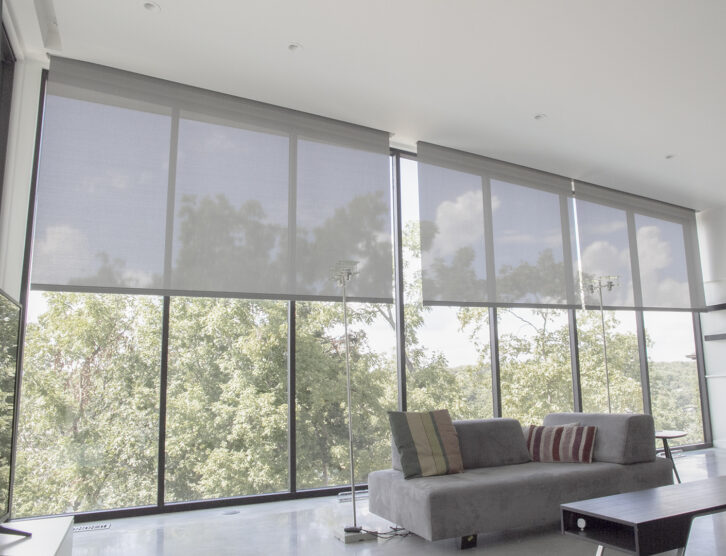
 There is no question that sales of automated shades are rising to unprecedented levels. A recent study from Global Market Insights said that the automated shading systems market is estimated to register a CAGR of 10% through 2032. Similarly, Mordor Intelligence projected the automated shade market to grow from $2.52 B in 2025 to $3.84B in 2030 (an 8.79% CAGR).
One way to better understand dealer opportunities for sales of automated shades is to break the category into two distinct target markets: retrofit and new-builds.
- Retrofit is when we incorporate automated shades into an existing build and upgrade the environment. This can require modifications to existing structures, wiring, and/or power input sources.
- New-build is when the installation of automated shades takes place in a new structure, and the automated shades, components, wiring, and other related elements are part of the initial building plan.
There are opportunities for both types of installations if dealers incorporate the right automated shades into their pitch. While a GrandView Research study found that “retrofit installations accounted for a revenue share of 57% of the global blinds and shades industry in 2024” due to the growing demand for upgrading existing spaces, that same study said that “revenue from installations in new construction is expected to grow at a CAGR of 8.7% from 2025 and 2030.”
With both retrofit and new-build installations on the rise and presenting solid, steady business opportunities, let’s examine each scenario so dealers can make the best recommendations and close the most sales.
Which automated shades are a fit for retrofits?
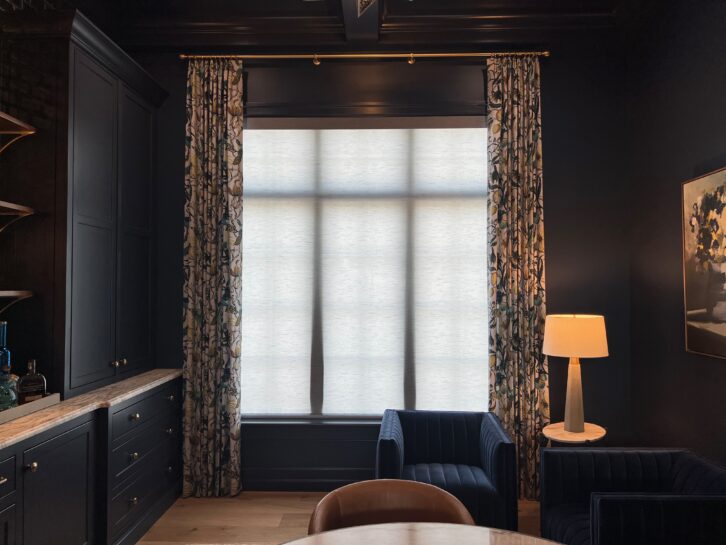 No matter what the install, no customers want projects that create higher expenses and extra work while leaving unattractive, visible wires in their wake. This means that, for most retrofitting of automated shades into existing structures, battery-powered automated shades might make the most sense.
The power of batteries. Battery-powered or wireless shades can be installed in lived-in homes and active business spaces without having to modify or cut into finished walls or ceilings, and without interrupting power or day-to-day activities. The battery-powered option not only eliminates the time and costs associated with replacing or modifying existing wiring, but it can also completely eliminate the need to get construction or safety permits. There is no tearing into walls to replace wires and no tearing out hair waiting for permits. The aesthetic appeal is enhanced without even temporarily compromising a room’s clean, untainted modern look.
Custom fits. Another consideration when retrofitting automated shades is the ability to offer customized automated shade solutions. Made-to-order automated shades can be a necessity when dealing with existing windows that have unique shapes and sizes. Different mounting depths or unusual window frames may demand shade solutions that aren’t typically carried “off-the-shelf.” These custom automated shades feature motors that are designed to deliver smooth, quiet operation, even when the shades themselves are bigger than the average shade.
Custom automated shades can also be tailored to unique requirements — features like recessed pockets and hidden tracks can be added as part of a retrofit package.
Which automated shades are built for new builds?
 When automated shades are part of the initial building plan, be it residential or commercial, some of the stressors of adding retrofit shades are eliminated. Architects and designers can make provisions for shade-ready features from the get-go, including integrated power, mounting wiring, recesses or pockets, space for the shade track or roller – reducing initial set-up costs and delivering desired aesthetics.
Hard-wired for sales. Building owners or specifiers may still want battery-powered shades, but they also have the option to choose hard-wire motors with wiring that can easily be run through framing. The location of power sources and infrastructure can be planned; tracks, rollers and mounting can all be hidden.
Plus, when automated shades are part of a building plan that incorporates a smart hub and other smart devices, automated scenes can be planned from the outset. Devices like smart shades, smart lighting, sensors, and smart HVAC controls can be hard-wired and designed to work in tandem without extra components, adapters, or limitations on device locations. The automated shades can work with these devices to create scenes for certain times of the day, as well as times of the year when natural light and heat can be used to save energy and reduce costs. This capability presents an opportunity for smart home dealers to offer customers a wider range of connected products.
Powering up with PoE. Because new builds allow for power to be easily and covertly embedded, automated shades that use a cost-effective, easy-to-install option like Power-over-Ethernet (PoE) may be an ideal shading solution.
PoE shades use a single run of CAT5 cable to provide both power and communication. The use of a single network cable means there is no proprietary hard wiring necessary. Also, since the new PoE motor is low voltage (under 50V DC), it does not require the services of a licensed electrician or special certifications, reducing installation expense and time.
With power coming from a single, central source, more information can be transferred on the network cable while improving reliability over traditional RF solutions. These PoE shades are also extremely flexible; additional sensors can be added to the motor to meet customer needs that extend beyond the initial build and grow over time.
Get ready for anything
The takeaway for dealers from all this information about the two different types of automated shade installations should be to, as the Boy Scouts advise, “be prepared.” With both retrofit and new-build installations on the rise, opportunities are expanding for dealers who can offer a wide range of different types of installs — from wireless options like battery power, to customized solutions to address a range of window sizes and applications, to hard-wired options like PoE. Growing the automated shades sector of your business is possible if you’re ready with the best-fitting solutions.

About the Author
Jason Turner is vice-president and co-founder of PowerShades, one of the leading designers and manufacturers of manual and motorized shades. Follow him on LinkedIn at https://www.linkedin.com/in/jasonbturner/.
See also: Exclusive Interview: Circana’s Marshal Cohen On The Holiday Purchase Intentions Consumer Survey