Manufacturers of wireless earbuds often prioritize advanced features like noise cancellation, spatial audio, and AI components to differentiate their products in a competitive market. This often results in bulky earbuds that fulfill consumer expectations but leave individuals with smaller ears underserved. For these consumers, fit and comfort are more than a preference—they’re a necessity that drives the buying decision.
To address this issue, audio brands are adopting a smarter approach to earbud designs, beginning with what’s inside. The technology used to produce sound, particularly in the type of driver, plays a significant role in determining the size and, consequently, how earbuds feel, how well they fit, and how long they can be worn comfortably.
Miniaturization Without Compromise

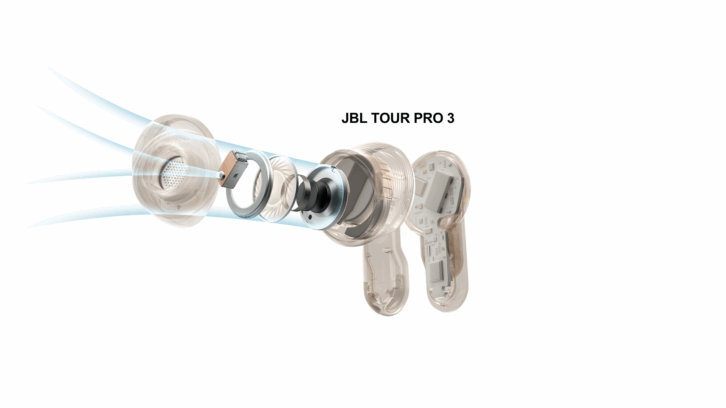
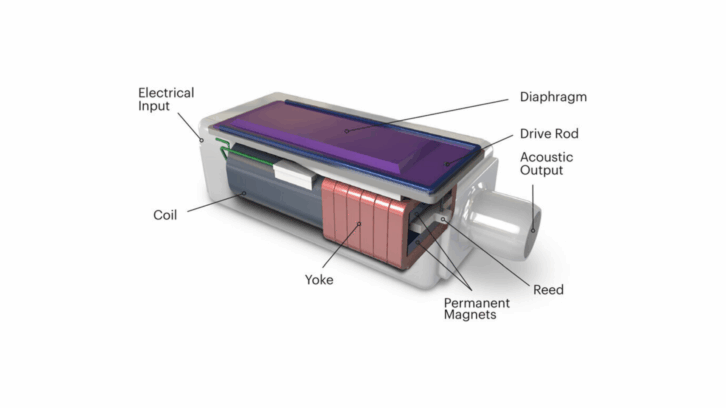
Balanced armature (BA) drivers, initially developed for use in hearing aids, offer a compact alternative to traditional dynamic drivers, occupying less than half the volume while delivering exceptional sound quality. In hybrid configurations, BA drivers handle crisp high and mid frequencies while a dynamic driver delivers rich bass. Because adding a BA relieves the dynamic driver from having to cover the full frequency range, the dynamic driver used in a hybrid design can be smaller, saving space and weight in each earbud. The smaller dynamic driver in this hybrid configuration needs to be designed as a pure woofer focusing on the low to mid-frequency range to achieve an overall superior audio quality compared to a standalone larger dynamic driver.
This dual setup enables manufacturers to shrink the overall size of the earbud housing, reduce weight, and extend battery life, making the design more comfortable for smaller ears without compromising audio quality.
Hybrid designs with BAs present new product design opportunities and give retailers a unique selling point in a commoditized category. Brands like JBL, Bowers & Wilkins, JLab, and Edifier are already investing in this approach, offering models such as the JBL Epic Sport ANC 3 and the Edifier Neo Buds Pro 2 that specifically address common pain points among smaller-eared consumers, including ear fatigue, poor fit, and sensitivity to volume. In turn, selling hybrid designs with BAs helps increase customer satisfaction and expand the total addressable market.
Driving Differentiation Through Comfort
As comfort becomes a key buying driver in wireless earbuds, the market data reveals significant opportunities for brands that prioritize ergonomic design. According to NPD Group data from 2023, nearly 45% of women and nearly half of Gen Z consumers report difficulty finding earbuds that fit comfortably, representing a substantial underserved market segment that spans both gender and generational demographics.
The business case for comfort-focused designs is compelling. According to the 2023 State of Sound Report from Qualcomm, global consumers ranked comfort as the #1 purchase driver for TWS earbuds, with about 45% of respondents identifying comfort as the most desirable feature.
Additionally, a 2022 Deloitte report found that products with higher comfort ratings had 24% lower return rates and 2–3x higher customer satisfaction ratings. This directly impacts retailers’ bottom lines, as return data from Best Buy and Target indicated that poor fit was one of the top three reasons for earbud returns in 2023.
Recognizing this opportunity, major brands are beginning to explicitly target smaller ear sizes. Companies like Apple, with its AirPods Pro 2’s extra-small ear tips, and Samsung, with Galaxy Buds FE, have noted improved satisfaction and repeat purchases among consumers who previously struggled with fit issues. This targeted approach not only expands market reach but also builds stronger customer loyalty among previously underserved demographics.
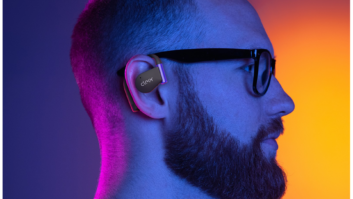
Open-style wireless designs are also gaining traction as part of the comfort-first movement. Since 2022, the open-ear segment has grown at a compound annual rate of roughly 35%, outpacing the broader hearables market. Unlike sealed in-ear designs, open-ear devices rest just outside the ear canal, avoiding inner-ear pressure that individuals with smaller ears commonly feel.
Addressing key consumer pain points like ear fatigue and discomfort, open-ear products are more wearable, driving longer use sessions and stronger brand loyalty. This style also allows active users such as runners, hikers, and walkers to stay connected to their surroundings while listening, preventing them from feeling the need to remove the earbuds in various environments.
Open-ear wireless earbuds can also be paired with sound personalization and app-based hearing profiles, offering new ways for brands to talk about comfort without losing sight of performance.
For manufacturers and retailers alike, the shift toward open-fit designs represents both a commercial opportunity and an engineering challenge. As user expectations around sound quality and battery life rise, brands are responding with hybrid driver systems and form factors that close the performance gap between open and sealed earbuds, offering wearability without compromise.
Small Components for Big Growth
As wireless audio continues to evolve, one-size-fits-all designs are no longer enough. The growing demand for comfort-first earbuds is reshaping how manufacturers approach form factor, internal architecture, and user experience. From the miniaturization enabled by balanced armature drivers to the explosive growth of open wireless systems, the industry is proving that comfort and performance don’t have to be mutually exclusive.
For retailers, this shift presents a meaningful opportunity to differentiate in a crowded market. Products that prioritize ergonomic innovation alongside audio excellence not only expand market reach but also foster stronger customer loyalty. As more consumers seek devices that fit seamlessly into their ears, the brands that deliver comfort without compromise will be the ones to succeed.
See also: Tariffs Today — To Buy Or Not To Buy?