John Riddle
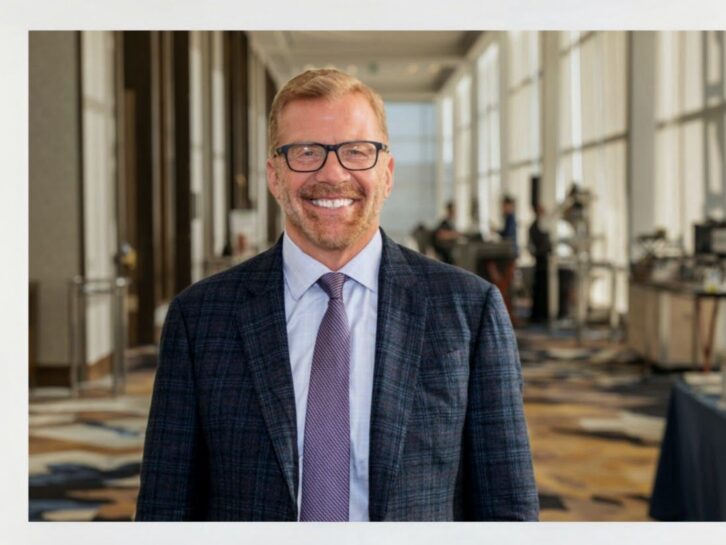
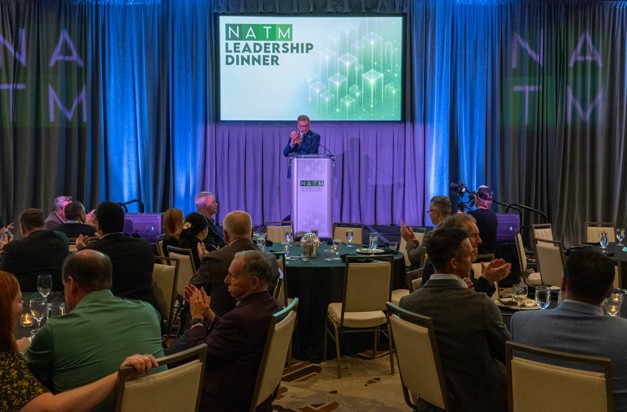
At the Annual NATM Conference, the Head of NATM discusses the economy, evolving consumer behavior, and why independent retailers are uniquely positioned to thrive in an increasingly complex marketplace.
Retail has always rewarded those willing to adapt. During John Riddle’s nearly five decades in the appliance and consumer electronics industry, he has watched dominant retailers disappear, business models evolve and consumer expectations change dramatically. Sears, Montgomery Ward and other once-dominant names that defined American retail have faded into history, replaced by home improvement centers, warehouse clubs, e-commerce and a marketplace where consumers can compare products with a few taps on a smartphone.
Today, another transformation is underway.
Artificial intelligence is changing how consumers research products. Inflation continues influencing household budgets. Financing has become a critical part of the purchasing journey, and retailers face intense competition from virtually every direction.
Yet despite those challenges, Riddle remains remarkably optimistic.

Not because the road ahead will be easy.
But because he believes the qualities that have always distinguished independent retailers—knowledge, trust, service and long-term relationships—have never been more valuable.
“The consumer still wants someone they can trust,” Riddle said during an exclusive interview with TWICE following NATM’s 2026 Vendor Conference. “If we continue educating customers and delivering exceptional service, independent retailers will continue to succeed.”
That philosophy has shaped Riddle’s career, from leading one of the country’s premier independent retailers to executive roles with major manufacturers and now as Head of the National Alliance of Trade Merchants (NATM). It also reflects NATM’s broader mission: helping independent retailers compete not simply through buying power, but through intelligence, collaboration and customer experience.
For Riddle, the industry’s future isn’t defined by who offers the lowest price. It’s defined by who creates the greatest confidence.
A Market Searching for Stability
The numbers tell a story of an industry finding its footing. According to Riddle, appliance unit sales declined 10.8 percent during the first quarter of 2026, one of the steepest quarterly declines he can recall in a career spanning nearly fifty years.
“I couldn’t find another period with declines like that,” he said, noting that even during the Great Recession the industry rarely experienced comparable unit declines. The good news is that conditions steadily improved as the year progressed.
Second-quarter declines moderated to approximately 4.5 percent, reducing the industry’s first-half decline to roughly 6.8 percent. By July, unit sales were down only about 2.3 percent, providing encouraging signs that consumer demand was beginning to stabilize.
Consumer electronics presented a different picture.
Television unit sales remained relatively healthy, but average selling prices continued declining as manufacturers delivered larger screens and more advanced technologies at increasingly competitive prices. The result was a market where consumers purchased more technology while retailers faced continuing pressure on margins. Riddle believes those statistics reveal something important.
“The consumer hasn’t stopped buying,” he said. “They’re just making more thoughtful decisions.”
That distinction is critical. Consumers continue investing in their homes. They continue replacing failed refrigerators, upgrading laundry rooms and purchasing new technologies. What has changed is how they arrive at those decisions.
Today’s shoppers spend more time researching, comparing financing options and evaluating long-term value before making significant purchases. “They’re looking for confidence,” Riddle said. “They want to know they’re making the right decision.”

The Rise of the Thoughtful Consumer
Higher interest rates, persistent inflation and rising costs for housing, insurance and everyday necessities have fundamentally changed purchasing behavior. Rather than eliminating discretionary spending altogether, consumers have become more deliberate.
Promotional financing and Buy Now, Pay Later programs now play a much larger role in the buying process, allowing shoppers to spread payments over time while preserving household cash flow.
Riddle notes that this trend extends well beyond younger buyers. Even affluent consumers are approaching purchases differently. He points to recent commentary from Costco executives, who reported growing demand for value-oriented products among their membership base—customers traditionally considered among the strongest consumer segments.
“If Costco is seeing that behavior,” Riddle observed, “it tells you something about where consumers are today.”
The challenge for retailers isn’t simply offering lower prices. It’s helping consumers feel confident that they’re making smart investments. That confidence increasingly comes from expertise rather than discounts.
Why Independent Retailers Are Well Positioned
Ironically, the same forces reshaping retail may be strengthening the independent channel.
Consumers have access to more information than ever before.
- Product reviews.
- Comparison websites.
- Video demonstrations.
- Artificial intelligence.
- Specifications are available instantly.
- Answers are everywhere.
- Confidence is not.
Buying a major appliance remains one of the most complicated purchases consumers make. Choosing a refrigerator involves cabinet dimensions, delivery access, family size, energy efficiency, storage requirements and installation logistics.
Selecting a premium cooking suite requires understanding ventilation, electrical requirements and how a family actually uses its kitchen.
Those decisions aren’t solved by reading specifications. They’re solved through conversation.
“They’re looking for someone who can help them make the right decision,” Riddle said.
 That’s where independent retailers continue to distinguish themselves.
Unlike many national chains, whose appliance departments represent one piece of a much larger retail strategy, independent dealers build their businesses around knowledgeable professionals capable of guiding consumers through every stage of the purchase.
Rather than simply asking which model a customer wants, experienced sales consultants ask how the family cooks, whether oversized comforters need additional washer capacity, whether a refrigerator will fit through an existing doorway or how a homeowner plans to use a new outdoor kitchen. Those conversations create something increasingly valuable in today’s marketplace.
Trust.
For Riddle, that has always been the independent retailer’s greatest competitive advantage.
The difference today is that consumers appear to value it more than ever.
As technology continues changing the retail experience, he believes the retailers who combine digital innovation with genuine human expertise will be the ones who ultimately earn lasting customer loyalty. And that, he says, is exactly where independent retailers have an opportunity to lead. If independent retailers possess unique advantages, the next question becomes obvious.
How do they continue strengthening those advantages as the marketplace grows more competitive? For Riddle, the answer begins with something far less glamorous than a showroom floor or a product launch. It begins with information.

From Buying Group to Business Intelligence Partner
For much of its history, buying groups were measured largely by purchasing power.
- Negotiating programs.
- Driving volume.
- Building vendor relationships.
Those responsibilities remain essential, but Riddle believes today’s retail environment requires something more. “The pace of change is simply too fast for retailers to rely on instinct alone,” he said. That’s one of the reasons NATM has invested heavily in expanding its proprietary Data Dashboard, transforming it into a business intelligence platform that helps members understand not only what is happening in the marketplace, but why.
The dashboard allows retailers to compare performance across brands, categories and regions, benchmark results against fellow members and identify trends before they become obvious in monthly financial statements. For many retailers, it has fundamentally changed how decisions are made.
Instead of relying exclusively on historical performance, merchandising teams can quickly evaluate shifting consumer demand, recognize emerging opportunities and adjust inventory strategies with greater confidence. “Data isn’t just about reporting anymore,” Riddle said. “It’s about helping members make better business decisions.” Just as importantly, the information creates conversations. If one member is outperforming the group in premium refrigeration, another may ask why.
If a particular category is showing unusual strength in one region, others can explore whether similar opportunities exist in their own markets. That willingness to share ideas has long distinguished NATM from many other organizations. “Our members aren’t afraid to help each other,” Riddle said. “That’s part of our culture.”
For Riddle, collaboration has become every bit as valuable as purchasing leverage. Knowledge, after all, multiplies when it’s shared.
Artificial Intelligence Changes the Tools—Not the Mission
No discussion about retail today is complete without addressing artificial intelligence.
Riddle doesn’t see AI as something to fear. He sees it as something to understand.
Like every major technological advancement before it, artificial intelligence will reshape the industry.
- Retailers will use it to improve inventory planning.
- Enhance marketing.
- Develop better customer communications.
- Analyze sales trends.
- Summarize product information.
- Increase operational efficiency.
- Those capabilities are significant.
But Riddle is equally convinced that technology cannot replace judgment. “AI gives you information,” he said. “Experience tells you what to do with it.” That distinction may become increasingly important as appliances grow more sophisticated.
Today’s consumers aren’t simply choosing between white, black or stainless steel. They’re evaluating connected home ecosystems, induction cooking, energy management, smart refrigeration, premium laundry systems and integrated kitchen packages. Those purchases often involve thousands of dollars. They also involve confidence. An experienced sales professional understands questions that consumers may never think to ask.
- Will that refrigerator fit through the front entry?
- Does the electrical service support induction?
- How will steam laundry improve garment care?
- Will that ventilation system meet local building codes?
Artificial intelligence can answer many questions. Experience knows which questions matter.
That’s why Riddle believes retailers should embrace AI enthusiastically—while continuing to invest just as aggressively in training their people. Technology should amplify expertise. Not replace it.
Relationships Remain Retail’s Greatest Asset
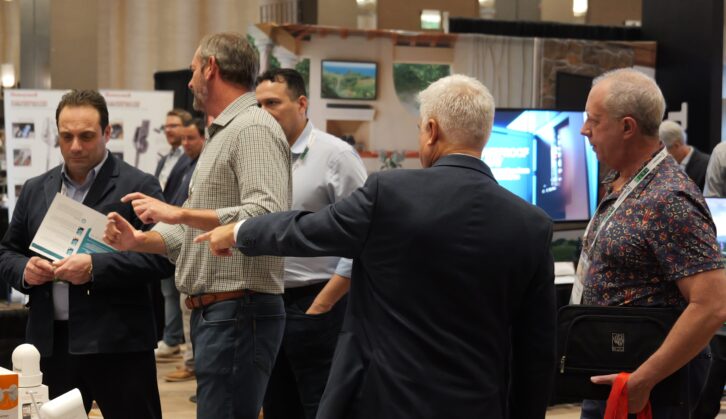 Perhaps no subject generated more passion during Riddle’s interview than relationships.
Throughout his career, he has seen partnerships create opportunities that spreadsheets alone never could.
- Manufacturers introduce innovative products.
- Retailers provide real-world feedback.
- Ideas are exchanged.
- Problems are solved.
- Strategies evolve.
That collaborative environment has become one of NATM’s defining characteristics. “It’s not always the meeting that creates the greatest value,” Riddle reflected. “Sometimes it’s the conversations before or after the meeting.”
Those informal discussions frequently lead to new merchandising ideas, improved product launches and stronger partnerships that benefit both manufacturers and retailers. For vendors, NATM provides access to experienced retailers who understand consumers at the local level. For retailers, manufacturers offer insights into product development, marketing strategies and emerging technologies that can strengthen their competitive position. The result is a relationship built not simply on transactions, but on shared success.
In an increasingly digital business environment, Riddle believes those personal connections have become even more valuable. Technology can accelerate communication. It cannot replace trust.
Preparing Retailers for the Next Chapter
As Riddle looks toward the future, he doesn’t pretend the industry’s challenges will disappear.
Economic cycles will continue. Consumer expectations will evolve. Competition will intensify.
Artificial intelligence will become increasingly sophisticated. The retailers who succeed, he believes, will be those willing to learn continuously. That philosophy drives NATM’s investment in education, committee collaboration, market intelligence and leadership development. Rather than reacting to industry changes after they occur, the organization strives to help members anticipate them. Whether discussing AI, financing trends, premium appliances or evolving consumer expectations, the objective remains the same. Equip independent retailers with the information, relationships and confidence needed to make better decisions.
For Riddle, leadership has never been about predicting the future. It’s about preparing for it.
The Enduring Value of Trust
When asked what gives him optimism after nearly fifty years in the industry, Riddle doesn’t begin with technology. Or data. Or market share.
He begins with people. Consumers still want someone who listens. Someone who understands. Someone who stands behind the sale. Someone who answers the phone after delivery. Someone who solves problems instead of simply processing transactions. Those qualities have always defined the nation’s best independent retailers. Today, they may represent the industry’s greatest competitive advantage.
Artificial intelligence will continue transforming retail. Digital commerce will keep evolving. Economic conditions will rise and fall. But throughout his conversation with TWICE, Riddle returned repeatedly to one belief that has guided both his career and NATM’s mission.
Retail has never simply been about selling products. It has always been about earning trust.
For independent retailers willing to combine technology with expertise, innovation with service and data with meaningful relationships, Riddle believes the future isn’t something to fear. It’s something to embrace. And if history has taught him anything over the course of nearly five decades, it’s that the retailers who continue investing in people will always have an advantage that cannot be copied.
In a marketplace where information has become abundant, trust has become priceless. For John Riddle, that may be the most important lesson of all.