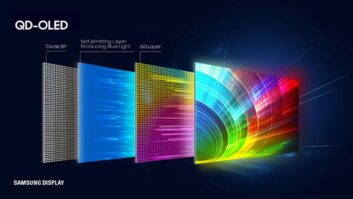
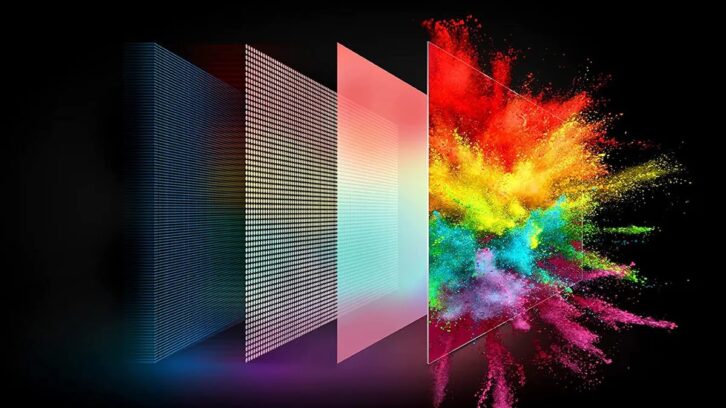
 A new generation of quantum dot technology is coming, and that could mean QLED and OLED TVs with even better color range than the upcoming new slate of RGB-backlit LED TVs. The technology, P-QD, promises exceptional color depth.
The big question is whether you’re going to care.
The promise of P-QD, FlatpanelsHD reports, is a TV panel delivering over 95% of the Rec. 2020 color space. That’s really great news if you want a reference monitor for graphic design or other applications where absolute color accuracy across an expanded gamut is crucial.
But this color range isn’t what’s used in the things you watch on TV in HDR movies and shows – that’s the P3 color space, and the latest RGB and OLED TVs can already deliver 100% of the P3 gamut.
What is P-QD, and when can we expect it?
The P in P-QD stands for Perovskite, and it’s a replacement for the cadmium and indium materials used in first- and second-generation quantum dot TVs, respectively. Indium isn’t as accurate color-wise as cadmium, but the former is banned in many countries due to its toxicity. Perovskite promises to return to the cadmium highs without the whole poisoning-people downside.
According to FlatpanelsHD, a typical second-gen quantum dot TV hits around 75% of Rec.2020 in QLED and mini-LED TVs. Perovskite quantum dots promise an increase to 95%. That’s more accurate than current QD-OLEDs, which typically come in at or below 90% of Rec.2020, and of RGB-LED TVs, which generally reach 90%.
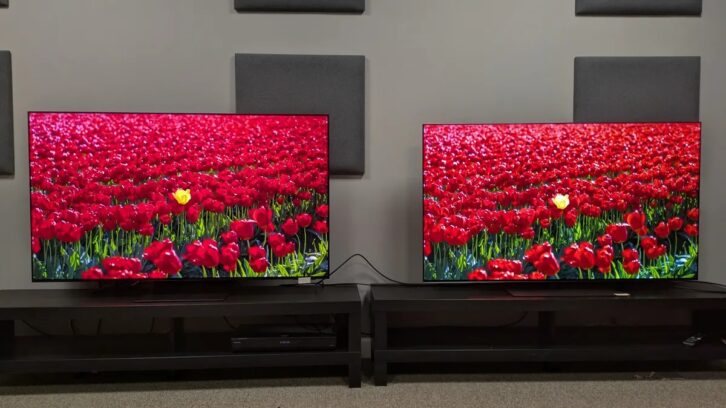
When will it arrive? That’s currently unclear. There are unconfirmed reports – speculation – that TCL’s already announced 2026 flagship X11L uses P-QD.
TCL has promised “Super Quantum Dot” technology for that TV, but hasn’t named P-QD specifically, although we know that TCL has been working with Zhijing Nanotech since 2020 on P-QD technology.
But as yet we don’t know P-QD’s ETA – and it’ll be some time before it becomes widely available.
If TCL is working on using it, that suggests there are advantages – but also, maybe it’s just a chance for it to be first. The best-case scenario is that it helps the color range of more affordable TVs, too – the best TVs at the top of the line might be hitting 100% of the P3 color gamut, but cheaper TVs still need a boost to get there.
On the other hand, if this tech stays in premium TVs for a time because it’s new and expensive, then that won’t help either. We’ll see how the P-QD race shakes out – but perhaps you’ll hear professional monitor makers yelling about it earlier than TV makers.
About the Author
Writer, broadcaster, musician, and kitchen gadget obsessive Carrie Marshall has been writing about tech since 1998, contributing sage advice and odd opinions to all kinds of magazines and websites as well as writing more than twenty books. Her latest, a love letter to music titled Small Town Joy, is on sale now. She is the singer in the spectacularly obscure Glaswegian rock band Unquiet Mind.