 The Maono PD200W is a hybrid dynamic microphone with USB-C, XLR, and 2.4 GHz wireless connectivity, all in one unit. That’s an unusual combo at the $100 price point, and on paper, it looks like a pretty clever way to future-proof a single-microphone purchase.
For creators looking for a capable all-around microphone that adapts as their workflow changes, the PD200W makes a strong case as a practical, flexible tool that solves real workflow problems creatives face when moving between devices and setups.
Design & Features
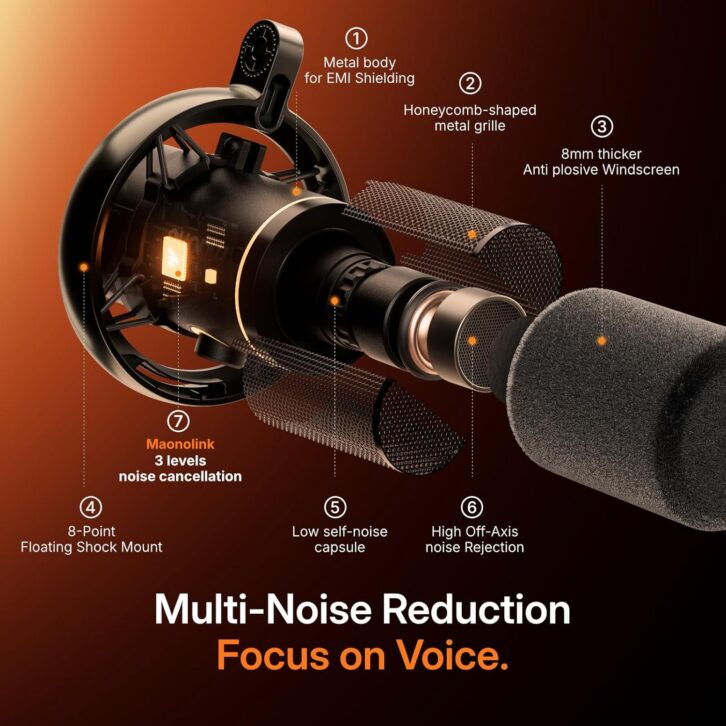 The PD200W features a 30 mm dynamic capsule with a 24-bit/48 kHz sampling rate, an 82 dB signal-to-noise ratio, and a 128 dB max SPL. Those numbers line up with what you’d expect in this class, and more importantly, the sound in real use reflects them.
The standout feature of this budget podcast microphone is its triple-mode connectivity that allows you to plug into a computer or tablet via USB-C, connect over XLR into an interface or mixer for more traditional studio workflows, or use 2.4 GHz wireless with the included USB-C receiver for cable-free operation.
The wireless option changes how you think about a mic like this. Most dynamic mics in this range are either USB or XLR, not both, and very few add wireless into the mix. Official specs quote up to 60 m of range and as much as 60 hours of runtime with lighting turned off.
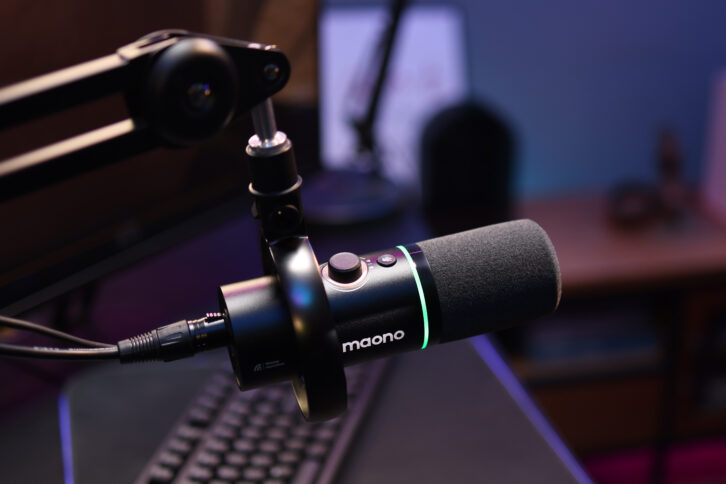
Physically, the build feels more robust than entry-level USB mics, with a mostly metal body and a sturdy desktop stand included. The RGB lighting ring around the base won’t make or break the audio, but it does speak to the audience Maono is courting: creators who want a bit of flair without surrendering quality.
Flexibility gives the Maono PD200W mic a longer shelf life than many entry-level USB models. Plug it into a laptop over USB-C, and it behaves like a traditional plug-and-play creator mic. Use XLR, and it integrates into mixers or audio interfaces for more advanced setups. Switch to wireless mode, and it becomes useful for mobile production, standing presentations, or camera-based recording where cables get in the way.
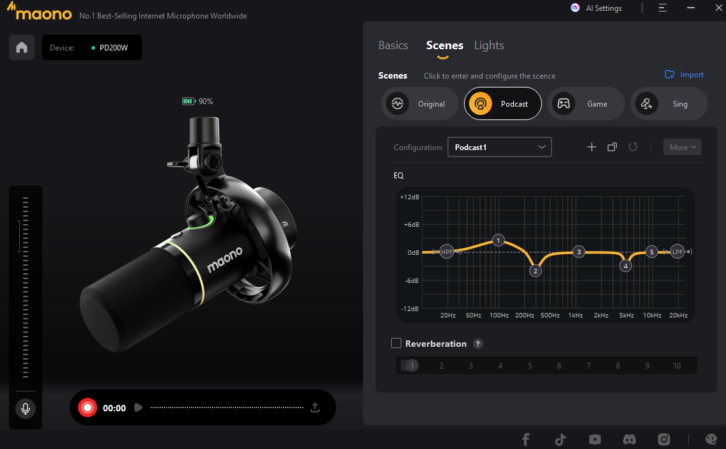 Maono provides a companion MaonoLink app where users can tweak EQ, compression, limiter settings, and noise reduction. It’s not a full DAW, but it gives beginners just enough control to shape their sound without needing a third-party tool.
The onboard physical controls are simple, consisting mainly of a mute button and a multi-function dial. While not as sophisticated as dedicated hardware controls on pro mics, they work well for the PD200W.
Our Testing Experience
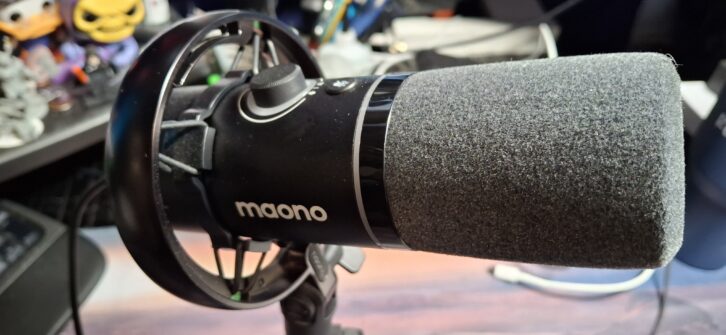 TWICE had the opportunity to test the Maono PD200W for a few months, and we found that across each mode, the microphone delivers a warm, focused voice profile that keeps dialogue clear and dominant without exaggerating highs or lows. That’s exactly the goal for podcasters and streamers, and it largely succeeds.
Compared to cheaper USB-only alternatives, the PD200W sounds fuller and more controlled right out of the box. That being said, this is very much a spoken-word mic, and its cardioid pickup does a good job of rejecting room reflections even in untreated spaces. The included stand is solid and adjusts a few inches vertically. Controls are easily accessed, although we feel the control knob is the least premium-feeling feature of the mic.
The best thing about the PD200W is how easily it integrates into various workflows. We found that the ability to switch between USB, XLR, and wireless was incredibly convenient when it came to using the mic in different situations, especially on days when we moved between remote work and hooked up to studio equipment.
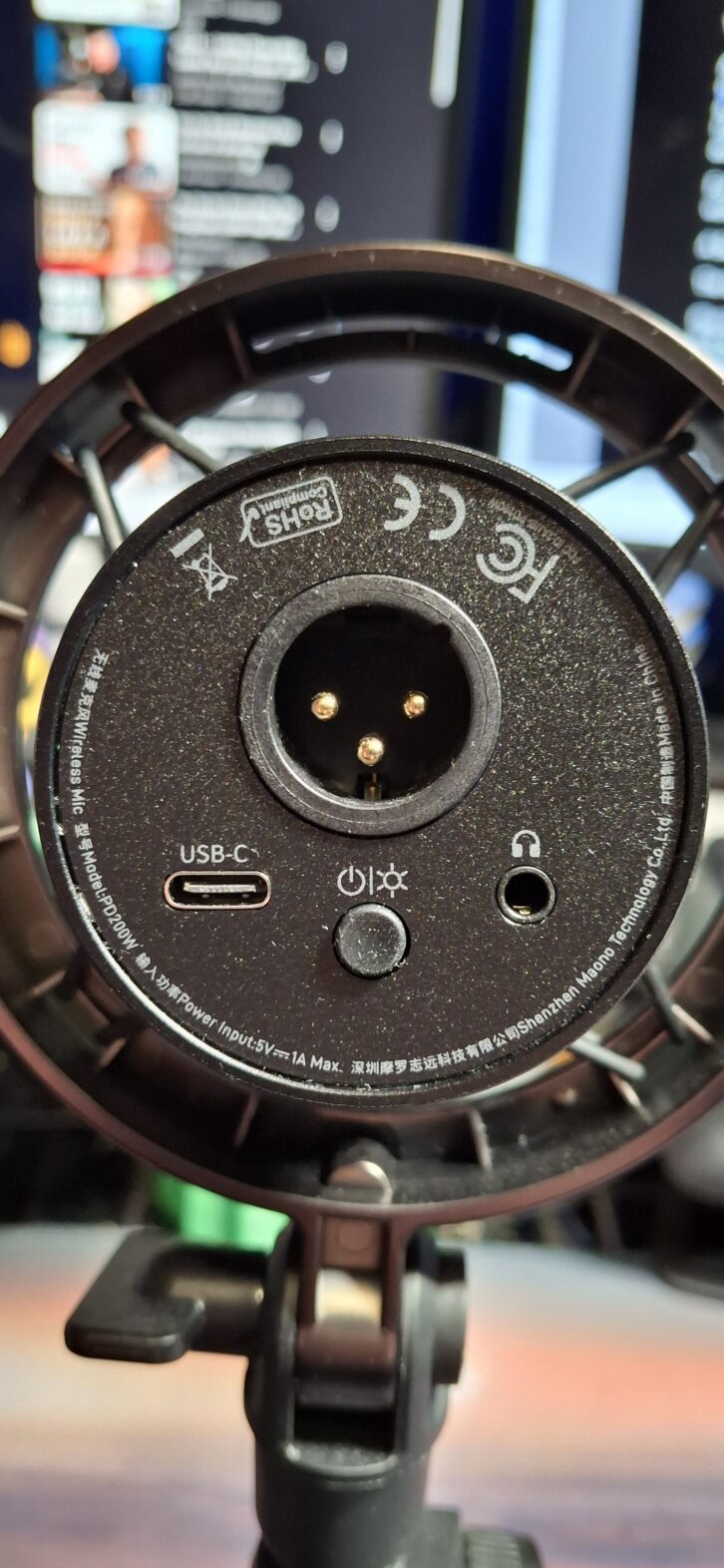 The PD200W doesn’t offer multiple polar patterns, which means if you want ambient or group capture on a round table, you’ll still need more hardware to get quality audio capture. Fortunately, Maono did add support to pair two microphones to one wireless receiver, allowing separate stereo track recording for two-person productions. That’s a genuinely practical feature for small podcast teams and collaborative content creation.
The wireless performance in our tests had stable connections with minimal dropouts in typical desk use, and the battery life lasted through a couple of long recording days. Sound capture was just as good wired, but the wireless dongle is larger than a typical USB stick, and we recommend using a USB hub to reduce port blocking on a laptop or desktop. It’s a minor inconvenience, but worth noting if you travel with your gear to record on location.
Maono claims the wireless connection reaches up to 60 meters, with battery life rated up to 60 hours with RGB lighting disabled. In our real-world use, we found the wireless setup feels straightforward and stable for typical recording environments, and we experienced few, if any, drops in performance.
Verdict
 The Maono PD200W succeeds because it understands what many modern creators actually need: flexibility without unnecessary complexity. By combining USB convenience, XLR expandability, and wireless freedom, it offers newer users an accessible package with enough versatility to grow into more advanced setups later.
It’s not trying to compete with high-end studio microphones costing several times more. Instead, the PD200W focuses on making content creation easier across multiple environments and devices, and it does that remarkably well for the price point.
See also: Review: Narwal Freo Z10 Turbo