This year marks the 100th anniversary of the founding of the CTA (Consumer Technology Association), which started out as the RMA (Radio Manufacturers Association). This is the fifth in a series of essays exploring and celebrating CTA’s and our industry’s first century of invention, innovation, and entrepreneurship, assembled from varying technology historical research and writings I have done over the course of 20-plus years, including from an annually updated industry history for CTA’s now-defunct Digital America, 20-plus years of CTA Hall of Fame inductee biographies, and numerous tech history articles for a variety of publications over the years.
Here are the previous chapters:
- Part 1 (1924-1929): Founding
- Herbert H. Frost: CTA’s “George Washington”
- Part 2 (1930-1945): David Sarnoff
- Part 3 (1946-1960): The TV Age
- Part 4 (1961-1974): The Sixties
- Jack Wayman, Our Industry’s Indispensable Exec
- Part 5a (1975-1985): Decade of Disruption – Home Video
- Part 5b (1975-1985): Decade of Disruption – Personal Audio
- Part 5c (1975-1985): Decade of Disruption – Personal Computing
- Part 5d (1975-1985): A Decade of Disruption – 1984 Phones It In
- Part 5e (1975-1985): A Decade of Disruption – 1984, The Sony Decision
- Part 6a (1985-2000): Platform Wars – Recording Media
- Part 6b (1985-2000): Platform Wars – Video Games
- Part 6c: Platform Wars – Airways (Part I)
- Part 6c (1985-2000): Platform Wars – Airways (Part II)
- Part 6d (1985-2000): Platform Wars – Compression
- Part 6e (1986-2000): Platform Wars – Digital Photography

An era came to an end a few months ago when Best Buy announced it would no longer sell DVD and Blu-ray discs in its stores, almost 27 years since the digital optical disc format first hit retailers early in 1997 in the U.S. In its coverage, TWICE noted that DVD and Blu-ray were “once a major economic driver for the studios,” but that “the physical media industry is rapidly crumbling in the shadow of streaming platforms.”
Nearly three decades is an unusually lengthy lifespan for the viability of a technology or media, which usually measures around 20 years. For instance, movies on videotape were introduced in 1977 and lasted only a few years into the DVD era in the late 1990s. Vinyl record albums, which had replaced 78rpm shellac discs, had barely turned 20 when the audio cassette rose to prominence in the early 1970s. The audio cassette hadn’t yet turned 20 when the CD appeared. And the CD hadn’t yet reached 20 when the first MP3 files started to get swapped online.
Why has DVD/Blu-ray survived longer than previous physical multimedia platforms from the last century? Possibly because it avoided the platform wars other A/V formats endured, gaining input and support from divergent hardware, content, and computer constituencies during its development. Possibly the developers surveyed the damage wreaked by the other platform wars of the period and sanity finally prevailed. I contend that, unlike the other platform wars, DVD benefited from the presence of a referee more respected and more powerful than the individual dueling consumer electronics manufacturers and Hollywood studios.
Whatever the reason for its longevity, DVD seems more the exception than the rule as far as platform wars past and present are concerned, all of which make it a fascinating case study on how major players could agree that it was better to get along despite their technical differences, corporate egos, and greed.
But the road to DVD actually started with a different optical disc format: laserdisc.
The Turtle
 What follows is an updated and compacted version of a history of DVD I wrote in 2002 for a now-defunct magazine called DVD Etc. I don’t think the company that published that magazine still exists, so I feel free to plagiarize my own previously published DVD history.
Simultaneous with the development of the CD in the last 1970s and early 1980s so was its optical disc video sibling – the laserdisc.
Putting video on a disc dates back to the late 1920s when British TV inventor John Logie Baird devised several Gramophone-based video disc schemes. In 1935, Logie demonstrated such a system at London’s Selfridges department store using a wax disc and yielding a whopping 30 lines of resolution.
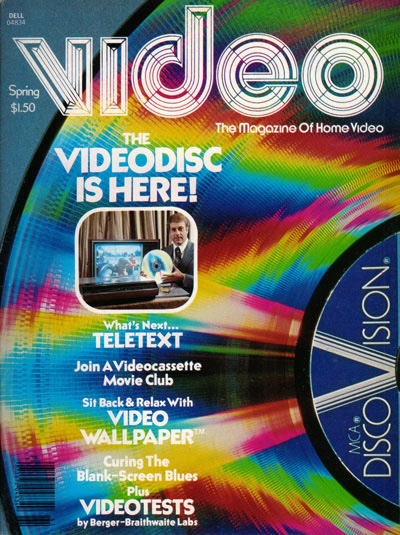 As related in Chapter 6a, there were multiple efforts to produce a video disc from the 1970s through the early 1990s. Unique among them was a partnership between 3M and Stanford Research Institute (SRI) that resulted in the laserdisc, introduced by MCA as DiscoVision in late 1978. Laserdisc was a 12-inch optical disc that contained analog video instead of digital but at nearly twice the resolution of VHS but needed to be flipped over to watch a whole movie. When you got to the end of Side 1, you got a funny graphic of an overturned turtle telling you to manually flip the disc.
While videophiles adored Laserdisc – myself included (I still own several dozen laserdiscs, including for karaoke) – the format was not a hit with mainstream consumers. Only an estimated 2% of U.S. households contained one, and just 16.8 million laserdisc players were sold worldwide of which 9.5 million were from Pioneer, all of which left VHS as the dominant prerecorded video format.
RCA’s Videodisc Blunder
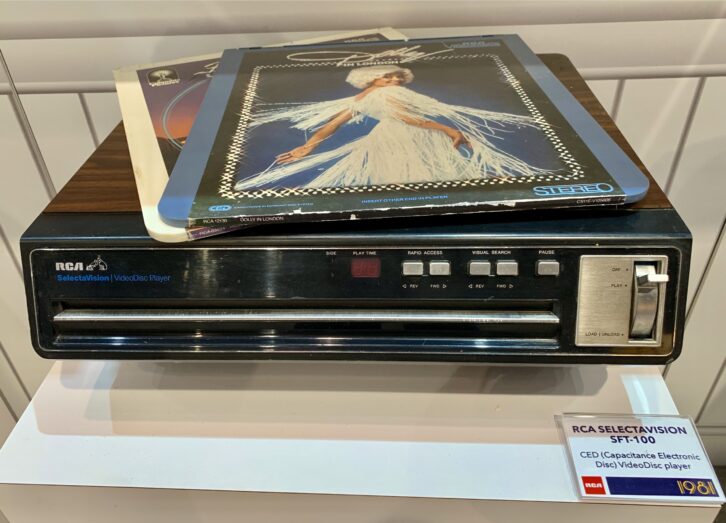
To compete with laserdisc, in March 1981 RCA introduced its own 12-inch videodisc platform called CED (Capacitance Electronic Disc). Played like a record, CED used a stylus to electronically read physical grooves, eerily reminiscent of Baird’s 50-year-old ideas. And, just like a vinyl record, CED grooves slightly decayed each time a CED was played, diminishing video quality over multiple plays.
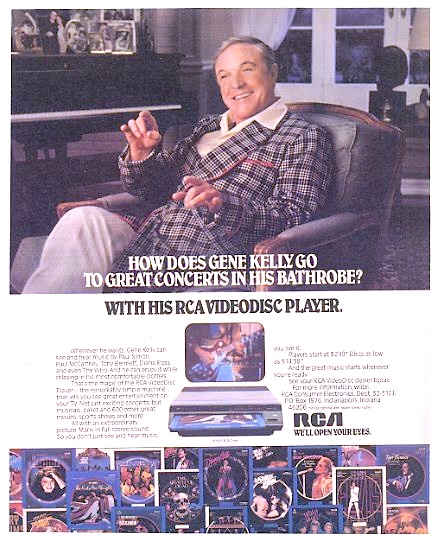 To promote CED, RCA hired song-and-dance legend Gene Kelly as a spokesperson. I attended a CED event early in my career and so got to meet this Golden Era movie star. But instead of complementing him on Singing in the Rain or one of his other iconic Hollywood musical performances, I told Mr. Kelly how much I admired his lone non-singing/non-dancing dramatic turn as a stand-in for acerbic journalist H.L. Mencken in 1960’s Inherit the Wind. To say I got a Gene Kelly skunk eye would be an understatement.
The public, however, now inculcated with a multitude of laser-reading discs, was uninterested in an archaic phonograph-like technology. After losing $580 million and selling only a half million players, RCA dropped CED in April 1984.
CED’s high-profile and expensive failure led directly to RCA’s decline and its sale to GE in December 1985, ending the company’s 65-year reign as the industry’s dominant and preeminent consumer electronics and technology company.
Laserdisc managed to hang on as the videophile video source of choice into the early 1990s when the emergence of MPEG-2, related in Chapter 6d, helped spur technical progress to a smaller all-digital video disc platform.
Hardware Meets Hollywood

Toshiba, Matsushita, Sony, and Philips all were exploring digital video disc platforms. At Toshiba, the corporate effort was led by Koji Hase, who would become general manager of Toshiba’s DVD division, and the technical work was led by the company’s chief technical officer Dr. Hisashi Yamada.
More conceptual commercial groundwork for a high-quality digital video disc, however, was being laid by Warren Lieberfarb, president of Warner Home Video. Lieberfarb, often described as being overly aggressive (although he was patient with me when I interviewed him), was concerned that the next generation of digital television and video-on-demand would render VHS obsolete. But Lieberfarb also knew that the next-generation home video format had to be higher quality and half the price of VHS tapes.
In 1990, Lieberfarb started to collaborate with Philips on a next-generation disc format but was unimpressed with Philips’ MPEG-1 efforts.

Around that time, Hase and Lieberfarb met when they were both part of the negotiations that led to Toshiba buying a chunk of Time Warner. In April 1992, Hase, knowing Lieberfarb’s desire to develop a next-generation video disc, finagled a half-hour meeting with Lieberfarb to explain Toshiba’s development efforts. The 30 minutes in Lieberfarb’s Burbank offices stretched to six hours, then spilled over to dinner at LA’s famous Morton’s steakhouse. Lieberfarb told Hase what he and the Hollywood community wanted in a next-generation disc, and Hase promised he could deliver. The result was a partnership between Warner and Toshiba to develop a consumer digital video format code-named “Taz” after the studio’s Looney Tunes Tasmanian Devil character.
Back in Tokyo, Hase had Yamada consult with Matsushita engineers who had developed a dual-layer technology that would help solve disc capacity problems. In February 1993, Yamada demonstrated the fledgling Taz to Lieberfarb.
One problem: Yamada’s prototype wasn’t compatible with music CDs.
Lieberfarb went back to Philips, which owned core optical disc patents as the co-developer of the CD, to make it a DVD development threesome. But in early 1994, Philips decided to partner with Sony on a different digital video disc effort. Lieberfarb saw this defection as an attempt by Sony-Philips to steal the Warner-Toshiba technology, and the platform development war began.
Platform War
Without Philips, Yamada, working with Warner’s senior VP for technical operations, Chris Cookson, finished what was called Super Density disc (SD).
SD was a dual-layer disc, essentially two .6mm discs bonded together with clear glue to enable the laser to see through the top layer to the layer below. Each .6 mm disc could store 5 GB, which meant the dual-layer result held 10 GB. The bonding resulted in a disc-less subject to warping. Dual-sided play would eventually double the capacity.
Sony and Philips, meanwhile, came up with a single 1.2mm disc capable of holding 3.75 GB of digital video and began working with 3M to develop its own dual-layered technology.
In May 1994, hoping to cut the legs out from under the Sony-Philips effort, Lieberfarb formed the Digital Video Disc Advisory Committee, comprised of Disney, Time Warner, Sony Pictures, MCA, Paramount, MGM, and Viacom. On September 21, Lieberfarb’s committee released a 12-point list of performance requirements for what the movie studios wanted in a next-generation disc format, which included at least 135 minutes of playtime, room for three to five languages, multiple subtitles, multiple aspect ratios, Dolby Digital multi-channel sound, and a parental lockout feature.
SD complied with these stipulations. The Sony-Philips format did not.
Bell ringing
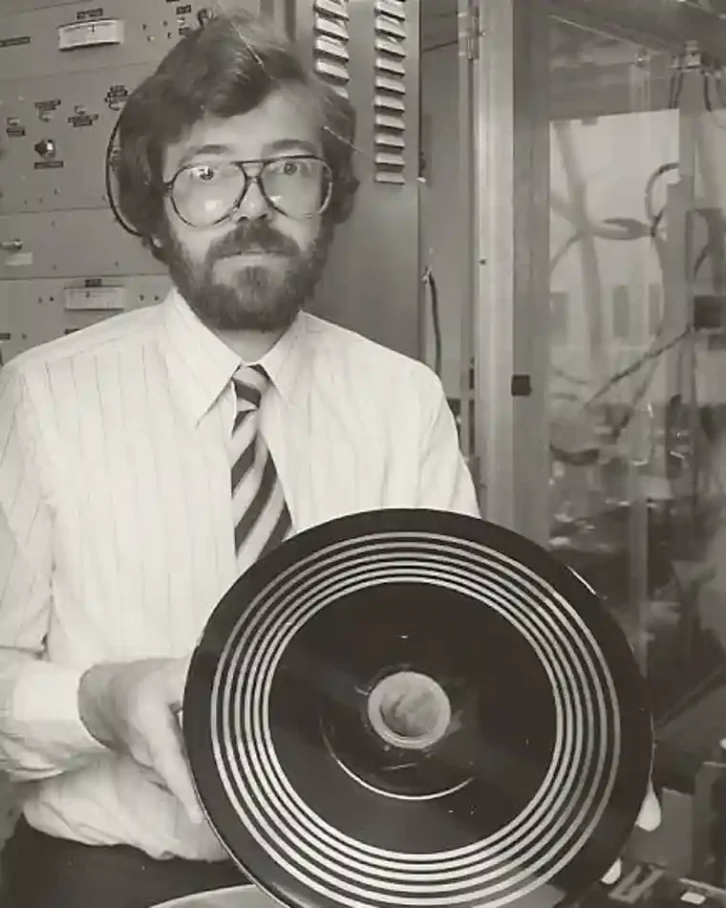
Once Hase and Lieberfarb teamed up, Sony and Philips realized it needed a high-powered partner of its own. Optical disc recording also was a hot topic in the computer industry where only three letters mattered: IBM.
In the spring of 1994, Philips approached executives from IBM’s optical storage research facility in Tucson, AZ. IBM executive John Kulakowski was appointed point man for Big Blue, and enlisted the help of Dr. Alan Bell, a noted optical disc expert and, at the time, program manager in IBM’s Almaden Research Center and in San Jose.
On May 19, Kulakowski and Bell met with Philips executives, along with representatives from Apple, Compaq, and Microsoft. The computer executives got a preview of a new CD-based optical disc format Philips called high-density compact disc (HDCD, not to be confused with the later high-end audio CD format). The same group met again a month later at IBM’s San Jose offices, discussing PC-compliant technical nuts and bolts.
As far as IBM’s engineers were concerned, there were dozens of potential next-generation optical disc formats floating around, and Philips’ effort wasn’t any more or any less intriguing than the others. The computer company had no idea that Philips was developing a consumer digital video format, and according to Bell, Philips didn’t tell them.
Bell lacked enthusiasm for Philips’ ideas, so work on the format stalled during the summer. Then, a week before Christmas 1994, all DVD hell broke loose.
PR War
With Lieberfarb cornering the market on Hollywood content partners, and with its own IBM partnership moribund, Sony and Philips Sony decided to take their disc efforts to the court of public opinion.
On December 16, Sony and Philips issued a press release proposing specifications for a high-density multimedia CD, or MMCD. The release stated that the two companies had begun discussions with motion picture companies, consumer electronics manufacturers, and computer hardware and software vendors on a ‘Digital Video Disc’ format.
These assertions were only semantically correct and implied certain industry imprimaturs. Worse, Bell and his PC group didn’t even know that they had been looking at a consumer video product, much less endorsing one.
Oops.

A newly formed and more CE industry-inclusive SD Alliance – Toshiba, Hitachi, Matsushita, Mitsubishi, JVC, Pioneer, and Thomson – refused to concede the field to Sony and Philips. On January 24, 1995, the SD Alliance counter-punched with its own “no, we have the format” release. The announcement billboarded the actual support of Time Warner, MGM, MCA (Universal), and Turner Home Entertainment, and touted how the SD format “meets or exceeds all requirements…[of] the Hollywood Digital Video Disc Advisory Committee.”
Now that Sony and Philips had shined the light on them, Bell and his ad hoc computer group suddenly gained a new level of importance. Instead of simply advising on computer compatibility for a new optical storage format, it would play Kingmaker for the next big home entertainment movie format.
On February 10, a group of PC industry executives met at the San Francisco Airport Westin and formalized itself under the generic name of the Technical Working Group (TWG), with Bell as chairman. Much to the stunned dismay of attending Sony and Philips executives, the TWG decided it wanted a demonstration of Toshiba-Warners’ SD before it made any recommendations.
The TWG clearly stated that it would endorse neither DVD format. It would merely examine the technical details of the two proposed formats and develop a list of non-binding recommendations for computer-based applications.
That was the public pose, anyway. The cold, business reality was something else.
DVD Referee
All the DVD contestants wanted the final platform to be PC compatible. As a result, both the SD and MMCD camps would be forced to abide with whatever IBM and the TWG “recommended.” And what IBM and the TWG “recommended” was a single, unified, PC-compatible format.
On February 28, 1995, Bell and the TWG met with SD camp reps at the Warner studios in Burbank. Cookson demonstrated SD with the bus crash scene from The Fugitive in full surround sound. Bell and his TWG compadres were suitably blown away. Bell and the TWG had, of course, already seen MMCD. After several technical sessions, it was clear to Bell and the TWG that SD was the superior format.
On May 3, the TWG issued a press release entitled “Requirements for Future High Capacity Compact-Disc Format Announced by Computer Industry Technical Experts.” In the release, the TWG listed nine “objectives” that the PC companies expected from a new optical video disc format, many addressing backward and forward compatibility with both current and future entertainment and PC-based optical disc platforms.
Neither the SD nor MMCD specifications included PC data storage compatibility, however. That solution came from the Optical Storage Trade Association (OSTA), via the TWG. OSTA had earlier issued a file system specification called the Universal Disc Format (UDF), which specified how data files are arranged on a disc. OSTA contributed a modified UDF called Micro UDF, which would enable a disc designed to be played in a consumer electronics digital video disc player to also be able to be played in a PC.
But both sides continued to dig in. By late July, disgusted by the lack of compromise, Bell privately let everyone know that IBM was ready to endorse SD. This threat prompted new high-level discussions between the camps. In August, Toshiba’s Nishimuro made several covert visits to the nearby Sony offices in Tokyo. Faced with IBM’s threat, Sony finally agreed to compromise but wanted one technical concession to save face. Bell agreed.
 With the outlines of a compromise in place, the MMCD camp diplomatically surrendered in an August 18, 1995, letter to the TWG. Sony and Philips were prepared to support the goal of a unified proposal by combining the best approaches of each platform. At a press conference at the IFA show in Berlin, the following week, Sony and Philips made their concession public.
However, the SD Alliance refused the Sony-Philips technical compromise.
Bell and the TWG decided it was time for a final showdown. Using the annual OSTA meeting on September 7-8 in Maui as cover, the TWG met for six hours with each camp at the Sheraton in Waikiki. On the 7th, the SD camp tried to convince Bell and the TWG that its technical scheme was better. The next day, the MMCD camp argued that the SD scheme was too experimental.
After its MMCD meeting, Bell and his TWG cohorts conferred over dinner, then conferred overnight over the phone with IBM executives in Armonk, NY. After coming to an agreement, IBM sent a letter to all DVD parties that it would endorse the compromise format. After some additional protest, the SD camp finally and reluctantly accepted the compromise. New format specifications were announced on November 13, 1995, at Comdex.
Name War
But there were still three problems. The first was what to call the unified format. Naturally, both sides wanted their own efforts represented – the SD Alliance wanted “SD” to be part of the name, while Sony and Philips wanted “CD” as part of what the format would be called.
The answer, of course, had been staring everyone in the face. Lieberfarb had been calling the new format DVD – digital video disc – for more than a year, and the press had followed suit. But digital VIDEO disc implied that the format was for entertainment purposes only. There was nothing in the name that implied the format’s far more expansive computer capabilities.
Determined to unite the formats, Toshiba’s Nishimura picked up a dictionary, flipped through the pages to the letter “V”, and stopped his finger on the word “versatile.”
On December 8, 1995, a new set of unified and newly named Digital Versatile Disc specifications were released. Toshiba announced that the first players would go on sale the following September for between $500 and $700.
Copy Protection War

Well, not really. There was one last hurdle to overcome: pirates.
Hollywood studios had no desire to face the kind of piracy rampant in the videotape world, especially since DVD would provide video pirates with a perfect original from which to make their black market copies. So Lieberfarb, the MPAA, and CEMA proposed federal legislation making it illegal to copy DVDs.
However, the legislation would have made it impossible for computer users to manipulate DVD content.
In May 1996, Bell helped organize the Copy Protection Technical Working Group (CPTWG). The CPTWG consisted of representatives from Hollywood, the consumer electronics industry, the PC/IT industry, and the music industry. On October 29, 1996, after studying several proposals, the group endorsed a scheme from Matsushita called the Content Scrambling System (CSS)
Instead of scrambling a whole movie, CSS simply would scramble the beginning of each scene. The world was then divided into six “regions,” with different encryption codes for each region, designed to limit if not eliminate the black market trade.
Now, finally, DVD was a done deal. Pioneer, Toshiba, and Sony flooded store shelves with decks in February 1997, followed a month later by the first software titles from – who else? – Warner Home Video. Sony-owned Columbia TriStar followed with its own slate of titles a few months later.
But what if you gave a format and nobody came?
Title Wars
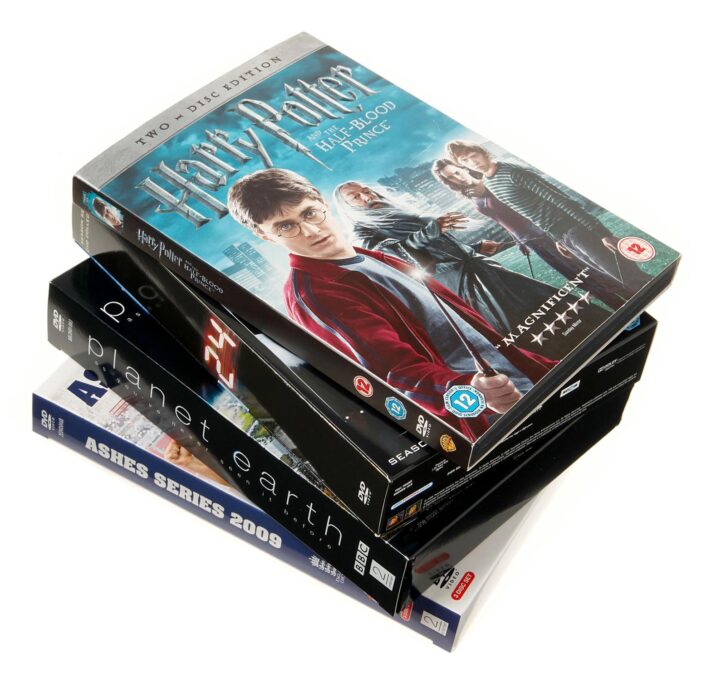 Warren Lieberfarb had now spent five years cornering Hollywood studio executives and convincing them to get on the DVD bandwagon when the time came.
Well, the time had come, the DVD bandwagon had pulled up, and – no one other than studios who had associations with DVD hardware makers had gotten on. When DVD players became a reality, studios froze fearing cannibalization of the still healthy videotape business. Plus, many studios balked at the idea of paying Warners a few cents a disc in DVD licensing royalties.
In the fall of 1997, Universal and Disney signed on. But it took some major prodding by Lieberfarb and backroom wheeling and dealing to get Paramount and Fox studios on board. Paramount started to release titles in mid-August 1998 only after Warner agreed to a favored pricing plan for Blockbuster, owned by Viacom, which owned Paramount. Rupert Murdoch also agreed to release Fox titles on DVD in August only after Time Warner backed down in a bitter and highly publicized dispute over airing his Fox News Channel on Time Warner cable systems.
DreamWorks announced its first titles in October 1998. A week before Christmas 1998, Universal announced that the first movies directed by Steven Spielberg would be available on DVD.
It wouldn’t be until spring 1999, however, more than three years after the format unification and more than two years since the copy protection problem had been solved, that DVD decks and DVD titles from all the major studios were available nationally. in 2001, dollar sales of DVD movies surpassed those of VHS, and several movies earned more in DVD sales in their initial release weekend than during their initial theatrical weekends. In 2003 DVD rentals surpassed videocassette for the first time. The most glaring DVD MIAs were the original Star Wars Trilogy, which wouldn’t appear until September 2004 – two years after sales of DVD players surpassed those of VCRs.
DVD Format War
 Despite all the DVD consumer electronics, content, and computer cats being reluctantly and petulantly herded to create the format, a DVD platform war still broke out. In a classic “what were they thinking” move, national electronics retail giant Circuit City decided the so-called “open” DVD format wasn’t good enough.
In June 1998, Circuit City, in partnership with the Hollywood law firm Ziffren, Brittenham, Branca and Fischer, launched a limited pay-per-view DVD format called Digital Video Express, aka Divx. A $4.49 Divx movie – compared with $20-plus for an open DVD title – would play unfettered for 48 hours using a special Divx player connected to a phone line; buyers would then have to pay for each subsequent post-48-hour viewing.
Several manufacturers including Thomson and Panasonic introduced Divx-compatible players, most Hollywood studios – with the obvious exception of of Toshiba-associated Warners and Sony-owned Columbia – produced more than 300 DivX titles, and several other regional and national consumer electronics retailers joined Circuit City in selling both players and Divx discs. In early 1999, one market research firm projected that Divx hardware would account for 15% of all DVD players shipped that year.
But in June 1999, after universal derision from consumers, Circuit City shut Divx down after spending nearly $350 million and suffering a $114 million loss. Divx’ one legacy was to inspire the name – DivX – of an MPEG video compression alternative that enjoyed a slightly longer existence into the early 20-teens.
DVD Recordable War
 While progressive scan technology was known, it took two years before the first progressive scan DVD players hit the market. It took less time for a DVD-Audio deck to be introduced, by Panasonic, in late 1999.
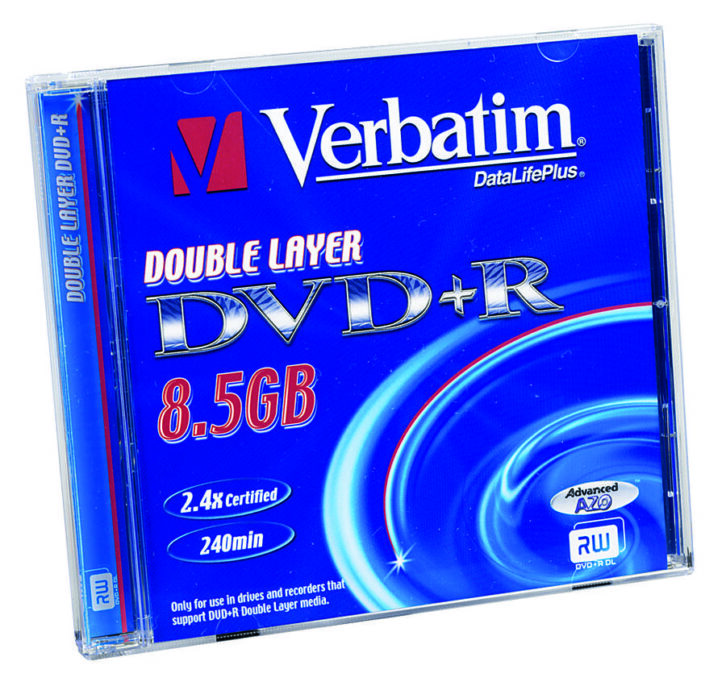
At around the same time that DVD-Audio was being introduced, a limited number of companies demonstrated recordable DVD decks and camcorders. But – what a surprise – manufacturers making recordable DVD devices couldn’t agree on a single format.
Pioneer, supported by Apple and Compaq, led an effort for the DVD-R “dash” format, Philips and Hewlett-Packard led a DVD+R “plus” coalition, and Matsushita and Hitachi championed a DVD-RAM standard. In 2002, Matsushita and Hitachi both unveiled a combination of DVD-RAM/DVD-R equipment. By 2004, several manufacturers had introduced dual-format player/recorders to reduce consumer confusion over formats.
The advent and variety of far simpler, more portable, and universal flash media, however, eventually obviated the market for recordable DVDs.
Notwithstanding the Divx and DVD recording war detours, DVD’s avoidance of a platform war was more an extraordinary exception than the rule. Ironically, this one exception was paralleled by the avoidance of another exceptional higher-definition video platform war, this time with the FCC playing referee, which we’ll start exploring next week.