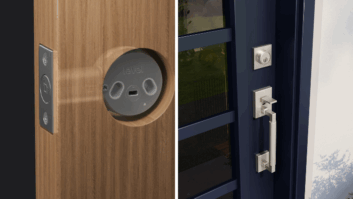
Smart home technology has long been part of the luxury residential market, but there is a change taking place in how builders, developers and homebuyers view it. Instead of being an upgrade added later, the technology is increasingly being designed into a residence from the start.
That shift was behind my recent conversation with JC Murphy, chief commercial officer at Savant, following the company’s announcement that it had been selected as the exclusive smart home technology partner for two U.S. Development luxury Florida projects: Salato Pompano Beach and Viceroy Residences Clearwater Beach.
JC Murphy believes projects like these point to where the market is going, with lighting, shading, climate, entertainment and energy management becoming an expected part of the home.
“There’s a baseline of functionality they’re expecting in the home,” JC Murphy said.
For buyers, the difference can become pretty clear when touring properties. “You walk into a home that you push a button, and the music comes on, and the shades go down, and the lights come on,” he said. Then a buyer can walk into another property with similar architecture and design that doesn’t have those capabilities.
For JC Murphy, the reaction is increasingly going to be: “Well, I’m buying the one with smart features.”
Getting Involved Earlier
The shift is also changing when Savant and the integrator get involved.
JC Murphy said Savant is now working with MEP firms and other members of the project team early in the design and construction process.
“We want to be there right at that moment because we want the keypads and the fixtures put into the drywall and into the ceiling during the construction process,” he said.
Smart home technology can be retrofitted, but new construction provides the opportunity to make it part of the infrastructure from day one. “Things can absolutely get retrofitted, but it’s so much easier with that in as part of the initial offering and new construction.”
Savant, GE Lighting and More Price Points
 Part of Savant’s ability to address a broader market goes back to its acquisition of GE Lighting from General Electric in 2020.
JC Murphy said the combination has brought together GE Lighting expertise in high-volume consumer products with Savant’s vast experience in software and the high-end luxury market.
“We’re now fully operationalized and organized as one company with two amazing brands,” he said.
It has also helped Savant address the perception that its technology is only for the very top of the market. “In the past, many consumers felt like Savant is just a high-end luxury brand. And that it’s too expensive,” JC Murphy said.
By adding GE-branded consumer and professional products to its portfolio, Savant can offer connected solutions across more price points, an important development as technologies once associated primarily with custom installation continue to reach a wider market.
Making the Technology Disappear

For luxury homeowners, having more technology doesn’t necessarily mean wanting to see more technology. “The more that we’re able to embed the technology in the solution itself, the better we can design it into the fabric of the home,” JC Murphy said.
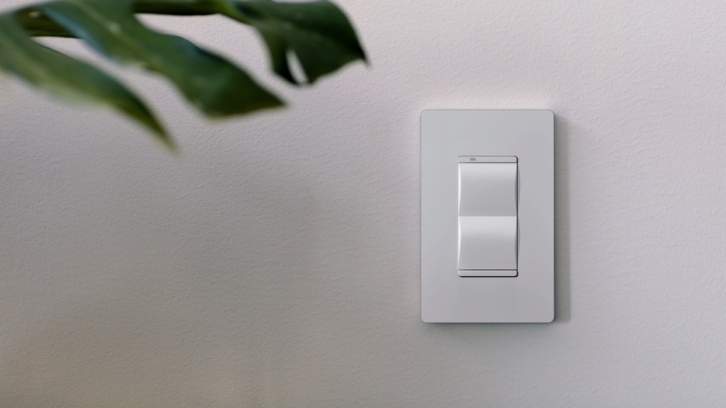
One example is Savant’s brand-new keypad host architecture, which embeds Savant’s software intelligence into an elegant device that already belongs on the wall. “Our entire software stack is embedded in a keypad on a wall,” JC Murphy said.
The keypad can operate like a conventional switch or dimmer while also providing the foundation for smart home and smart power capabilities. More processing can be added as the system grows. It also supports the cleaner look architects and designers want.
AI Without the Learning Curve
AI was a big part of our conversation, but JC Murphy doesn’t look at Savant’s approach as simply another voice assistant. He calls it a “technology companion.”
“Today’s voice assistants simply react to a command. We’ve been investing in the development of an AI platform that can engage in a two-way conversation, make recommendations and then execute on them, and so much more,” he said.
Because Savant starts as the control ecosystem, it already knows what systems and devices are connected and what they can do. That empowers the homeowner to interact with the home in a very different manner.
“With Savant AI, I can simply ask my system what I can do in my home to save on energy bills or what kind of scene I could create to help maximize relaxation in a particular room,” JC Murphy said. “The user doesn’t have to be trained on how to use the app or be a technology expert to learn about their home’s capabilities.”
JC Murphy demonstrated the technology during our interview, asking Savvy, Savant’s AI companion, what someone unfamiliar with the smart home could do.
The system suggested controlling lights, temperature and shades, playing music, viewing a door camera, checking air quality and looking at energy information. When JC Murphy told Savvy that the visitor wasn’t a technology person, it responded with simple examples in easy-to-understand casual, everyday speech.
That demonstration made the point: The homeowner doesn’t necessarily need to know which system controls what. The user can simply tell the home what the desired result is, and AI will help them realize it.
JC Murphy also described testing the technology with visitors to his home who spoke German, Korean and Spanish. Although they had experienced his home’s automation before, they had never personally interacted with it. Once they realized they could simply speak to the system in their native languages, that changed.
“All these people who have been intimidated by technology now have their own companion they can talk to about the tech in their home, big or small,” JC Murphy said. For an industry that has spent years trying to make the smart home easier to use, JC Murphy sees that as a potentially important breakthrough.
“It has long been too complex for many people,” he said.
From Control to a Smarter Home
 JC Murphy sees AI eventually going beyond simply turning something on or off.
Because the control system understands the devices connected to it, AI can help homeowners determine how to use those products more effectively.
He used Savant’s integration with Daikin as an example. Instead of requiring a homeowner to understand the technology behind the HVAC system, the user could ask how to make the home more efficient and receive recommendations.
“You can just say, ‘Hey, what can I do with this Daikin system to cool my home in the most efficient way possible?” JC Murphy said.
For JC Murphy, the first step is making the smart home easier to use. The next is helping the home operate more intelligently.
Energy Is Now Part of the Conversation
Energy management is another area that has changed significantly.
“With blackouts and energy-related issues occurring more frequently as a result of an aging grid infrastructure, and homeowners looking for ways to increase energy efficiency, power is becoming a key part of almost every conversation about the smart home,” JC Murphy said.
Homeowners are adding EV charging, HVAC equipment, appliances and other electrical loads that can challenge a home’s existing electrical capacity, as well as batteries and generators that can maintain power to the home during outages.
“No matter what, the energy management discussion is relevant,” he said.
If JC Murphy were designing a luxury residence today that wasn’t going to open until 2035, energy monitoring would be near the top of his list.
“You’ve got to have something in the home that’s monitoring energy use or sharing what the energy profile looks like.”
That kind of information is available to homeowners in the Savant app as part of the Savant Power System’s capabilities, and it becomes the starting point for decisions involving HVAC, hot water, pool equipment, appliances, EV charging, solar, generators and battery storage.
For TWICE readers, JC Murphy also sees appliance integration as an important piece of the energy management story. “Appliances are a major consumer of energy in the home and visibility into energy consumption is incredibly important,” he said.
The energy management space is rapidly evolving. Instead of treating an EV charger, HVAC system or appliance independently, the soon-to-be available Savant Smart Budget features energy-management software that can look at the home’s available electrical capacity as a whole and manage how that power is allocated.
Privacy and Control
More intelligence in the home also raises questions about privacy.
JC Murphy said Savant has been deliberate about how its AI companion is activated. “Just because we can make this type of AI technology always-on and always listening in some environments doesn’t mean we should,” he said.
Savant’s initial approach requires the homeowner to take an action to activate the AI. “The whole idea of user-activated is a super-important concept to us,” JC Murphy said.
Access control is another consideration, particularly in luxury homes where integrators, contractors and other service providers may need access at different times. JC Murphy said homeowners and integrators can see who is interacting with a Savant home and establish specific permissions, including limiting access at particular times.
Don’t Assume the Customer Is a Tech Expert
 When I asked JC Murphy about one of the biggest misconceptions developers have about smart home technology, his answer wasn’t about technology at all. Developers and technology companies, he said, can overestimate how sophisticated the end user is — or how sophisticated that person wants to become.
“Typically, the users in a smart home want to enjoy the features and benefits without spending loads of time becoming a technology expert,” JC Murphy said.
His advice to industry professionals: “Don’t overestimate how much homeowners know about what you installed in their home.”
That also gets back to the importance of AI. A smart home can have tremendous capabilities, but those features don’t mean much if the homeowner doesn’t know they exist or doesn’t know how to use them.
The “Super Electrifier”
The expanding smart home is also changing the role of the custom integrator.
JC Murphy sees successful integrators developing expertise beyond traditional AV and into lighting, shading, HVAC and power. During our conversation, he came up with a term for them: the “super electrifier.”
“This is a group of professionals who have developed the ability themselves or partnered with another entity to offer shading, lighting, HVAC and power design,” he said.
But JC Murphy believes having expertise across the systems that are increasingly important to the home puts the integrator in a much stronger position — and can get them involved earlier in the project.
Easier Technology, More Opportunity
With AI making systems easier to use, could technology eventually reduce the need for professional installation? JC Murphy doesn’t think so.
“I think people are concerned that technology is going to eliminate the need for professional installation,” he said. “I think folks are always going to want installed solutions.”
What he does expect to change is the efficiency of the installation business.
“The technology is going to provide for more profitability and allow installation companies to scale without adding lots of manpower,” JC Murphy said.
For dealers and integrators, service after the installation could become even more important.
“It’s the installation of the offering, and it’s the service of that offering post-installation that’s super valuable,” he said. “I think that’ll get even more attention moving forward, not less, with the technology that’s going into the home.”
That is particularly relevant as the lines between traditional consumer electronics retail and custom installation continue to become less distinct.
JC Murphy noted, however, the bigger change may be happening with the consumer. The industry has spent years trying to convince people why they need smart home technology. As it becomes easier to use, less visible and more closely tied to lighting, climate and energy, that conversation is changing.
Increasingly, homeowners will simply expect it to be there.
See also: The Future Of The Kitchen Is More Human Than High-Tech