 In a world of ever-smarter appliances and ever-bigger screens, Whirlpool Corporation stands apart for asking a different kind of question — not “what’s possible?” but “what’s useful?”
“At Whirlpool, every project begins with one question,” says Rob Moser, Whirlpool Corporation vice president of design. “What does our customer really need? We’re not chasing technology for its own sake — we’re focused on making everyday tasks simpler, faster, and better.”
That simple premise — to create products that fundamentally improve people’s lives — drives a century-long legacy of purposeful innovation across Whirlpool’s brands.
While competitors race to add more features, Whirlpool is refining the ones that matter most — finding elegance in empathy and power in practicality.
Innovation Rooted in Real Life

Whirlpool’s design process doesn’t start in a lab — it starts in real homes. Teams observe how people actually cook, clean, and live, uncovering the small but persistent frustrations that define daily routines. Those insights often spark the company’s most impactful ideas.
“Some of the methods we use are part of our secret sauce,” says Rob Moser, “but the outcome is simple: products that reflect what consumers truly want.”
The results are innovations that quietly remove friction. Take Whirlpool’s FanFresh™ feature, which keeps clothes fresh for hours after the wash cycle ends. Or the Spin & Load dishwasher rack, which rotates 360° for easy access — especially helpful for seniors or anyone with mobility challenges.
These aren’t showy inventions, but they make a noticeable difference in how people live. “You shouldn’t have to work around your appliances,” says Rob Moser. “They should work around you.”
Design for Everyone — Not Just the Luxury Few
While many companies develop new technologies for premium lines and later scale them down, Whirlpool works the other way around. “We believe good design shouldn’t be exclusive,” the company explains. “Rather than innovate for the few and simplify later, we start with real-world constraints — family budgets, small spaces, busy lives — and ask how we can make life better there.”
This bottom-up approach democratizes innovation and builds loyalty where it counts: in the mass market. It’s also a powerful differentiator for retailers, who can tell a story about products that serve real homes, not just aspirational ones.
For distributors and manufacturing partners, it’s a model of scalable innovation that drives volume and satisfaction — proving that empathy and accessibility can be just as profitable as prestige.
Cross-Brand Collaboration: Shared Thinking, Distinct Identities
 Whirlpool’s portfolio spans a broad spectrum of consumers, from the design-forward homeowner to the reliability-first family. But across brands, one idea remains constant: purposeful, human-centered innovation.
“It always comes back to the needs of the user,” says Rob Moser. “Some needs are universal — keeping food fresh, reducing laundry time. Others are deeply personal — one person loves mastering a recipe, another just wants to feed the family and move on.”
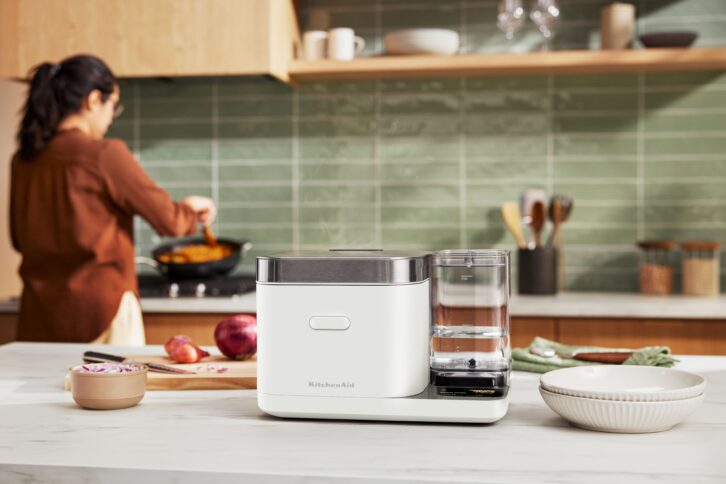
A recent example is the KitchenAid Grain and Rice Cooker, a deceptively simple appliance designed to solve a surprisingly complex problem: cooking grains other than rice. With an integrated water tank and pre-programmed grain modes, it automates the tricky parts while allowing creative control where it counts.
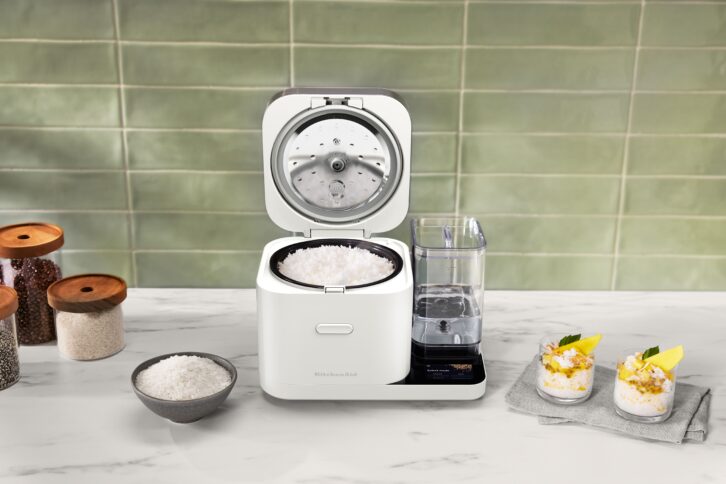 Its contextual display even fades into the background until needed — a subtle design touch that’s now inspiring Whirlpool’s broader appliance UX. “This idea of ‘intelligence that disappears until it’s useful’ is influencing everything from major kitchen appliances to laundry,” the company says.
It’s a reminder that innovation at Whirlpool doesn’t just move products forward — it moves philosophies forward.
Breaking Boundaries in Kitchen Design: The Downdraft Revolution
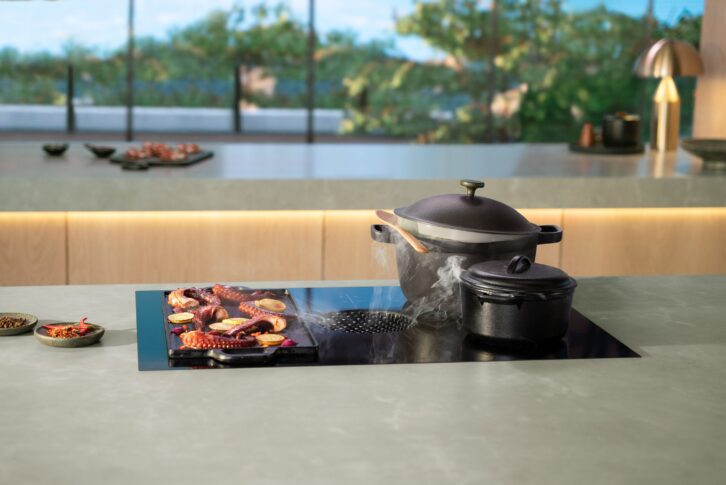
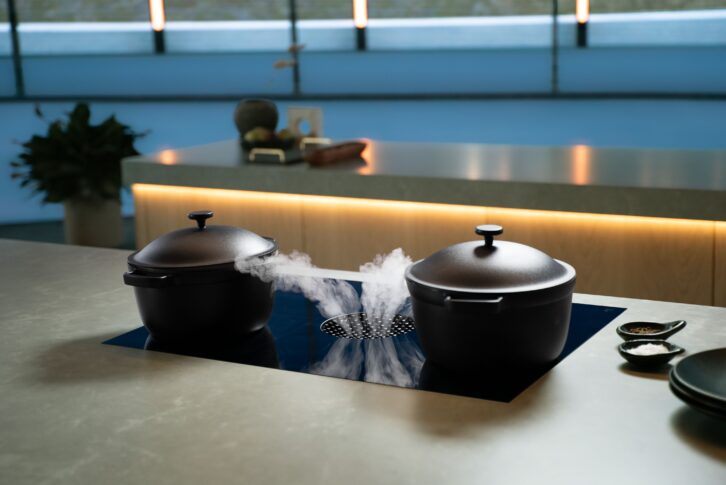 One of Whirlpool’s most exciting advancements is the new JennAir and KitchenAid downdraft induction cooktop, which reimagines what’s possible in kitchen architecture.
For centuries, kitchen layouts have been dictated by one constraint: venting. Cooktops sat against walls so smoke could escape. Whirlpool’s recirculating downdraft system breaks that pattern completely.
At just eight inches deep, it uses advanced fan and filtration technology to eliminate smoke and odor — quietly and efficiently — with no need for exterior venting. The impact on design is transformative.
“You can now place your cooktop in an island without a hood overhead,” says Rob Moser. “It means you can face your guests, enjoy the view, and lay out your kitchen the way you want.”
Designers have been quick to embrace the freedom. “It removes one of the most stubborn constraints in kitchen planning,” Rob Mosernotes. “You can now have continuous stone surfaces, uninterrupted sightlines, and kitchens that finally breathe.”
For the first time in generations, a cooktop has become a design enabler, not a limitation.
Wellness as a Design Imperative
While “wellness” has become a marketing buzzword across industries, Whirlpool approaches it as a design philosophy — one that integrates physical, environmental, and emotional well-being.
“When our products reduce friction, stress, or fatigue, they give people back mental space,” Rob Moser explains. “That’s wellness — your home working with you, not against you.”
Across its brands, that philosophy is translating into tangible innovations:
- Quiet, odor-free ventilation systems that keep the air clear and the conversation flowing.
- Refrigeration systems that extend freshness and reduce food waste.
- Laundry features that eliminate allergens and keep clothes feeling just washed, hours later.
Even subtler details — like soft-close doors, gentle lighting, and reduced operational noise — play a role in creating calmer, more restorative spaces.
For retailers, this provides a fresh and emotionally resonant story to tell: products that do more than perform — they nurture.
Laundry Innovation: Little Fixes, Big Payoffs
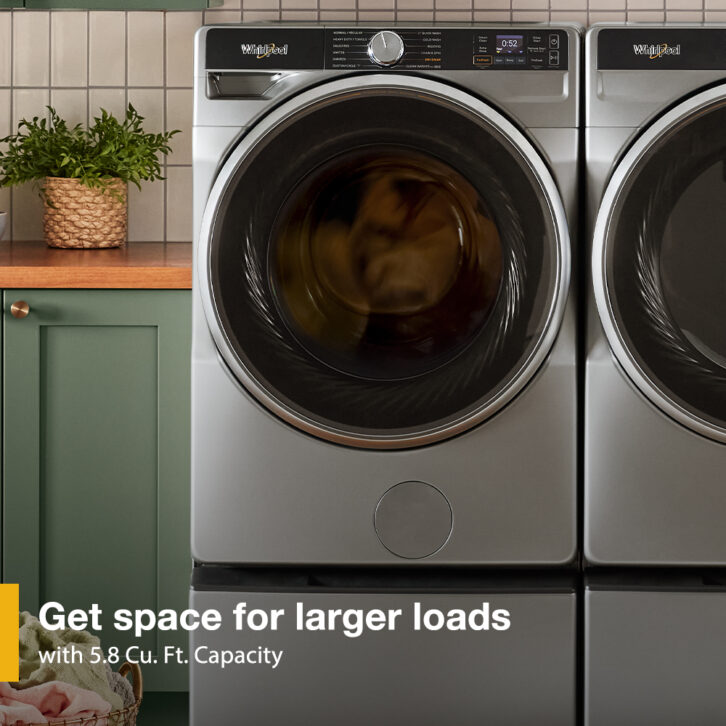 Nowhere is Whirlpool’s empathy-driven design clearer than in its laundry innovations across the Whirlpool lines.
Pet owners, for example, know the frustration of fur-covered clothes. Whirlpool’s pet-hair removal system tackles that problem directly — not as a luxury, but as a necessity for millions of households. “I have an Australian Shepherd named Maggie,” one Whirlpool designer laughs. “She has a fur color for every outfit.”
Then there’s FanFresh™, a feature built for modern life — running laundry overnight, between meetings, or before leaving for work. It keeps clothes fresh until you’re ready to move them, eliminating the musty “forgotten load” smell.
“These features might seem small,” says Rob Moser, “but they’re deeply human. They remove everyday annoyances, and that’s what makes people fall in love with a brand.”
For sales teams and partners, these relatable benefits are storytelling gold — simple, demonstrable value that resonates instantly on the showroom floor.
Smarter Technology, Simpler Living
As the appliance industry races toward connected everything, Whirlpool is taking a more intentional path. The company embraces smart technology — but only when it serves a purpose.
“Some companies think you should be able to watch your doorbell camera on your cooktop,” Rob Moser quips. “We think your oven should keep your cookies from burning if you have to answer the door.”
That line captures Whirlpool’s whole design philosophy: intelligence that simplifies life, does not complicate it.
For retailers and consumers alike, it’s a refreshing approach in a world of overwhelming options — “smart” products that feel genuinely supportive, not demanding.
Looking Ahead: Meaningful Progress, Not Flashy Promises
The future of Whirlpool innovation lies in balance — between technology and simplicity, design and purpose, aspiration and accessibility.
“You’ll see products that fit more naturally into people’s lives and do a little more than expected,” says Rob Moser. “Some will feel like leaps forward; others will just make you think, ‘Wow, that’s clever.’”
Expect everything from smart ovens that learn your cookie preferences to small appliances that automatically measure water for grains and dishwashers with spinning racks that make loading effortless.
And increasingly, Whirlpool is offering customizable aesthetics — knobs, handles, and finishes — giving consumers new ways to make their spaces personal.
But one thing won’t change: “You won’t see us adding technology for its own sake,” Whirlpool insists. “You’ll see products that make a real difference in how people live, cook, and care for their homes.”
A Purpose That Connects the Industry
For retailers, distributors, and manufacturers, Whirlpool’s design ethos offers more than compelling products — it provides a reliable framework for partnership.
When innovation starts with people, the path from design to sale becomes clearer. Retail associates can lead with empathy, not specs. Distributors can rely on steady demand driven by everyday relevance. Manufacturers can align with a brand whose innovation pipeline is both consistent and consumer-proven. Whirlpool’s success reminds the industry of something fundamental: technology doesn’t create loyalty — understanding does.
Innovation That Begins with People — and Ends with Better Living
Across its brands, Whirlpool is proving that innovation isn’t about what appliances can do — it’s about what they enable people to do. Whether it’s reimagining kitchen design, easing daily routines, or creating quieter, calmer homes, every breakthrough starts from the same place: empathy.
That’s what makes Whirlpool’s innovation timeless. It’s not technology for technology’s sake — it’s technology for life’s sake.