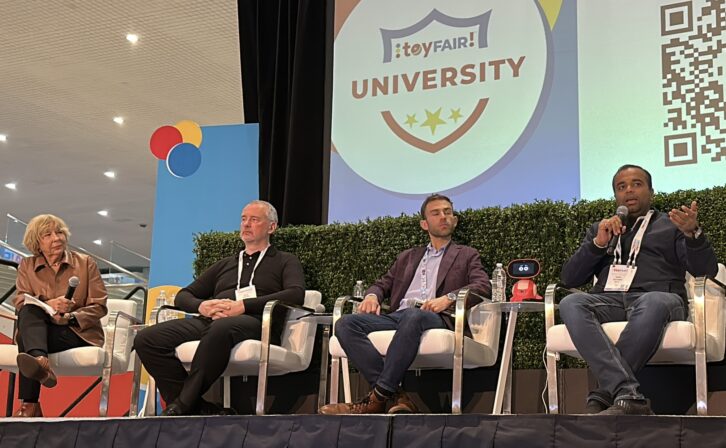
Toy Fair’s Generative AI panel (l-r): moderator Robin Raskin, founder, Virtual Events Group; Ben Erwin, creative executive producer, XR & emerging technologies consultant; Matthew Leopold, partnerships team lead at Alibaba; Sneh Vaswani, founder & CEO of Miko (image credit: Stewart Wolpin)
“Toys aren’t just for kids” is now more than just a tired truism within the toy industry. With an aging population combined with more advanced technologies such as artificial intelligence, the so-called “kidult” and “elder toy” markets are slowly gaining prominence and importance both behind the product design and marketing scenes as well as on toy and consumer technology product shelves.
Attendees at last week’s Toy Fair at New York City’s Jacob Javits Center were treated to a small but increasing number of AI-powered devices, as well as play products able to be enjoyed by those aged 80 months to 80 years. According to a recent survey conducted by the Toy Association, 89% of consumers this holiday season plan on buying toys for another grown-up, 53% of men surveyed plan on buying a toy for themselves, 41% of parents said they bought an average of 13 toys for themselves over the past year, and 20% of parents said they’d be buying a toy for an aging relative.
“What all of this data indicates is that the spending power of the kidult is growing and is giving way to new opportunities on either end of the kidult spectrum,” reported Kristin Morency Goldman, a Toy Association toy trend specialist. “We all know the developmental, cognitive, social, and many other benefits of play for children. But now consumers are really starting to understand that these benefits can extend to older adults as well.”
As to what kinds of tech toys adults will buy for whomever, AI is likely to become a more ubiquitous feature. At a show conference on “How the Toy Industry Can Use Generative AI,” moderator Robin Raskin referenced an observation made by Rob Reich, professor of political science at Stanford and the university’s Institute for Human-Centered AI associate director: “AI science is like a late-stage teenager, newly aware of its extraordinary powers but without a fully developed frontal cortex that might guide its risky behavior and lead it to consider its broader social responsibilities.” In other words, AI-enabled toys are as far along in their maturation process as the audience they are targeted at but will continue to mature.
Admittedly, actual AI-enabled toys weren’t that prevalent on this year’s Toy Fair show floor still dominated by non-tech plush, metal, paper, plastic, and wood game, licensed character, educational, and play offerings. What few tech-enabled toys on display this year were primarily STEAM/STEM-oriented, as well as the usual RC trains, drones, and automobiles, robots, and video game adjacent wares.
Here are our choices of the newest, most consumer tech-oriented toys unveiled at this year’s Toy Fair available for either last-minute stocking for this year’s holiday quarter or to prepare for next year’s gifting seasons – click on the image below to access the gallery.
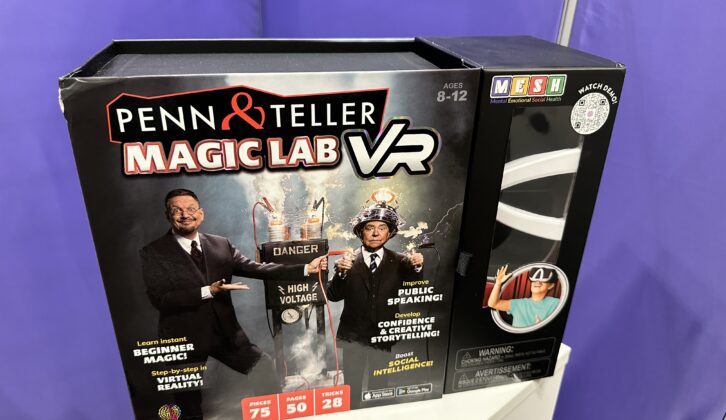
Abacus Brands Penn & Teller Magic Lab VR $64.99 The makers of the long-running Professor Maxwell’s VR learning kits now brings the magic of magic to kids of all ages with the Penn & Teller Magic Lab VR. Shot in the magic duo’s Las Vegas theater at the Rio, the kit includes 75 pieces and a 50-page manual to teach 28 tricks. Budding balls-and-cups prestidigitators learn from the masters themselves via VR – a VR app viewed by placing a smartphone into the included goggles. But like most Abacus VR kits, the Penn & Teller Magic Lab VR is not merely magic instruction, but teaches the science behind the sleight-of-hand, along with performance skills to breed confidence. (image credit: Stewart Wolpin)
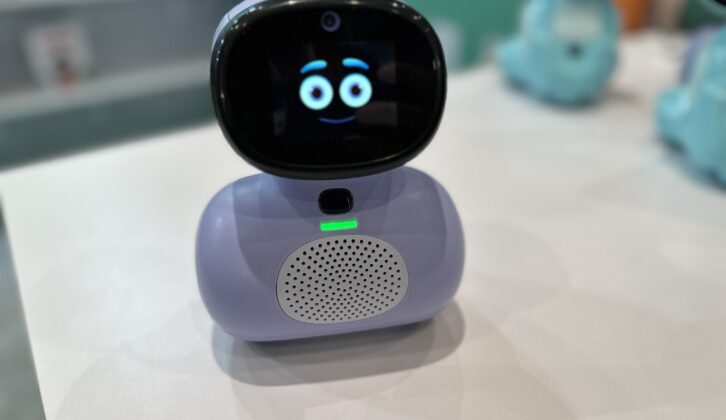
Miko Mini $99 preorder; $149 MSRP The most AI-endowed toy at Toy Fair was this smaller, cheaper version of the original Miko robot ($249), now in its third edition. The Miko Mini is not only around half the size of the original but relies more on voice control rather than the original’s potentially daunting touch GUI. Otherwise, the Mini is fully endowed with the original Miko’s AI-powered interactions that allows a user to converse, review that day’s school lessons, and play games. While the heavy AI processing is done in the cloud, all other data, including video, stays local on the device. Miko Mini is available in either pastel purple or blue, rolls around autonomously on three wheels, can conduct direct video calls to it by a parent, runs continually for up to two hours – although Miko is designed for more intermittent use – on its rechargeable battery, and, thanks to its generative AI, gets more personalized and gains better understanding with usage. (image credit: Stewart Wolpin)
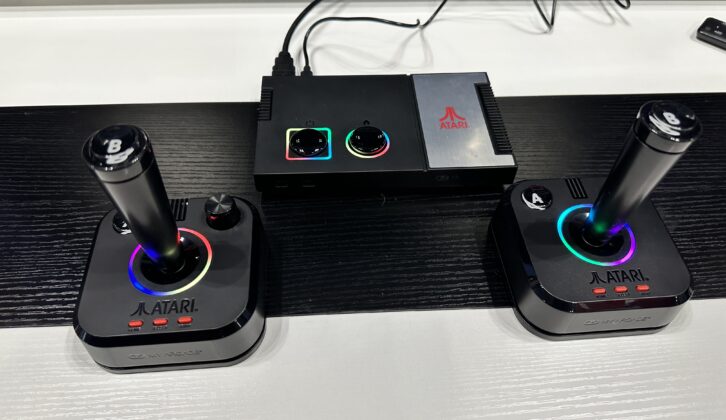
My Arcade Atari GameStation Pro $99.99 Designed to appeal to the kidult nostalgia market is this retro but HDMI-connectable Atari gaming system that will mimic and play more than 200 games including Asteroids, Breakout, Centipede, Missile Command, Pong, Space War, and Video Pinball, for the Atari 2600, 5200, 7800, and other ancient arcade platforms in their original pixilated forms – games are listed under their appropriate Atari generation. Players can choose to play widescreen or in the really retro 4:3 aspect ratio, all in 720p, and the dual joystick controllers are wireless, operating on a non-Bluetooth 2.4GHz frequency. The system will start shipping at the end of October. (image credit: Stewart Wolpin)
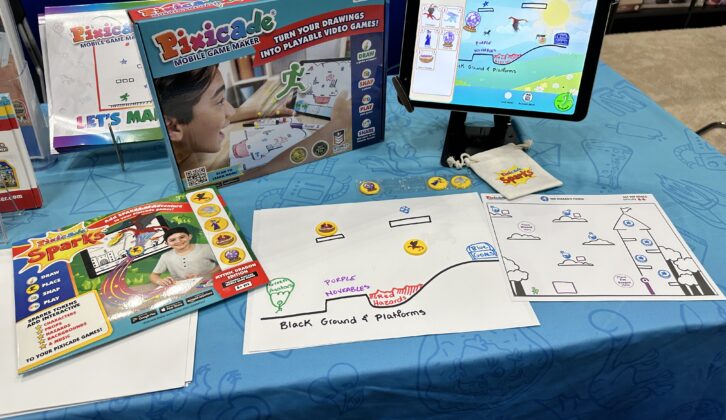
Pixicade Mobile Game Maker Sparks Tokens $29.99 w/bundle, $19.99 sold separately Some kids are too young to actually start typing out code, so the pixies at Pixicade have further simplified game creation – a child simply creates a drawing, either freehand or on an included template, takes a picture of their creation through the Pixicade app on a smartphone or tablet, and the drawing becomes a playable game. Pixicade has now added Sparks stick-on tokens that allow a budding video game designer to add animated interactive elements to their play. Bundled with a full Pixicade kit will be dragon Spark tokens, and Ocean and Space tokens can be purchased separately. (image credit: Stewart Wolpin)
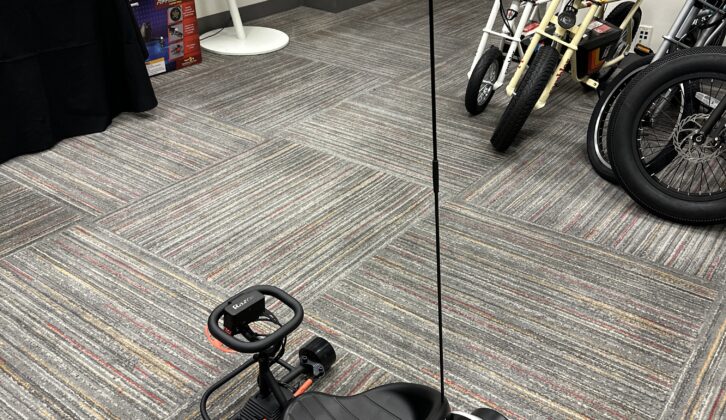
Razor Rad Rod $229.99 MSRP, $199.99 MAP This “rat rod” styled kart, a brand-new innovation for Razor, runs on a 24-volt rechargeable motor capable of motoring a child of up to 110 pounds at up to 10MPH for up to 40 minutes. Sitting in its “T” bucket seat, young hot-rodders have access to paddle throttle and brake controls, rolls on front skateboard and rear slick wheels, and the safety flag makes it easy to spot the Rod as its semi-speeds down a sidewalk or driveway. (image credit: Stewart Wolpin)
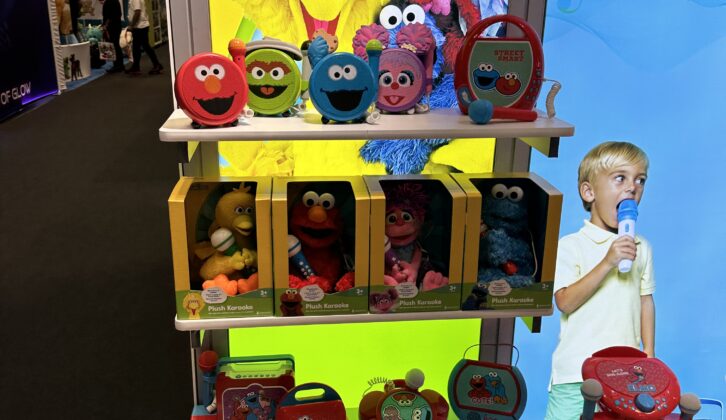
Singing Machine Sesame Street Karaoke Microphone $14.99, Plush $29.99, Power Tower Pedestal $59.99 Sure, kids karaoke isn’t new, but kids karaoke with Sesame Street stars? Singing Machine Sesame Street karaoke characters including Elmo, Cookie Monster, Big Bird, and Abby Cadabby become sing-along duet partners in multiple incarnations, from the simple microphone/speaker design to plush character dolls to the more ornate pedestal microphone combo. All Sesame Street karaoke styles will be available to start shipping early next year. (image credit: Stewart Wolpin)
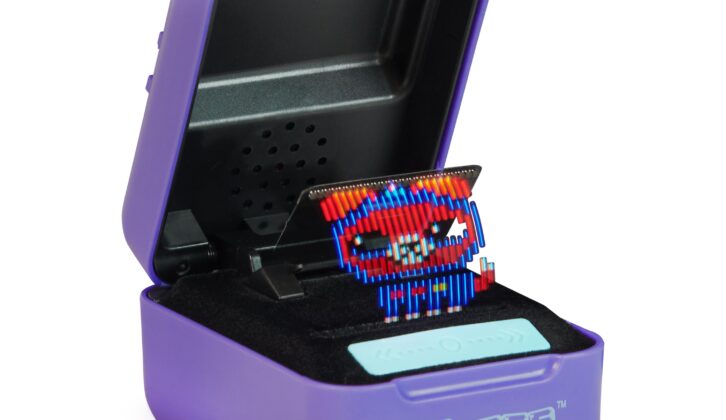
SpinMaster Bitzee Virtual Pet $29.99 Instead of viewing a virtual pet on a screen, Bitzee lets kids touch the flickering images to interact with the varying playful characters. Bitzee projects a series of 15 characters on a touch-capacitive oscillating film that kids can flick to interact with to get audio and video reactions. Users nurture each character such as a snail, turtle, clown fish, cat, dog, and unicorn from baby to adult and playing games unique to each. Filling a Love Meter and winning games allows a child to earn treats to attract the next character. Once each character’s maturity process is complete, the user reaches Super Bitzee mode and can now interact with any of the 15 characters as desired. Bitzee’s purple pod, about the size of a large ring box, runs on three AAs for around 6 hours of play. (image credit: Blitzee)
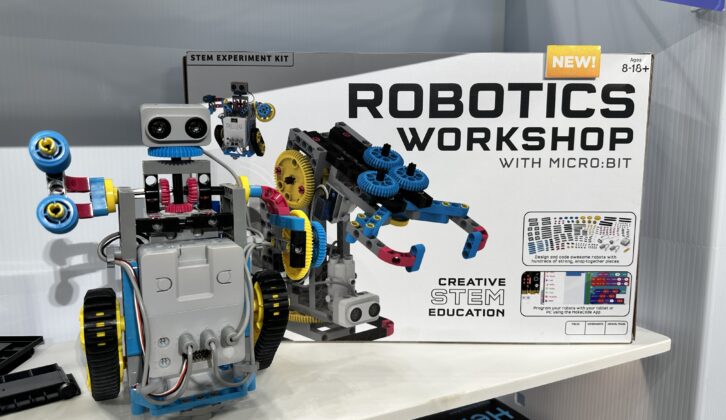
Thames & Kosmos Robotics Workshop $64.95 Well known for its STEM Experiment Kits, Thames & Kosmos will start shipping this build-your-own robot system that will include a new MakeCode and Java script supported Microsoft processor that will allow for a wider variety of programming possibilities. Scheduled to ship next late summer or early fall with a price between $280-$300, the kit will include around 150 pieces, including touch and temperature sensors and an accelerometer, all of which will enable 20 different robot build configurations. (image credit: Stewart Wolpin)
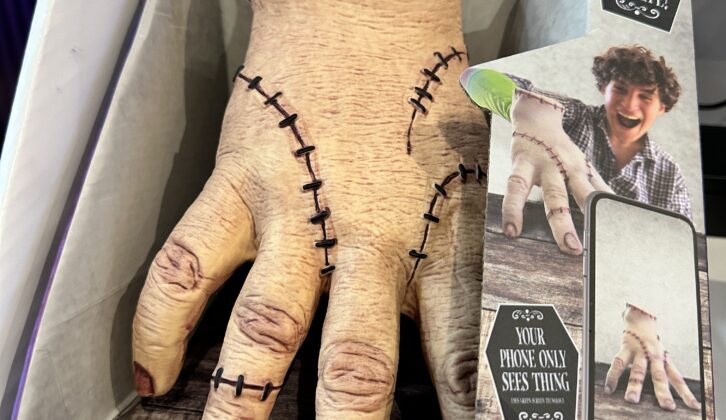
Wow! Stuff Real FX Thing $34.99 Licensed from the Wednesday Netflix series, this Thing thing lets user create disembodied hand videos. Creepy creators merely slip a green sleeve on their arm, don the Thing glove, then fire up the Chromakey green screen-powered app to shoot hand-only videos that can be shared or uploaded to social media. Real FX Thing is due to start shipping in Q2 2024. (image credit: Stewart Wolpin)