Bedminster, N.J. – Verizon Wireless is upgrading its cloud-based
navigation service for cellphones to offer more of the functions of a portable
navigation device (PND).
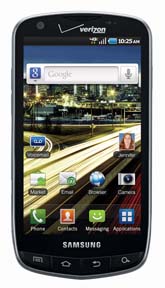
The upgraded subscription-based service, called VZ Navigator VX
service, is available on select Android smartphones. They include select Droid
smartphones, such as Motorola’s Droid X and HTC’s Droid Incredible, as well as
the Samsung Fascinate.
Upgraded features include navigation views presenting a
through-the-windshield view of a map rather than an aerial view. In addition,
the through-the-windshield view displays 3D views of buildings and landmarks
flanking a street or highway and realistic images of street and highway signs
at intersections and ramps.
Verizon’s new capabilities are available at launch only in six
cities: Chicago, Detroit, Los Angeles, New York, Washington D.C., and Kansas
City, Mo. More cities will be added in 2011.
Other PND-like enhancements include a day/night mode that
displays a blue sky on the screen during the day and a darker sky at night.
The Verizon service also offers satellite maps, as does the free
Google Maps Navigation service.
Consumers can download VZ Navigator VX from the Android Market
and pay $9.99 a month for unlimited use, $4.99 for a weekly use, or $2.99 for
24-hour use.
One advantage to a cloud-based service, the carrier said, is that
consumers don’t have to manually download updates to maps and points of
interest databases. The monthly charge includes continuous updates to maps and
points of interest.
One disadvantage that VZ Navigator VX doesn’t address is the ability
to automatically reroute a user who turns off a predetermined course into an
area where cellular signal is lacking or blocked. The service, however, will
continue to guide drivers who lose signal coverage but remain on the
recommended route.