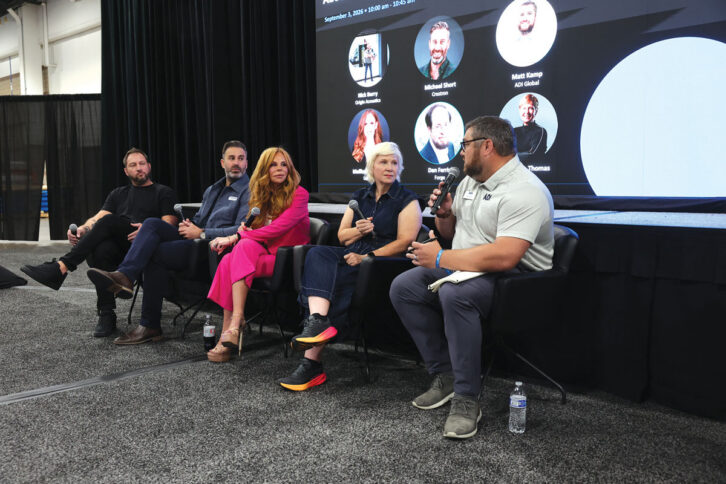
The future of custom home integration isn’t about selling homeowners more technology. Instead, it’s about understanding how they live and using technology to create experiences for them and their families.
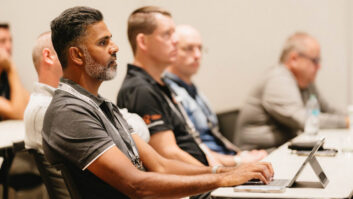
That was a central theme of “What Every Integrator Needs to Know About the Next Five Years,” a Thursday morning CEDIA Expo 2026 Smart Stage roundtable featuring Mellisa Andresko of Lutron, Michael Short of Crestron, Nick Berry of Origin Acoustics, Kathleen Thomas of Sony, Matt Kamp of ADI Global, and moderator Dan Ferrisi of Forge.
Overwhelmingly, the panelists said homeowners increasingly don’t care about individual brands, specifications, or even the technology itself. What they want from an integrator is a home that works for them.
That means integrators need to change the conversation with clients. Instead of asking what products they want, they should be asking how a family uses its home. Kamp described the emerging role as that of a “technology architect,” similar to the way an architect works with a homeowner to understand how each room will be used. The difference is that the integrator is designing what happens within those spaces.
“It’s not just selling SKUs; it’s what do you want to do in this room and how are you going to use it,” Berry offered. “It’s a fundamental change for our profession where we become the architects of technology, and I think that is where we’re going to be in five years.”
The panelists also emphasized the importance of making technology nearly invisible. Homeowners want what the panel described as “invisible luxury,” technology working in the background without requiring them to think about it.
AI and interoperability could help integrators achieve that goal. As systems become more connected, integrators will have greater freedom to combine lighting, audio, video, shading, security, networking, and energy management into a single experience. AI could also make it easier to personalize those experiences while helping integrators configure, diagnose, and manage systems more efficiently.
But the technology isn’t the point. The panelists repeatedly returned to the idea that integration is both a science and an art. The best systems create feelings and memories rather than simply delivering technical performance.