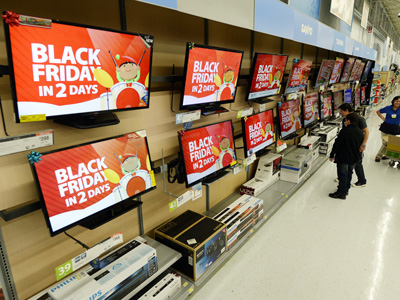
 Black Friday is November 27 this year, and the TV deals will be live well before that. Futuresource’s Lucy Brenton showed here in July that discounting intensifies in Q4 around the big retail events, with 5 to 10% cuts against the annual peak now routine. And shoppers no longer wait: Circana’s Marshal Cohen told TWICE last November that early deals finally got consumers to bite.
That’s when minimum advertised price (MAP) policies break: not because anyone decides to break them, but because a bundle, a gift card or an open-box listing was never discussed. By the time someone asks, the promo is live.
The fix is boring and it works: one page, agreed between brand and dealer before the first ad is built, covering five things.
1. Cart prices
Most MAP policies restrict what you advertise, not what you charge. The FTC describes the shape: a brand adopts a pricing policy on its own, offers it “take it or leave it”, and may stop dealing with a retailer that ignores it.
“See price in cart” sits in the gap between advertising and selling, and policies treat it differently. One TV maker’s dealer policy allows a cart-only price on its MAP models, but not on models under a unilateral pricing policy (UPP), where selling more than $3 below the stated price is a violation.
Another brand’s guidelines treat any “click for price” or “see price in cart” button that ends below MAP as a violation, but leave the final checkout page out of scope.
So line one is simple. For each holiday model: MAP or UPP, and is a cart price allowed? Write it next to the SKU, because nobody on the sales floor reads the full policy at 11 pm on a Thursday.
2. Bundles
A soundbar thrown in with a TV is the oldest move in the November playbook, and it’s where listings slide under MAP without anyone meaning it: the TV sits at MAP while the bundle price implies a discount on it.
One brand lets dealers bundle another of its display products with a compliant TV at up to 100% off the second item’s MAP, provided no value-add is ever netted out of the TV price. Another caps value-adds at 10% of the stated price, wants every bundle approved, and bars stacking bundles with other promotions unless it signs off.
The one-page answer: the approved bundles, their prices, and how the ad shows them. Opia’s Sarah Fournier made the point here in October: bundle benefits that solve a purchase problem rather than discounting the whole aisle. A mount, delivery or a calibration visit sells the TV and never touches the advertised price.
3. Gift cards

A $100 gift card with a $1,000 TV is a 10% discount in the shopper’s head. The policies I’ve read range from counting a card as a value-added offer within a cap, to allowing it on UPP models only for future purchases (never redeemed at the same checkout), to saying nothing at all. The silence is where the arguments start.
Settle three things per model: is a gift card allowed, up to what value, and can it be spent on the same transaction. Then settle who funds it: a brand-run promotion on the brand’s own promo roadmap is usually exempt and can be netted into the advertised price; a dealer-funded card usually isn’t and can’t. Identical to a shopper, completely different to a compliance team.
4. Open-box units
Open-box is where November’s returns come back as December’s pricing problem. Appriss Retail’s Kara Holthaus wrote here last December, citing a LendingTree survey, that four in ten consumers admit to buying something with the plan to return it, 43% for electronics. Those sets come back opened, and somebody has to price them.
One brand’s policy defines open-box as anything used, returned, opened or demoed, allows it at up to 15% below the stated price if the listing clearly says it isn’t factory new, caps it at 5% of that model’s volume, and keeps it off every online marketplace except eBay. A custom-install distributor’s policy says recertified or refurbished units must be clearly labeled.
On the page: the open-box discount allowed, the label the listing must carry, and where it can be listed. Put grey stock and unfamiliar marketplace sellers on the same line; nothing loses an authorized dealer’s goodwill faster than an unknown seller undercutting them with an “open-box” listing that isn’t open-box at all.
5. How a violation gets flagged
This is the line most pages skip, and the one that saves relationships. A weekly price check is fine in March. In November prices move daily, and in my experience many drops go live after hours, when nobody at the brand is looking.
Agree who checks: the brand, the distributor, or automated MAP monitoring that runs daily. Agree what counts as evidence: a screenshot with the date and the URL, not a phone call from a rival dealer.
Agree how the first notice reads: factual, with the correct price and a short deadline to fix it. And agree what happens next. The policies I’ve read escalate from a written warning to suspensions of the model and, eventually, de-authorization, with each violation counted separately.
One rule from the lawyers belongs on the page too. Antitrust counsel at Foley & Lardner put it plainly last year: enforce on your own, consistently across all resellers, and never target a violator because another dealer asked you to.
Put it on one page
None of this needs a lawyer in the room, just the brand’s channel manager, the dealer’s merchandiser, the holiday SKU list and an hour before the first ad is built. Five lines per model: cart price yes or no, approved bundles, gift-card limit, open-box discount and label, and who flags what, with what evidence, by when.
The dealers who ask for that page before the promos start are the ones who don’t spend December arguing about a soundbar.
About the Author
Alex Chaidaroglou is the founder and CEO of Altosight, which tracks millions of prices daily so online retailers and brands can defend their margins: competitor monitoring, repricing with hard floors, and MAP enforcement, minus the manual grind. After 15+ years in pricing, e-commerce, and SaaS, he publishes practical pricing playbooks at Altosight’s blog and in other media. LinkedIn
See also: Nora Gomez On Human Intelligence, AI And The Future Of Retail